
Reviewed · DAY TRIPS IN DJERBA
Half Day Trip to Djerba Island
Djerba packs a lot into five hours. This private tour links the Roman road, Guellala’s pottery traditions, El Ghriba Synagogue, Djerbahood, and Houmt Souk in one smooth circuit. I like the private air-conditioned vehicle and the way the route mixes culture, religion, art, and shopping rather than stopping at one type of sight. The main drawback is the pace: five hours gives you a useful introduction, but not much time for lingering.
I also like that pickup is offered and that the guide can explain the island in English and French. One guide praised in the feedback is Mohamed, known as Momo, who was described as cheerful and informative. You should keep an eye on purchases at the pottery stop, though. One person paid 40 Tunisian dinars for a camel figure later found for 10 dinars in a shop.
In This Review
- Key points to know before you book
- Why this five-hour route works
- The Roman road sets the island’s story
- Guellala brings pottery and island traditions together
- El Ghriba Synagogue adds a serious historical stop
- Djerbahood turns a village into an open-air art stop
- Houmt Souk finishes with free time
- The private vehicle changes the feel of the day
- Is $46.74 a fair price?
- Who should book this Djerba tour?
- FAQ
- How long does the Djerba island tour last?
- Is hotel pickup offered?
- Is this a private tour?
- What is included in the price?
- Are tips included?
- Which languages can the guide speak?
- What happens if I cancel?
- Should you book the half-day Djerba trip?
Key points to know before you book
- Five major stops in five hours: The schedule covers the Roman road, Guellala Museum, El Ghriba Synagogue, Djerbahood, and Houmt Souk.
- A genuinely private outing: Only your group participates, so the vehicle and explanations are not shared with strangers.
- Guellala gets the most time: You have about 45 minutes at the museum and 30 minutes at a pottery workshop.
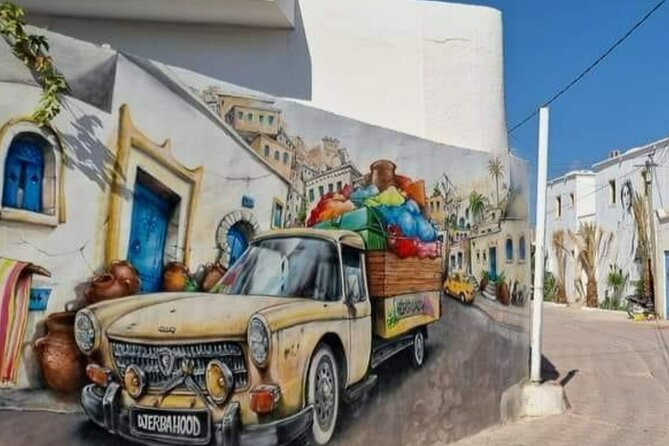
- Djerbahood is a highlight for many: The village adds colorful street art and a very different feel from the island’s museums and religious sites.
- English and French guidance is available: The driver or guide may explain the journey in both languages.
- Good value for a short visit: At $46.74 per person, the price is attractive if you want transport, a guide, and several major sights in one outing.
Why this five-hour route works
Djerba is often called the island of dreams, but you do not need a full day to get a useful first look. This trip is designed for people who want the main cultural stops without arranging several taxis, negotiating separate fares, or working out the island’s geography alone.
The route has a sensible shape. You begin at the Roman road, travel through Guellala, continue to El Ghriba and Djerbahood, then finish in Houmt Souk, the island’s capital. That order gives the outing a clear rhythm: transport history first, local crafts next, religious heritage after that, modern public art, and shopping at the end.
I would not treat this as a slow cultural study. You are moving often, and each stop has a set window. Still, the private format matters. You can ask questions, hear explanations in English or French, and avoid waiting for a large group to gather. Several comments praise the clean private car, punctual hotel pickup, and friendly guidance.
More Day Trips in Djerba
- Private Day Trip Ksar Ghilane Oasis
★ 5.0 · 53 reviews - Door of the tunisian desert Ksar Ghilane and Matmata: Full one Day
★ 4.0 · 42 reviews - Private Day Trip Tataouine and Berber Village
★ 5.0 · 40 reviews
The Roman road sets the island’s story
The first stop is Chaussee Romaine Djerba, usually known as the Roman road. It is the only road connecting Djerba to the mainland, so this is more than a quick photo stop. It gives you a simple way to understand the island’s position and why this crossing has mattered for movement between Djerba and the continent.
You have about 35 minutes here, with no admission charge. That is enough time to stop, listen to the guide, and take in the setting without using too much of your morning.
The appeal is the context. Instead of appearing on the island without any sense of its connection to Tunisia, you begin with the route that links the two. Do not expect a long archaeological visit or an elaborate attraction. This is a brief orientation stop, and its value comes from the explanation rather than from a long list of things to see.
Guellala brings pottery and island traditions together
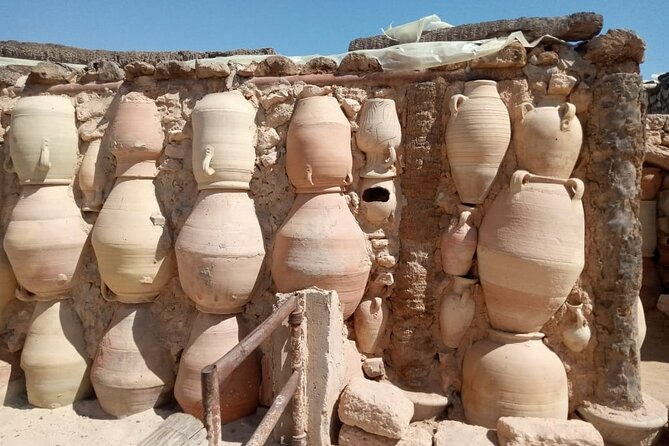
Guellala is one of the strongest parts of the outing because the schedule allows 90 minutes here. The village is known for pottery, and the visit combines the Guellala Museum with a pottery workshop.
You spend around 45 minutes in the museum. This is the place to look for an introduction to Djerban customs, domestic life, clothing, ceremonies, and local traditions. The exact presentation may depend on the guide and the pace of your group, but the museum gives useful background before you see the craft work in person.
The next 30 minutes are devoted to a pottery workshop. This changes the visit from simply looking at objects to seeing how local craft is presented and sold. You can ask questions, watch the work, and compare the workshop setting with the displays in the museum.
The remaining time allows for movement between the two parts of the stop. That is a practical detail. A rushed ten-minute museum visit would add little, while 90 minutes gives you a chance to understand why pottery has such a strong place in Guellala.
There is one clear buying warning. A camel-shaped item was sold to one person for 40 Tunisian dinars, while a similar item was later found for 10 dinars in a shop. I would treat the workshop as a place to look and learn first. If you want to buy, ask the price clearly, compare items elsewhere, and do not assume the first price is the normal local price.
That does not mean every workshop is unfair. It means you should shop with your eyes open. A private tour gives you freedom, but it does not remove the need to make your own buying decisions.
El Ghriba Synagogue adds a serious historical stop
The route then continues to El Hara Sghira, home of El Ghriba Synagogue. You have about 50 minutes, and entry is listed as free.
El Ghriba is the oldest synagogue on Djerba, making it one of the most important cultural stops on the route. Its presence also shows that the island’s story is not limited to beaches, pottery, or traditional markets. This is a place connected to Jewish heritage and to the wider mix of communities that shaped Djerba.
Your guide can help explain why the synagogue matters, which is especially useful if you do not already know the background. I would allow time to take in the building respectfully rather than treating it as another fast photograph. Religious sites call for quiet attention, and your guide can help you understand any local expectations during the visit.
The schedule is long enough for a proper introduction, but it is not a specialist heritage tour. If El Ghriba is your main reason for visiting Djerba, you may want a separate visit with more time. If you want to include it as one part of a broad island tour, 50 minutes is a reasonable allocation.
More day trips:
- Ksar Ghilane 1 day: The hot spring and the homestay
★ 4.5 · 37 reviews - Tataouine Cheneni 1 day visit
★ 4.0 · 33 reviews - Tataouine – Chenini 1 day: Discovery of Ksours and Berber villages
★ 4.5 · 22 reviews - Ksar Ghilaine and Chneni Tataouine 1 day tour in Tunisia
★ 5.0 · 8 reviews
Djerbahood turns a village into an open-air art stop
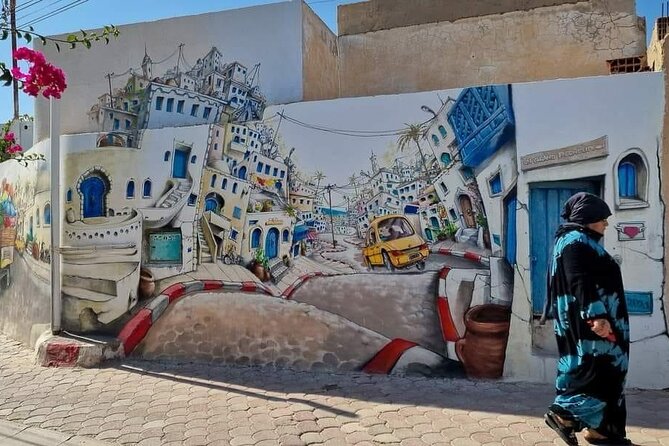
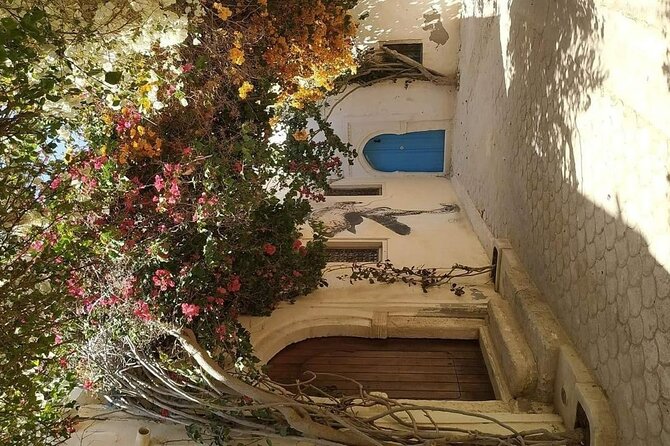
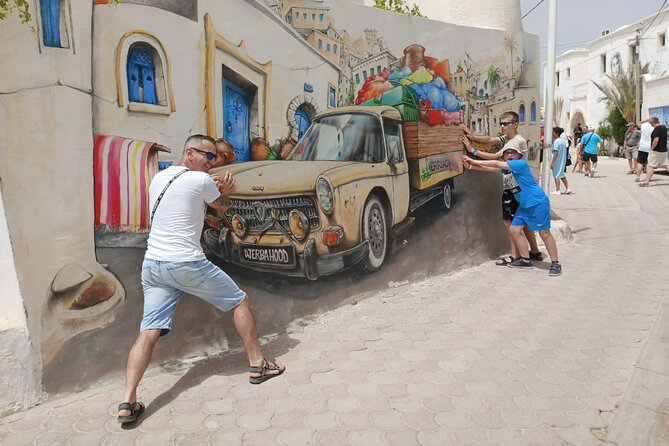
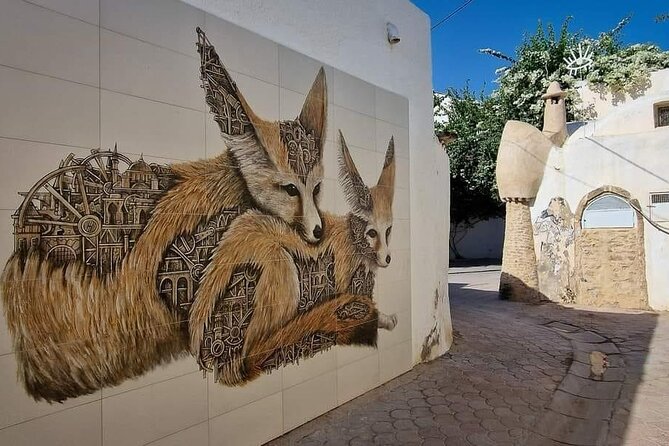
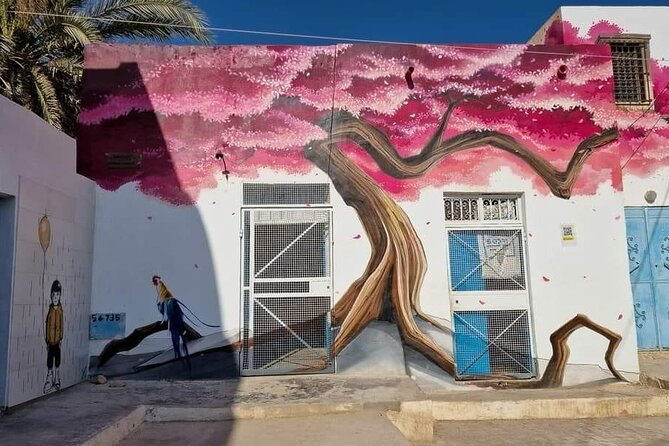
Djerbahood is the most visually different stop on the route. You have about 45 minutes to explore this distinctive place, where walls and doorways have become part of a large public art setting.
I can see why this stop receives strong praise. After the museum and synagogue, Djerbahood changes the mood. You are no longer looking mainly at objects behind displays or listening to religious history. You are walking through an inhabited village with art integrated into the streets.
This is a good place to keep your camera ready, but I would not reduce it to a photo stop. Look at how the painted walls relate to the older buildings and narrow lanes. The contrast between local architecture and newer artwork is part of the appeal.
Forty-five minutes is enough to see the main feel of Djerbahood, but you will not cover every corner at a relaxed pace. The private format helps because your guide can point out the most useful areas rather than leaving you to wander without direction.
If you prefer markets and historic buildings to street art, this may not be your favorite part. For many people, though, it becomes the most memorable stop because it feels informal, creative, and unlike the other places on the schedule.
Houmt Souk finishes with free time
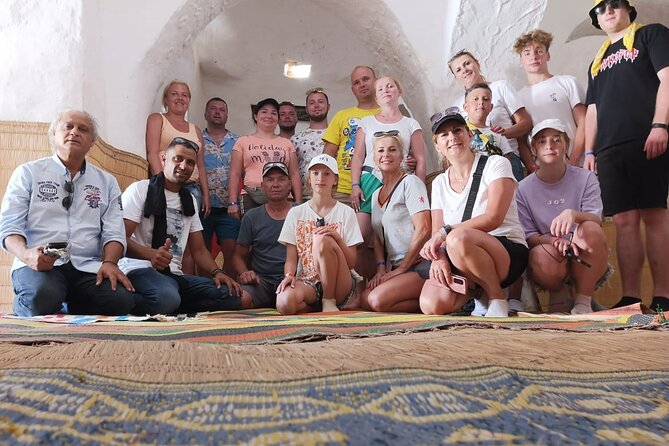
The final stop is Houmt Souk, the capital of Djerba. You get about one hour of free time in the souks before returning to your hotel.
This is a smart ending. By placing shopping last, the tour avoids making you carry purchases through the rest of the day. You can use the hour to browse, buy small souvenirs, or simply watch the movement of the market streets.
The word free time is important. This part is less guided than the earlier stops, so you should decide what you want from it. If you enjoy bargaining and browsing, one hour gives you a useful taste. If you want an extended shopping session, it may feel short.
I would keep your spending modest unless you already know what you want. The pottery warning applies here too, though the market offers a chance to compare prices. Ask before buying, check several stalls when possible, and remember that the first price is not always the final price.
Houmt Souk also gives the day a practical close. You finish in the island’s main town, then return to your hotel in the same air-conditioned vehicle. That is easier than arranging a separate ride after shopping.
The private vehicle changes the feel of the day
This is a private tour, meaning only your group participates. That makes a real difference on a five-hour schedule. You are not waiting for a bus to collect people from several hotels, and you can ask the guide to repeat an explanation or clarify a point.
The vehicle is air-conditioned, a useful feature in Tunisia. The feedback also describes the car as clean and the pickup as punctual. The tour offers pickup, though the supplied details do not specify every pickup location, so you should confirm that point when booking.
Guiding is included. English and French communication is specifically noted, and the comments describe the guidance as informative, friendly, and humorous. Momo, short for Mohamed, is singled out by name in one particularly warm account. Since guide assignments can vary, I would see this as an example of the service style rather than a guarantee that he will lead every departure.
The private arrangement is best for couples, families, and small groups who want a fixed route without the pressure of a large coach. It is also useful if you have limited time on Djerba and want a broad introduction in one morning or afternoon.
Is $46.74 a fair price?
At $46.74 per person, the tour offers solid value if you use all five hours. The price includes the air-conditioned vehicle and guide, while admission is included at the Guellala Museum. The other listed stops have no admission charge.
The value is strongest for a small group. You are paying not only for transport, but also for a private arrangement and explanations across several parts of the island. If you tried to arrange each stop independently, you would need to organize transport, estimate travel time, and make sure you returned to your hotel.
The price is less compelling if you only want to shop in Houmt Souk or visit one specific site. In that case, a shorter local outing might suit you better. This tour earns its price by linking five different experiences in one compact circuit.
Tips are not included. Carry some Tunisian dinars if you plan to shop or want to tip the guide or driver, but the amount is your choice. Since the tour is private, you can judge the service for yourself at the end rather than following a large group’s custom.
Who should book this Djerba tour?
I would recommend it to first-time visitors who want to understand Djerba quickly. You get a useful mix of island connection, craft, religion, public art, and town life, with no need to plan the transport yourself.
It also suits you if you are staying at a hotel and want pickup, a clean air-conditioned car, and a guide who can communicate in English or French. Families and small groups may especially like the private format, since the day can feel less formal than a coach excursion.
This is not the right choice if you want a slow morning at one museum, a long pottery lesson, or several hours in the souks. The itinerary is full, and each stop has a set duration. You should book it for coverage and convenience, not for unhurried exploration.
The tour has a 4.9 rating from 27 reviews, with 100 percent recommending it. Those numbers suggest strong satisfaction, especially with the guide, private vehicle, and range of stops. I would still keep the pottery-shopping caution in mind and treat the short duration as the main trade-off.
FAQ
How long does the Djerba island tour last?
The tour lasts approximately five hours.
Is hotel pickup offered?
Yes, pickup is offered. The provided details do not specify every pickup location, so confirm the exact arrangement when booking.
Is this a private tour?
Yes. Only your group participates in the activity.
What is included in the price?
The price includes an air-conditioned vehicle and a guide. Admission to the Guellala Museum is included.
Are tips included?
No. Tips are not included in the tour price.
Which languages can the guide speak?
The tour information and feedback indicate that guidance is available in English and French.
What happens if I cancel?
You can receive a full refund if you cancel at least 24 hours before the experience start time. Cancellations or changes made less than 24 hours before the start time are not refunded or accepted.
Should you book the half-day Djerba trip?
Book it if you want a private, well-priced introduction to Djerba and value seeing several major places in one outing. Djerbahood, Guellala, and El Ghriba give the tour real variety, while the Roman road and Houmt Souk help frame the island’s geography and daily life.
Skip it if your priority is slow shopping or detailed study at one site. For everyone else, $46.74 buys a practical half-day route, an air-conditioned car, a guide, and the ease of returning to your hotel after the souks. Just leave room in your budget for shopping, compare pottery prices, and remember that the tour is an introduction, not the final word on Djerba.
Just added around Djerba
- The three desert and mountain oases★ 5.0 · 6 reviews
- Horseback riding or camel at sunset in Djerba★ 5.0 · 6 reviews
- Day Trip in Ksar Ghilane with Lunch and Pickup★ 3.5 · 7 reviews
- Ksar Ghilaine and Chneni Tataouine 1 day tour in Tunisia★ 5.0 · 8 reviews
- 2 days tour to Douz & Ksar Ghilan oasis. and an overnight in the sahara under bedouin tent .. Dinner in the camp, Private Jeep – with english speaking guide.★ 4.5 · 8 reviews
- 1 day excursion to Chenini-Tataouine★ 5.0 · 8 reviews
- From Djerba: Explore the desert in a day★ 5.0 · 8 reviews
- Tozeur and the mountain Oasis★ 5.0 · 15 reviews
Day Trips in Djerba, compared.
Door of the tunisian desert Ksar Ghilane and Matmata: Full one Day
Read our review →
Ksar Ghilane 1 day: The hot spring and the homestay
Read our review →
Tataouine – Chenini 1 day: Discovery of Ksours and Berber villages
Read our review →

Ksar Ghilaine and Chneni Tataouine 1 day tour in Tunisia
Read our review →Browse the lists this tour appears in