
Reviewed · BARDO MUSEUM TOURS
Bardo Museum , Oudhna and the roman aqueduct
Ancient waterworks meet royal art. This private Tunis tour links the Bardo Museum, Carthage’s Malaga Cisterns, the 132-kilometer Roman aqueduct, and Oudhna in one well-planned day. I like the mix of indoor and outdoor sights, and I like having an air-conditioned vehicle for the drive between them. The main consideration is simple: lunch is not included, and six to seven hours of Roman sites can feel long if you prefer a slower day.
The tour costs $258.49 for a private group of up to two people. That works out to about $129 per person for two, with admission fees and taxes included. I also like the freedom of a private outing, though the short aqueduct stop may leave serious Roman engineering fans wishing for more time.
In This Review
- Key points to know before you book
- Why this makes a strong Roman Tunisia day
- Two hours inside the Bardo Museum
- Carthage’s Malaga Cisterns and the city’s water supply
- The aqueduct near Oudhna
- Oudhna’s amphitheater, Capitol, and mosaics
- How the stops work as one story
- What the $258.49 price includes
- Timing, comfort, and practical concerns
- Who should book this experience
- Should you book the Bardo, aqueduct, and Oudhna tour?
- FAQ
- Where does this tour take place?
- How long does the experience last?
- Is pickup offered?
- Is this a private tour?
- How much does the tour cost?
- Are admission fees included?
- Is lunch included?
- How long is the Bardo Museum visit?
- How long is the aqueduct stop?
- Can the tour be canceled because of weather?
Key points to know before you book
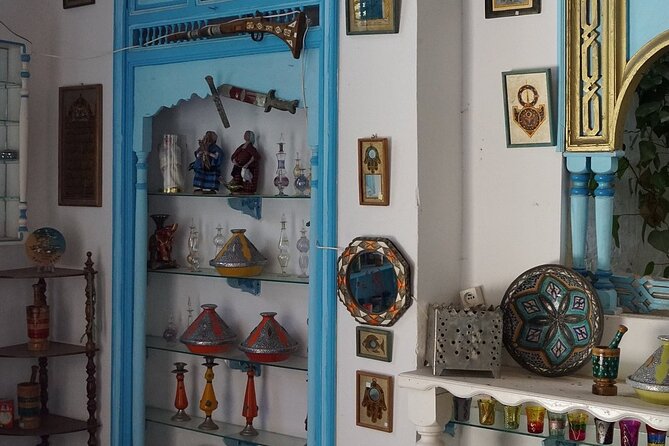
- The Bardo Museum holds an extraordinary Roman mosaic collection inside a former Ottoman royal palace, with about two hours set aside for the visit.
- Carthage’s Malaga Cisterns reveal the practical side of Roman life, with 18 water containers connected to the city’s ancient supply system.
- The aqueduct once carried water 132 kilometers, linking Carthage with springs near Mount Zaghouan.
- Oudhna combines an amphitheater, Capitol, vaults, and mosaics in an archaeological park surrounded by open countryside.
- This is a private tour for up to two people, with pickup offered and transport in an air-conditioned vehicle.
- The full day is tightly focused on Roman Tunisia, so it suits history fans more than visitors seeking markets, cafés, or a relaxed city stroll.
Why this makes a strong Roman Tunisia day
Tunis offers many historical stops, but they are spread across the region. The Bardo Museum is in the city, Carthage lies to the northeast, and Oudhna sits south of Tunis. Seeing all three in one outing would be awkward by public transport, especially if you want to understand how the sites connect.
This tour solves that problem with a private vehicle and a clear theme: Roman art, water, and urban life. The Bardo shows what people saw inside their homes and public buildings. Carthage shows how the city stored water. The aqueduct explains how that water arrived. Oudhna then gives you a large open-air site where theaters, civic buildings, villas, and mosaics bring Roman North Africa into view.
I like that the day does not stop at the famous museum. Many visitors see the Bardo and then return to central Tunis. Here, you get a better sense of the wider Roman system, including the engineering needed to supply Carthage.
The published score is 4.8 out of 5 from four ratings, a strong result but based on a small sample. The most consistent praise centers on the pleasant day, the excellent museum, the aqueduct, and Oudhna’s setting among open land.
More Bardo Museum visits:
- Private tour: Medina,Carthage ,Sidi Bou Said, Bardo Museum+lunch
★ 5.0 · 230 reviews - Carthage, Bardo Museum, Sidi Bou Said and Medina Private Day Tour
★ 4.5 · 153 reviews - Tunis: Carthage, Bardo Museum, Sidi Bou Said & Medina Group Tour
★ 4.5 · 33 reviews
Two hours inside the Bardo Museum
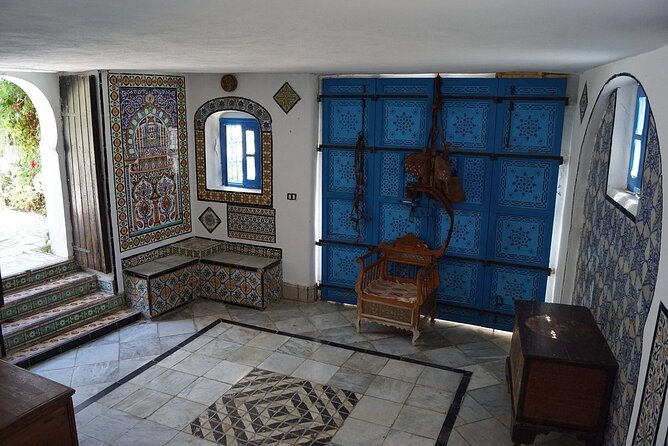
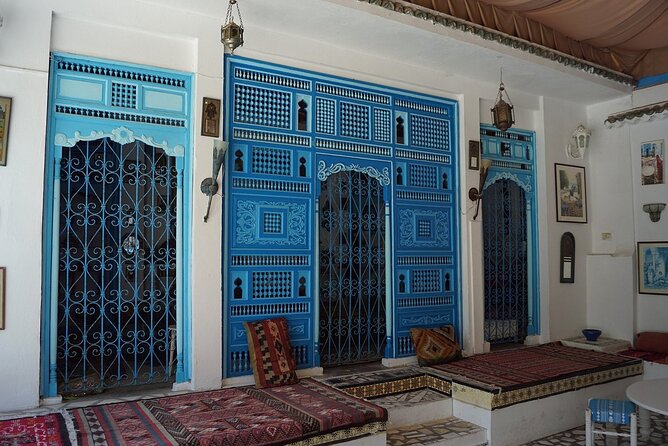
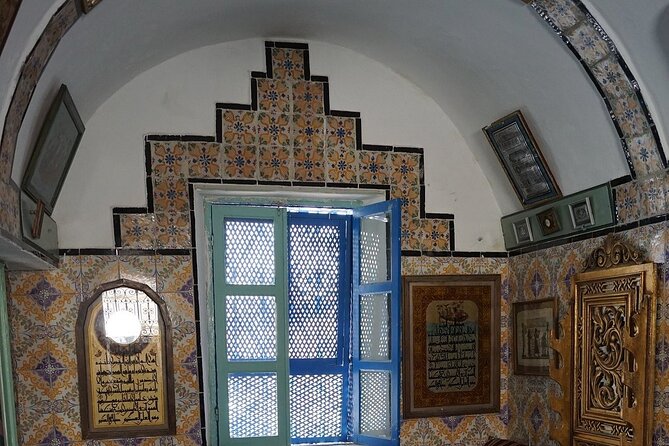
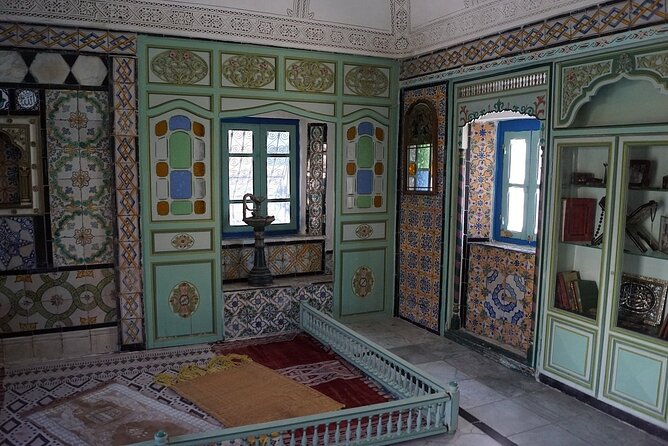
The Bardo is the anchor of the experience. Its great strength is the size and quality of its Roman mosaic collection, displayed in a grand former Ottoman royal palace. That setting matters. You are not simply walking through a modern display hall filled with fragments. The palace rooms add ceremony and scale to the art.
Give yourself time to look closely. Roman mosaics often work from a distance, where the full image becomes clear, but the small pieces reward a slower look. You may notice borders, repeated patterns, figures, animals, and scenes that are easy to miss when you move too fast.
The museum also gives useful context for the sites that follow. After seeing mosaics from villas and public buildings, Oudhna’s Villa Laberii mosaics will feel less isolated. You will have already seen how wealthy Roman households used floors as a form of decoration and status.
Two hours is a reasonable amount of time for a first visit, though it is not enough for every room if you read every label. If you are passionate about Roman art, you may want to agree with your guide about priorities early. The private format should make that easier than it would be in a large group.
The Bardo is also the most comfortable part of the day. You are indoors, away from the sun, and able to study objects at your own pace. Afterward, the tour shifts outdoors, so this is a good point to refill your water and prepare for the road.
Carthage’s Malaga Cisterns and the city’s water supply
The next stop is at Carthage, where the Malaga Cisterns mark the end of the aqueduct system. The site includes 18 large water containers, built to support the city’s needs. The supplied description gives their capacity as up to 32,000 liters of water per day.
The stop lasts about 30 minutes. That is enough for an introduction and a look at the scale of the cisterns, but not a long archaeological walk. I would treat this as a focused technical stop rather than a full exploration of Carthage.
The cisterns help you understand why the aqueduct matters. A long channel is impressive, but its purpose becomes clearer when you see where the water ended up. Carthage needed dependable water for homes, public buildings, and daily life. These storage containers formed part of that urban system.
The brief timing is the main limitation. If you are expecting a full tour of Carthage’s many sites, this experience is not designed for that. Its Carthage focus is the aqueduct’s endpoint, not a broad tour of Punic and Roman ruins across the city.
Still, the stop fits the day well. The Bardo gives you art. The cisterns give you infrastructure. Together, they show two sides of Roman civilization that are often separated in standard sightseeing.
The aqueduct near Oudhna
The tour then drives about 30 minutes south of Carthage toward the aqueduct. Around six kilometers from Oudhna, on the road between Mhammedia and El Fahs, you can see sections described as some of the finest Roman architectural work in the area.
This is the most unusual stop because it connects a distant spring source with a major ancient city. The Aqueduct of Hadrian once carried water from Mount Zaghouan to Carthage, over a channel measuring 132 kilometers. That distance gives the project its real force. Roman engineering was not only about arches and monuments. It was also about maintaining a reliable water supply across difficult ground.
The stop lasts around 30 minutes and admission is free. Expect a short visit centered on the visible aqueduct structure rather than a long walk along the full route. The timing works for a general sightseeing day, but enthusiasts may want to ask how much time is available for photographs and closer inspection.
I like this stop because it breaks up the museum and ruin visits with a piece of working infrastructure. You are looking at a system built to move water over a great distance, not at a decorative monument made only to impress. It also adds a strong sense of scale to the cisterns at Carthage.
The aqueduct section may be less satisfying if you want detailed interpretation on Roman construction techniques. The provided information confirms the route, its connection to Mount Zaghouan, and its length, but it does not promise a technical lecture or extended exploration. Keep expectations practical.
More museums and galleries:
- Private Day Tour Tunis Medina Carthage Sidi Bou Said Bardo Museum
★ 5.0 · 30 reviews - Private Tour Sidi bou Said Medina Carthage & bardo Museum
★ 4.5 · 13 reviews - Tunis Group Tour: Carthage, Sidi Bou Said, Bardo museum & Medina
★ 5.0 · 5 reviews - Bardo Museum with Medina, Carthage and Sidi Bou Private Tour
★ 5.0 · 5 reviews
Oudhna’s amphitheater, Capitol, and mosaics
Oudhna is the longest outdoor stop, with about two hours in the archaeological park. This is where the day gathers its pieces into one ancient settlement.
The Roman amphitheater could hold 16,000 spectators. That figure helps you picture Oudhna as more than a small rural outpost. A venue of that size required construction, management, and a large audience. Even if you are not an expert in Roman architecture, the scale should make an impression.
The Capitol is another major feature. It includes fine mosaics and impressive underground vaults dating to the Byzantine era. This mix of Roman civic architecture and later Byzantine changes gives the site more than one historical layer. You are not looking at a settlement frozen at a single moment.
Then there are the Villa Laberii mosaics. These link naturally back to the Bardo. In the museum, you see mosaics presented as art. At Oudhna, you can connect that art with the remains of a villa and the setting where such floors once served daily life.
Two hours is useful here. Oudhna is not just a quick photo stop, and the open-air setting gives you room to move between the main features. Wear practical shoes and bring sun protection. The tour requires good weather, and much of this portion is outdoors.
The park’s setting among nature is part of its appeal. It feels different from a city museum and different again from Carthage’s cisterns. You get a quieter sense of Roman Tunisia, with ruins spread across a broader setting rather than concentrated inside a display room.
How the stops work as one story
The clever part of this day is its sequence. The Bardo introduces the art and wealth of Roman North Africa. The Malaga Cisterns show the endpoint of a major water project. The aqueduct explains the long supply line. Oudhna then places civic buildings, entertainment, private villas, and later vaults in one archaeological park.
That sequence gives you more than four unrelated attractions. It lets you think about how Roman cities functioned. People needed water, public buildings, entertainment, decorated homes, and systems capable of supporting all of them.
I would not choose this tour if your priority is a broad introduction to every period of Tunisian history. It is strongly Roman in emphasis, with the Bardo’s Ottoman palace and Oudhna’s Byzantine remains adding supporting layers. For ancient engineering and archaeology, though, the focus is a real advantage.
What the $258.49 price includes
The price is $258.49 per private group of up to two people. For two people, that is roughly $129 each. The cost includes all fees and taxes, an air-conditioned vehicle, the listed museum and site admissions, and pickup if selected or available for your booking.
The value depends on how you would otherwise reach the sites. These locations are separated by long road connections, and the private vehicle removes the need to coordinate separate transport. You also avoid joining a large group, which can make a difference at the Bardo when you want to linger over a particular mosaic.
The price is harder to justify for one person, since the group rate does not fall to half. It makes more sense for a couple, two friends, or a small private party that values direct transport and a flexible pace.
Lunch is not included. Plan to pay for your own meal and confirm the day’s lunch arrangements before departure. One positive account describes a farm lunch as the icing on the cake, but the tour information does not include lunch in the price, so you should treat any meal as an extra.
Timing, comfort, and practical concerns
The listed duration is approximately six to seven hours. The scheduled sightseeing adds up to about five hours: two hours at the Bardo, 30 minutes at the cisterns, 30 minutes at the aqueduct, and two hours at Oudhna. Driving and pickup time fill the rest of the day.
That makes the schedule efficient rather than leisurely. You cover a lot of ground, but you are not left with long free periods at each place. I would book it when you want to see several important Roman sites in one day, not when you want to sit over a long lunch or wander without a clock.
An air-conditioned vehicle is a useful inclusion in Tunisia, especially because Oudhna and the aqueduct are outdoor stops. The tour requires good weather, so poor conditions can lead to a different date or a full refund.
The outing is private, and only your group participates. This is helpful if you want to ask questions, spend more time at the Bardo, or move through Oudhna at your own speed. The stated information says most people can participate, service animals are allowed, and the tour is near public transportation, though pickup is offered.
Keep valuables secure in crowded public areas. A direct account of time in Tunis describes street sellers as mostly manageable but advises holding belongings firmly because people may brush past in busy areas. That is sensible advice for the city portions of any Tunis visit.
Who should book this experience
I would recommend this tour to you if you enjoy Roman ruins, mosaics, ancient infrastructure, and private transport. It is also a good fit if you have limited time in Tunis and want to connect the Bardo with sites outside the city.
It suits couples particularly well because the group price covers two people. Families and friends may also appreciate the private vehicle, though the archaeological focus may be less appealing to children who need frequent changes of activity.
I would choose another plan if your main interests are Tunisian food, the medina, Punic Carthage, or a broad cultural tour. The day includes no dedicated medina visit and no meal in the price. It gives you a concentrated look at Roman Tunisia instead.
Should you book the Bardo, aqueduct, and Oudhna tour?
Book it if you want a well-connected day of Roman art, water engineering, and ruins without arranging several separate trips. The Bardo is the strongest single stop, while Oudhna adds the most satisfying open-air archaeology. The aqueduct and Malaga Cisterns are shorter visits, but they give the day a clear purpose.
The price is fair for two people who value a private, air-conditioned ride and included admission fees. Before confirming, check the pickup details, ask how lunch will work, and be ready for a full schedule with several outdoor stops.
If that sounds like your kind of history day, this is an efficient and worthwhile choice. If you prefer a slower pace or want to focus on Tunis’s medina and food, save the Roman circuit for another day.
FAQ
Where does this tour take place?
The tour begins in the Tunis area and visits the National Bardo Museum, Carthage’s Malaga Cisterns, the Zaghouan aqueduct, and Oudhna Archaeological Park.
How long does the experience last?
The approximate duration is six to seven hours, including transport between the stops.
Is pickup offered?
Yes, pickup is offered as part of the experience information.
Is this a private tour?
Yes. Only your group participates, and the booking covers up to two people.
How much does the tour cost?
The price is $258.49 per group of up to two people.
Are admission fees included?
Yes. All fees and taxes are included, and admission is included for the Bardo Museum and the Carthage cistern stop.
Is lunch included?
No. Lunch is not included in the tour price.
How long is the Bardo Museum visit?
The planned visit to the National Bardo Museum lasts about two hours.
How long is the aqueduct stop?
The aqueduct visit lasts about 30 minutes, and admission is free.
Can the tour be canceled because of weather?
Yes. The experience requires good weather. If poor weather causes cancellation, you can be offered another date or a full refund. You can also cancel at least 24 hours before the start time for a full refund.
Just added around Tunis
- 3-Day South of Tunisia Guided Tour from Tunis★ 4.0 · 3 reviews
- Explore Tunisia in Depth:The Private Grand Tour in 8 Days★ 5.0 · 3 reviews
- Private Tour Bardo Museum, Carthage, Sidi Bou Said and Medina★ 4.5 · 3 reviews
- Private Group Day Tour Tunis Medina Carthage Sidi Bou Said★ 4.5 · 3 reviews
- 5 Days Tunisia Discovery Private Tour★ 5.0 · 4 reviews
- Bardo Museum- The ruins of Carthage- Village of Sidi Bou Said★ 5.0 · 4 reviews
- Tunis Carthage Private Arrival Airport Transfer to Tunis★ 5.0 · 4 reviews
- 4-Day Private Tour: Sahara and Djerba Island from Tunis and Hammamet★ 5.0 · 4 reviews
Bardo Museum Tours, compared.
VIP Tour: Tunis Medina/Bardo, Sidi Bou Said, Carthage |PICKUP ALL
Read our review →
Private tour: Medina,Carthage ,Sidi Bou Said, Bardo Museum+lunch
Read our review →
Carthage, Bardo Museum, Sidi Bou Said and Medina Private Day Tour
Read our review →
Carthage, Bardo Museum, Sidi Bou Said & Medina Group Tour
Read our review →
From Hammamet or Tunis: Carthage, Bardo, Sidi Bou said and Medina
Read our review →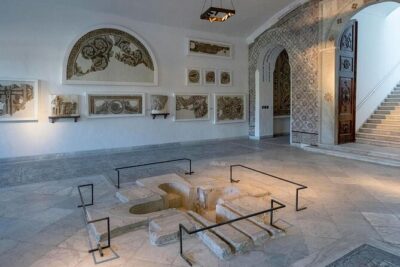
Private Day Tour Tunis Medina Carthage Sidi Bou Said Bardo Museum
Read our review →Private tour: Medina,Carthage ,Sidi Bou Said, Bardo Museum+lunch
Read our review →
Daytrip Carthage Sidi Bousaid Bardo and Tunis Medina
Read our review →Browse the lists this tour appears in