
Reviewed · BARDO MUSEUM TOURS
Daytrip Carthage Sidi Bousaid Bardo and Tunis Medina
Ancient ruins, blue doors, and crowded souqs fill one long day. This private tour links Tunisia’s biggest northern sights, giving you two UNESCO World Heritage sites, a comfortable air-conditioned vehicle, and a guide who can adjust the day to your interests. I especially like the focused Carthage visits and the chance to see both old Tunis and the stylish village of Sidi Bou Said without arranging several separate trips. The main drawback is pace: seven stops in seven to eight hours leaves limited time at each place.
I also like that pickup and return to your hotel are included, which matters in a city spread across several districts. Guides such as Ghassen, Sana, and Moncef have earned praise for history, local context, driving, and finding good photo spots. Still, the Bardo explanation may feel brief if you want a detailed museum lecture, and the Baths of Antoninus admission is not included.
In This Review
- Key points at a glance
- Why this route works so well in one day
- Carthage begins with questions at the Tophet
- The Punic Ports explain Carthage’s power
- The Baths of Antoninus show Roman Carthage
- Byrsa Hill puts the Carthage Museum in context
- Sidi Bou Said brings a change of mood
- The Medina of Tunis rewards a slow eye
- The Bardo closes the day with mosaics
- What the private format is worth at $162.60
- Guides and the shape of your day
- Who should book this tour
- Should you book it?
- FAQ
- How long does the tour last?
- Where can pickup take place?
- Is this a private tour?
- Which UNESCO World Heritage sites are included?
- Is the Bardo Museum visited every day?
- Are entrance fees included?
- Is lunch included?
- How far in advance is this experience usually booked?
- What is the cancellation policy?
Key points at a glance
- Three major Tunis-area sights in one day: Carthage, Sidi Bou Said, and Tunis are combined in a single private outing.
- Carthage gets the strongest treatment: You visit the Tophet, Punic ports, Baths of Antoninus, and Carthage Museum.
- A private vehicle saves time: Hotel pickup and return are offered from Tunis or Hammamet.
- The guide can shape the day: Ghassen is praised for Punic Wars material, while Sana is noted for friendly guidance and careful driving.
- Monday requires care: The Bardo Museum is closed on Mondays, so that visit does not take place then.
- The price covers convenience: At $162.60 per person, the value improves with two or more people sharing a private vehicle and guide.
Why this route works so well in one day
Northern Tunisia packs several eras into a fairly small area. Carthage brings the Punic and Roman past, Sidi Bou Said offers an attractive hilltop village with sea views, and the Medina of Tunis presents a living medieval quarter rather than a single archaeological site. The Bardo Museum then gives the day’s objects and mosaics a wider setting.
That variety is the real strength. You are not spending seven hours looking at ruins, and you are not limiting the day to an easy stroll through pretty streets. Instead, you move from ancient religion to naval power, Roman public life, Ottoman and Andalusian design, medieval commerce, and museum collections.
The tradeoff is obvious. Each stop has a short scheduled visit, with about 20 minutes at both the Tophet and Punic ports, 45 minutes at the baths, 30 minutes at the Carthage Museum, one hour in Sidi Bou Said, 90 minutes in the Medina, and one hour at the Bardo. Those times are enough for an introduction, not a slow study of every corner.
I would choose this tour if you have only one full day for Tunis and want a broad first look. If you have several days, you may prefer separate visits, especially for Carthage and the Bardo.
More Medina & Souk Tours in Tunis
- Private tour: Medina,Carthage ,Sidi Bou Said, Bardo Museum+lunch
★ 5.0 · 230 reviews - Carthage, Bardo Museum, Sidi Bou Said and Medina Private Day Tour
★ 4.5 · 153 reviews - Guided tour in the UNESCO world heritage Medina of Tunis
★ 5.0 · 68 reviews
Carthage begins with questions at the Tophet
The Tophet is one of Carthage’s most difficult and debated places. It may have been a children’s cemetery, connected to ritual practices involving Baal and Tanit, or its purpose may have been understood too simply by earlier writers. The site carries a strong old image of sacrifice and fire, but modern interpretation is more cautious.
That uncertainty is part of what makes the stop worthwhile. You are not just looking at stones and accepting one fixed story. You are being introduced to the limits of archaeological evidence and to the way dramatic writing shaped public ideas about Carthage.
The visit lasts about 20 minutes, with admission included. That is a sensible amount of time for a first look, though anyone fascinated by Punic religion may want longer. Ask your guide to explain which details are known, which are disputed, and how the site fits into Carthage’s wider religious life.
The Punic Ports explain Carthage’s power
The next stop helps you picture Carthage as a major sea power. A narrow channel once connected a southern commercial harbor with a northern circular naval harbor. The military port was protected from direct view, while ships could still reach the open sea. The naval base is described as having room for about 220 vessels, with dry docks and quays, while the commercial port covered about seven hectares and included warehouses.
The ports were filled after Carthage fell to Scipio in 146 BC. Later, the Romans reshaped the island area, so what you see today reflects more than one chapter of the site’s past. The port museum and remains help turn a vague idea of Carthage into something practical: a city whose wealth depended on shipping, storage, trade, and naval defense.
This stop is listed at about 20 minutes, with no admission charge. That short window means the guide’s explanation matters. Ghassen has received particular praise for his command of Carthage and the Punic Wars, so this is one point where an active conversation can add real value.
The Baths of Antoninus show Roman Carthage
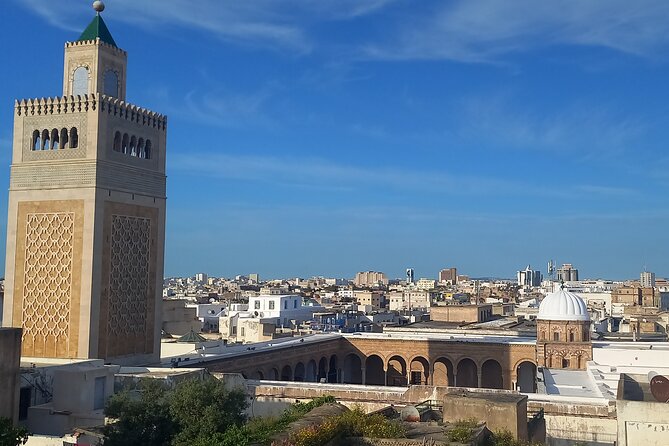
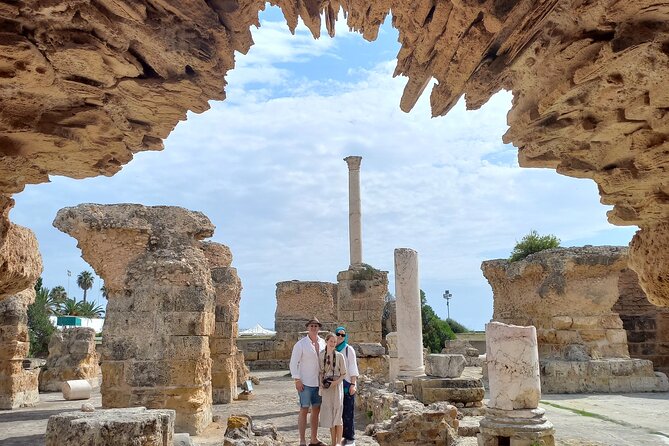
The Baths of Antoninus are a large Roman bathing complex built in the second century. Today they form part of an archaeological park, and the scale of the ruins helps you understand Roman public life better than a small fragment would.
Allow about 45 minutes here. You can expect the stop to focus on the surviving remains and the overall layout rather than every technical feature of Roman bathing. The ruins are extensive enough to reward a measured walk, but your time is still limited by the rest of the day.
One practical point matters: admission is not included at this stop. Ask about the current fee before you arrive, since the listed tour price does not cover it. This is also a place where comfortable shoes help. The tour requires a moderate level of physical fitness, and ancient sites can involve uneven ground.
More Bardo Museum visits:
- Tunis: Carthage, Bardo Museum, Sidi Bou Said & Medina Group Tour
★ 4.5 · 33 reviews - Private Day Tour Tunis Medina Carthage Sidi Bou Said Bardo Museum
★ 5.0 · 30 reviews - Private Tour Sidi bou Said Medina Carthage & bardo Museum
★ 4.5 · 13 reviews - Tunis Group Tour: Carthage, Sidi Bou Said, Bardo museum & Medina
★ 5.0 · 5 reviews
Byrsa Hill puts the Carthage Museum in context
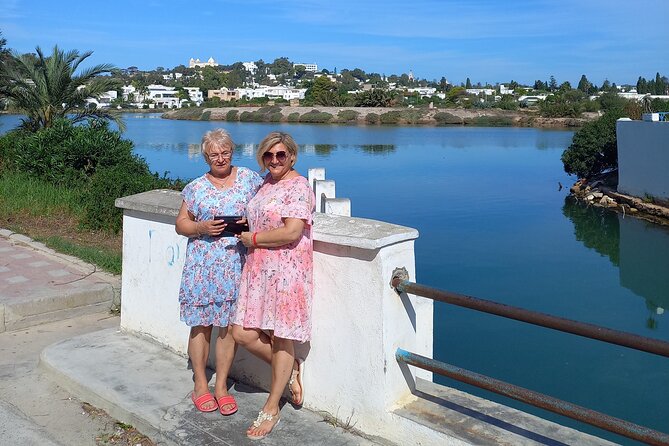
The Carthage Museum sits at the top of Byrsa Hill, a symbolic location because the ancient Punic city was built around it. The position also provides a view over the surrounding area, making the stop useful before or after seeing the lower archaeological remains.
The museum was created in 1875 and presents finds from the Carthage site. Its collections cover the city’s Punic and Roman periods and the many cultures that shaped Tunisia. The museum gives you objects to connect with the outdoor ruins, including the art and remains that would otherwise stay as names in a guidebook.
The scheduled visit is 30 minutes, and admission is included. I would treat this as an orientation visit rather than a complete museum tour. If you want detailed work on individual objects, you may find the explanation too short. One direct comment about the day praised the overall experience but found the Bardo discussion less detailed than expected, so it is sensible to tell your guide early if museum interpretation is your top priority.
Sidi Bou Said brings a change of mood
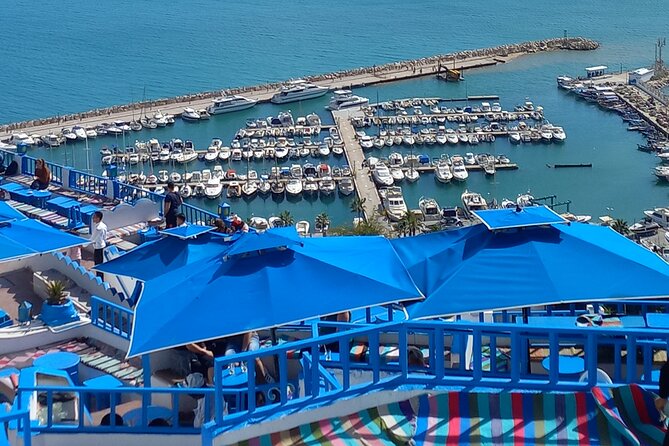
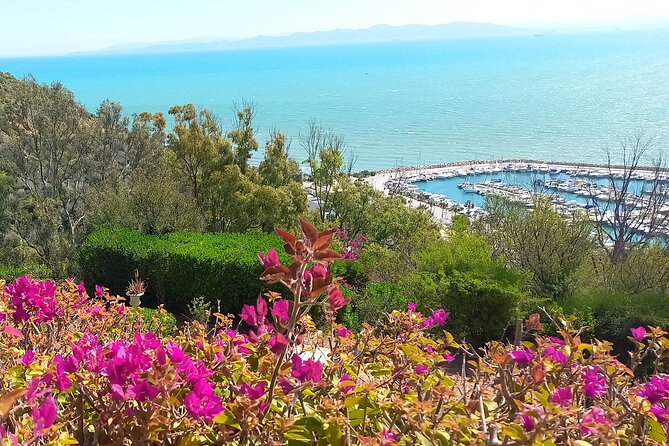
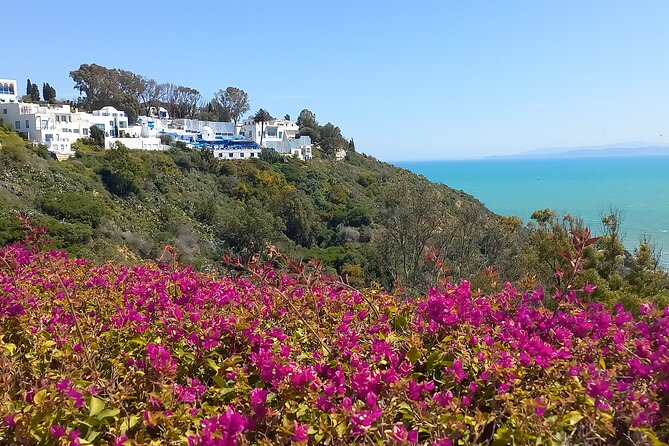
After Carthage’s ruins, Sidi Bou Said feels like a different world. Its white buildings, blue doors, cobbled lanes, and broad views toward the water make it one of the most photogenic stops near Tunis.
The village takes its name from a 13th-century Sufi saint. Its architecture combines Ottoman and Andalusian influences, shaped in part by Spanish Muslims who arrived in the 16th century. French visitors later viewed the fishing village through an Orientalist lens, and its character received protected status in 1915.
You have about one hour here, enough to walk through the main streets, take photographs, and pause at viewpoints. The tour does not list lunch as included, so this is a sensible place to ask about time for food if you need it. The day is long, and a short break can make the later Medina walk more pleasant.
Sidi Bou Said is also where a flexible guide helps. Sana has been praised for knowing when to explain and when to let the day breathe, while Ghassen has a reputation for finding good photo locations. You should still keep expectations realistic: one hour gives you a taste, not a full exploration of the village.
The Medina of Tunis rewards a slow eye
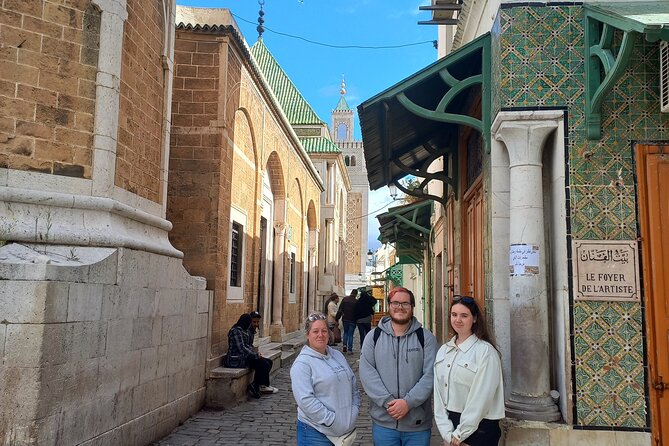
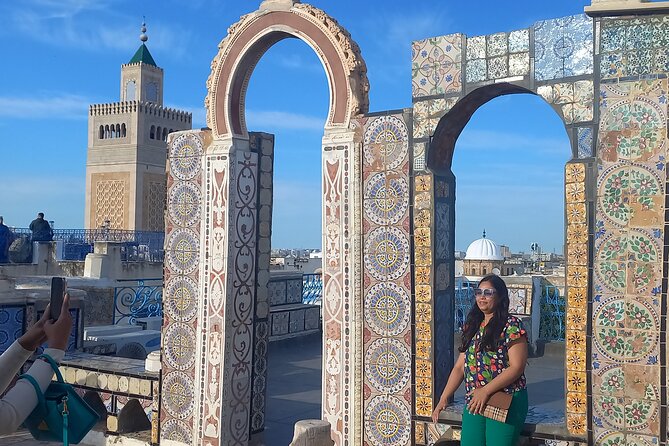
The Medina is the most active part of the day. This large medieval quarter is a maze of narrow streets, covered souqs, workshops, cafes, homes, palaces, hammams, mosques, and Quranic schools. Grand doorways and decorated interiors appear between ordinary daily scenes, which is what makes the area feel more than a collection of monuments.
The visit lasts about 90 minutes, the longest stop on the route. That is useful because you need time to get oriented. You may pass through souqs selling shoes and shisha pipes, see artisans at work, and enter streets that quickly change from commercial to residential.
The Medina can be visually busy, so I would stay close to the guide and use the time to notice details rather than trying to cover every lane. Ask about the purpose of the buildings you pass. A mosque, madrasa, palace, and hammam may look like attractive old architecture at first, but each tells you something different about how the medieval city functioned.
A private tour is particularly helpful here. Your guide can adjust the pace, explain local customs, and focus on architecture, shopping, photography, or history. The day’s route also includes parts of Tunis beyond the souqs, including the mosque and government district, according to the experience description.
The Bardo closes the day with mosaics
The National Bardo Museum is one of Africa’s major museums, with important mosaics and objects from civilizations that developed around the Mediterranean. It is a fitting final stop because it brings together the many periods you have encountered outside.
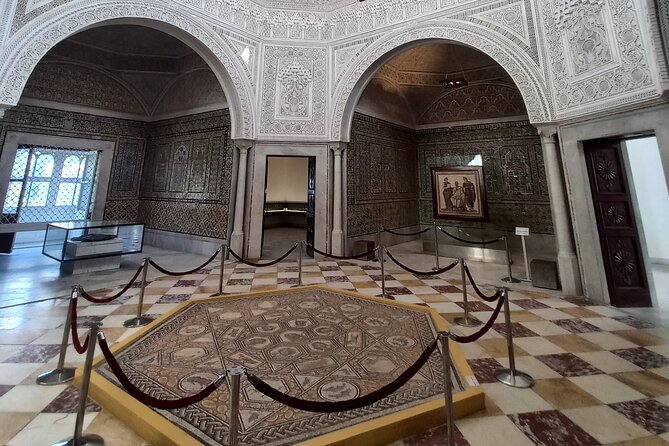
You have about one hour for a guided visit. The museum’s mosaics are a major reason to come, but its broader value is the way it places Tunisian archaeology in a wider Mediterranean story. After seeing Carthage’s ruins, you can better understand why objects, floors, sculptures, and decorative pieces matter.
There is one firm scheduling rule: the Bardo is closed on Mondays, so the museum visit does not take place that day. Check your chosen date before booking. The tour data does not explain whether a Monday visit is replaced with extra time elsewhere, so do not assume that it is.
The Bardo explanation may not satisfy you if you want an expert art-history lecture. Tell the guide what you most want to see, and use the hour for the galleries that match your interests.
What the private format is worth at $162.60
The cost is $162.60 per person. That is not the cheapest way to see Tunis, but the price includes hotel pickup and return, private transportation, a guide, and a full route through the area’s main cultural sights. Admission is included at the Tophet and Carthage Museum, while the Punic Ports visit is free. The Baths of Antoninus fee is extra, and lunch is not included.
The value depends heavily on group size. For one person, the price is a serious commitment. For a couple, family, or small group, the private format spreads the vehicle and guide cost across several people while keeping the schedule personal.
Convenience also has a price. You avoid arranging transport between Tunis, Carthage, Sidi Bou Said, and the Medina. You also avoid spending time figuring out where each archaeological site begins and ends. That matters on a seven to eight-hour day.
The experience receives a 4.8 rating from 20 reviews, with 95 percent recommending it. The strongest praise centers on guides who are punctual, friendly, attentive, and able to tailor the day. That is more important here than a luxury vehicle or a long meal, since the guide connects several complicated sites.
Guides and the shape of your day
The provider is Tunisia Guided Tours. Several guides are named in the available feedback. Ghassen is praised for Carthage and the Punic Wars, Sana for warmth, timing, explanations, and driving, and Moncef for engaging conversation and an interesting approach to the day.
You should tell the company what matters most before departure. If you care about ancient military history, say so. If you want more time in the Medina, stronger museum commentary, or photography stops in Sidi Bou Said, raise that early. A private tour gives you a better chance of shaping the experience, but the total time still limits how much can be added.
The driving itself is part of the convenience. Sana received specific praise for handling narrow roads and tight parking spaces calmly. That is useful around older districts and hilltop streets, where a private vehicle saves effort even if it cannot take you directly into every narrow lane.
Pickup is offered from Tunis or Hammamet, and the vehicle is air-conditioned. Confirmation is provided when you book. Service animals are allowed, and the tour is near public transportation, though the main benefit is the arranged hotel transport.
Who should book this tour
I would recommend it to first-time visitors with one day for the Tunis area, couples who want a private guide, families who prefer not to coordinate several taxis, and history fans who want Carthage explained rather than simply photographed.
It also suits people who like contrast. You get ruins, museum pieces, sea views, religious architecture, markets, and ordinary city life in one outing.
I would hesitate if you dislike early starts, short visits, or full schedules. It may also frustrate serious museum students who want long, detailed time at the Bardo and Carthage Museum. In that case, book separate visits or ask whether a more specialized private itinerary is available.
You need a moderate level of physical fitness. Expect walking at archaeological sites, in the Medina, and through Sidi Bou Said. Wear comfortable shoes and remember that the Baths of Antoninus admission is separate.
Should you book it?
Book this tour if your goal is to see the essential Tunis-area sights efficiently and have a guide connect the pieces. The combination of Carthage, Sidi Bou Said, the Medina, and the Bardo is hard to match in one day without private transport.
Before paying, confirm your pickup location, check that your date is not a Monday, ask about the Baths of Antoninus admission, and tell the guide which subjects matter most. If you can share the $162.60 cost with companions, the private format becomes much better value. If you want slow archaeology or extended museum time, choose a longer, more focused plan instead.
FAQ
How long does the tour last?
The experience lasts approximately seven to eight hours.
Where can pickup take place?
Pickup is offered from hotels in Tunis or Hammamet, with return transport included.
Is this a private tour?
Yes. Only your group participates in the private activity.
Which UNESCO World Heritage sites are included?
The tour visits the Medina of Tunis and the archaeological site of Carthage, both UNESCO World Heritage sites.
Is the Bardo Museum visited every day?
No. The Bardo Museum is closed on Mondays, so there is no Bardo visit on Monday tours.
Are entrance fees included?
Admission is included for the Tophet and Carthage Museum. The Punic Ports visit is free. Admission to the Baths of Antoninus is not included. The provided information does not specify a separate fee for every other stop.
Is lunch included?
No. Lunch is not included in the tour price.
How far in advance is this experience usually booked?
It is booked an average of 34 days in advance.
What is the cancellation policy?
You can cancel at least 24 hours before the start time for a full refund. Cancellations or changes made less than 24 hours before the start time are not accepted for a refund.
More medina walks
- Picturesque Village Of Sidi Bou Said + Tunis Old Medina
★ 4.5 · 13 reviews - The Medina
★ 4.0 · 7 reviews - Daytrip 3 Unesco Sites El Jem Kairouan and Sousse Medina
★ 5.0 · 7 reviews - Bardo Museum with Medina, Carthage and Sidi Bou Private Tour
★ 5.0 · 5 reviews
More Sidi Bou Said and Carthage tours
- Guided Bike Tour of Carthage Archeological Site in Tunisia
★ 5.0 · 88 reviews - Group Guided Bike Tour of Carthage Archeological Site in Tunisia
★ 5.0 · 57 reviews - Archaelogical Site Of Carthage + Picturesque Village Of Sidi Bou Said
★ 5.0 · 56 reviews - Historical Tour of Ancient Carthage
★ 5.0 · 51 reviews
Just added around Tunis
- Explore Tunisia in Depth:The Private Grand Tour in 8 Days★ 5.0 · 3 reviews
- 3-Day South of Tunisia Guided Tour from Tunis★ 4.0 · 3 reviews
- Private Tour Bardo Museum, Carthage, Sidi Bou Said and Medina★ 4.5 · 3 reviews
- Private Group Day Tour Tunis Medina Carthage Sidi Bou Said★ 4.5 · 3 reviews
- Bardo Museum- The ruins of Carthage- Village of Sidi Bou Said★ 5.0 · 4 reviews
- 5 Days Tunisia Discovery Private Tour★ 5.0 · 4 reviews
- Tunis Carthage Private Arrival Airport Transfer to Tunis★ 5.0 · 4 reviews
- 4-Day Private Tour: Sahara and Djerba Island from Tunis and Hammamet★ 5.0 · 4 reviews
Bardo Museum Tours, compared.
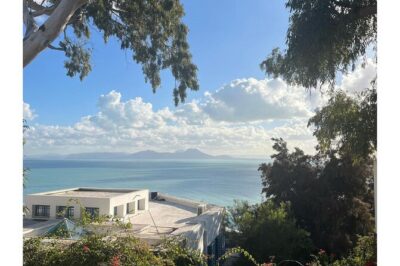
VIP Tour: Tunis Medina/Bardo, Sidi Bou Said, Carthage |PICKUP ALL
Read our review →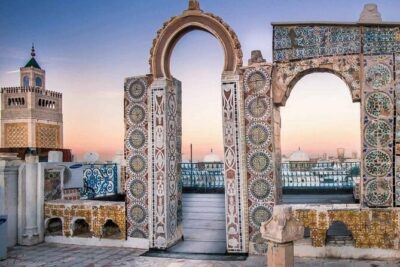
Private tour: Medina,Carthage ,Sidi Bou Said, Bardo Museum+lunch
Read our review →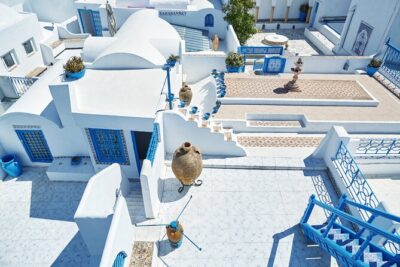
Carthage, Bardo Museum, Sidi Bou Said and Medina Private Day Tour
Read our review →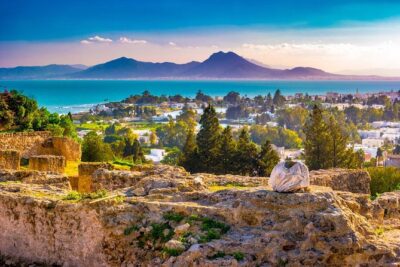
Carthage, Bardo Museum, Sidi Bou Said & Medina Group Tour
Read our review →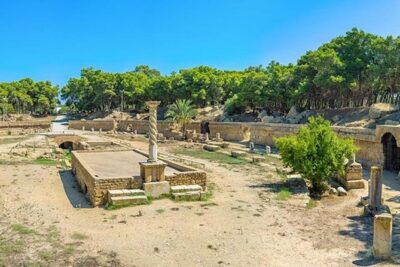
From Hammamet or Tunis: Carthage, Bardo, Sidi Bou said and Medina
Read our review →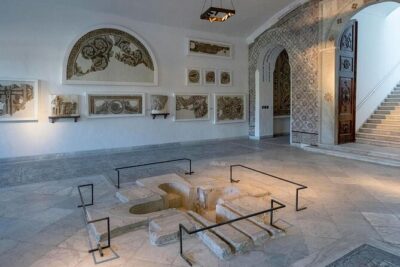
Private Day Tour Tunis Medina Carthage Sidi Bou Said Bardo Museum
Read our review →Private tour: Medina,Carthage ,Sidi Bou Said, Bardo Museum+lunch
Read our review →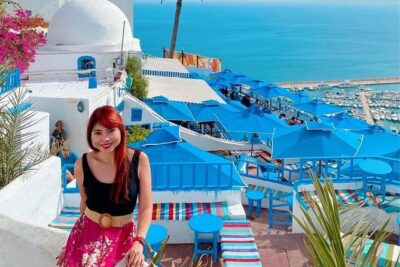
Private Tour Sidi bou Said Medina Carthage & bardo Museum
Read our review →Browse the lists this tour appears in