
Reviewed · SIDI BOU SAID & CARTHAGE TOURS
Carthage Discovery Half-Day Tour with Licensed Guide
Carthage rewards curious visitors. This four-hour private tour makes the ancient city easier to understand, with a licensed guide, hotel pickup, and entrance fees included. I especially like the chance to see several widely separated sites in one outing, and the private format lets the guide adjust explanations to your interests. The main consideration is the pace: two hours at the archaeological site, one hour at the Tophet, and just 30 minutes each at the museum and ports leaves little room to linger.
The tour also works well when your time in Tunisia is short. You get round-trip transport from Tunis or Hammamet in an air-conditioned private vehicle, plus a guide who can connect Phoenician, Punic, Roman, and later periods. The price of $94.90 per person is not the cheapest way to reach Carthage, but it covers transport, guiding, and admission, and group discounts may improve the value.
In This Review
- Key points to know before you book
- Why a half-day is enough to get acquainted with Carthage
- Exploring the archaeological site and Byrsa Hill
- Facing the questions at the Tophet
- Reading Carthage through its museum collection
- Seeing the Punic Ports that powered the city
- What the private guide adds to the day
- Is $94.90 a fair price for this Carthage tour?
- Who will get the most from this four-hour outing?
- Practical advice for a smoother visit
- Should you book the Carthage Discovery Half-Day Tour?
- FAQ
- How long does the Carthage Discovery Half-Day Tour last?
- Where does hotel pickup and drop-off take place?
- Is this a private tour?
- What transportation is provided?
- Are entrance fees included?
- Is lunch included?
- Can children join the tour?
- What happens if bad weather cancels the tour?
Key points to know before you book
- Private sightseeing from Tunis or Hammamet: Your group travels by private vehicle, with hotel pickup and drop-off included from those two areas.
- Four major Carthage stops: The route includes the main archaeological site, the Tophet, Carthage Museum, and Punic Ports.
- A guide-led history lesson: The guide explains Carthage from its Phoenician beginnings through Roman destruction and later occupation.
- Strong praise for guide service: Nouraddean, also called Nour in customer feedback, is singled out for clear historical explanations, flexibility, and help beyond the planned sightseeing.
- Admission is included: You do not need to buy separate entrance tickets for the archaeological site, Tophet, or museum.
- Plan for outdoor walking: The ancient sites are spread across open areas, and one customer specifically noted the walking and heat as useful things to consider.
Why a half-day is enough to get acquainted with Carthage
Carthage is not one compact ruin with a single entrance. Ancient remains are scattered around the modern coastal suburb, so getting from one area to another can take time. That is where this tour earns its keep. Instead of arranging separate transport between the sites, you move with a driver and guide who already know the sequence.
The excursion lasts about four hours, including the journey from your hotel. From Tunis, the ride to Carthage takes about 25 minutes. Along the way, you can see some of the area’s most exclusive villas, a useful reminder that this is still a desirable seaside district rather than an isolated archaeological park.
The private setup matters most for first-time visitors. You can ask questions as the ruins come into view, request more detail about military history or daily life, and adjust the pace to suit your group. One customer with flight delays was able to change the tour arrangements with the company, which suggests some practical flexibility, though changes are not guaranteed and should be arranged directly as early as possible.
A half-day will not give you time to inspect every stone. It will give you a strong overview of Carthage and a clear sense of why the city mattered. If you want a slow archaeological study, you may need more time than this tour allows.
More Sidi Bou Said and Carthage tours:
- Private tour: Medina,Carthage ,Sidi Bou Said, Bardo Museum+lunch
★ 5.0 · 230 reviews - Carthage, Bardo Museum, Sidi Bou Said and Medina Private Day Tour
★ 4.5 · 153 reviews - Guided Bike Tour of Carthage Archeological Site in Tunisia
★ 5.0 · 88 reviews
Exploring the archaeological site and Byrsa Hill
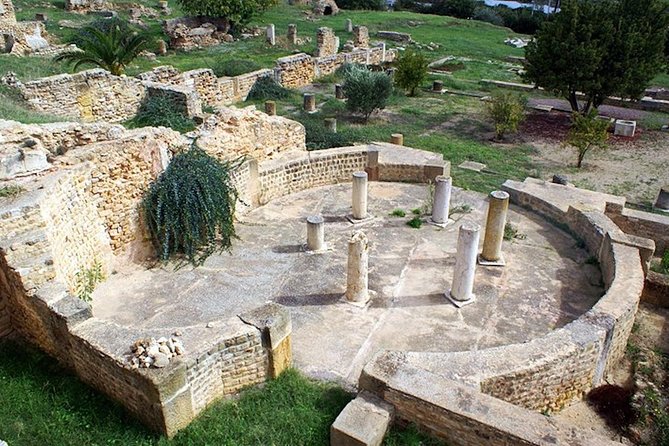
The first major stop is the Site Archeologique de Carthage, where you spend about two hours. This is the core of the outing and the place where the guide’s storytelling becomes especially useful.
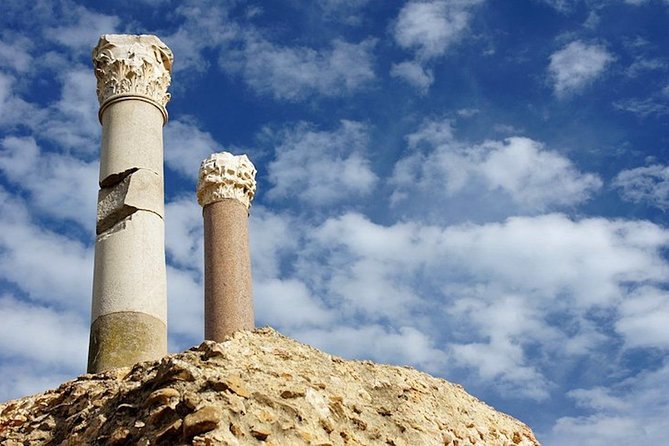
Carthage began as a Phoenician settlement and grew into a major power across the western Mediterranean. Rome destroyed the city in 146 BC, but the remains reveal a much more developed urban center than a casual glance might suggest. Excavations have uncovered five-story homes, sewage systems, city walls, villas, baths, theaters, and other public structures.
The walls once stretched about 21 miles, or 34 kilometers, around Byrsa Hill. You will not walk the entire circuit, of course, but hearing that figure changes how you read the scattered ruins. What can look like disconnected fragments begins to make sense as part of a large fortified city.
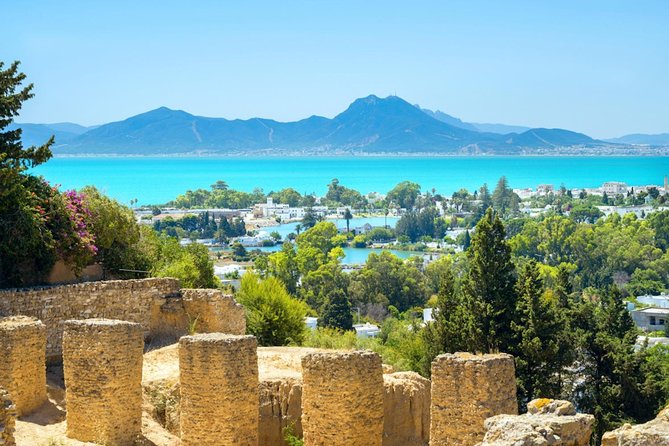
Byrsa Hill also gives you broad views toward the coast. The setting helps explain Carthage’s power. This was a city tied closely to shipping, trade, and naval defense, not simply a hilltop settlement. The guide can connect the higher ground to the ports and lower areas you see later.
The archaeological site includes remains of baths, theaters, and villas. Some of the most useful information here concerns ordinary infrastructure. Five-story houses and sewage systems point to a dense, organized city with considerable engineering skill. Those details make the site more meaningful than a procession of famous names and battle dates.
The drawback is physical comfort. Much of the experience takes place outdoors, and the walking can feel demanding in hot weather. Wear practical shoes, carry water, and keep in mind that the tour does not include lunch. The guide can help you understand what you are seeing, but the ruins still require standing and walking between areas.
Facing the questions at the Tophet
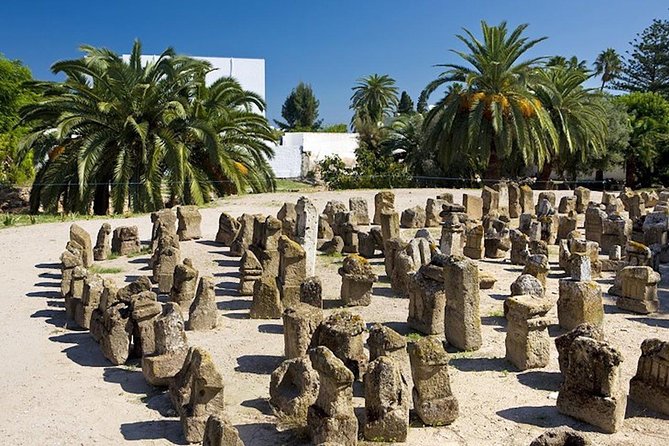
The Tophet receives about one hour, making it the second-longest stop. This ancient cemetery is one of the most difficult and debated places in Carthage.
The site is associated with ritual offerings involving children and animals, but the subject is not simple. Archaeologists and historians have long argued about how to interpret the remains and inscriptions found here. A good guide should explain the competing views without turning a serious subject into a sensational story.
This is an important reason to visit with a licensed guide. On your own, the Tophet can feel like a quiet area filled with stones and fragments. With context, you can consider the religious practices, social structures, and political pressures that shaped ancient Carthage.
The stop may not suit every child or every visitor. The subject matter can be upsetting, especially when presented without much distance. Children must be accompanied by an adult, and parents should decide in advance how much detail is appropriate for their family.
The Tophet also reinforces a larger point about Carthage. Much of what you see is incomplete, and some of the most important questions remain open. That uncertainty is part of the archaeological experience. You are not simply being handed a final answer. You are seeing a site where evidence still requires careful interpretation.
Reading Carthage through its museum collection
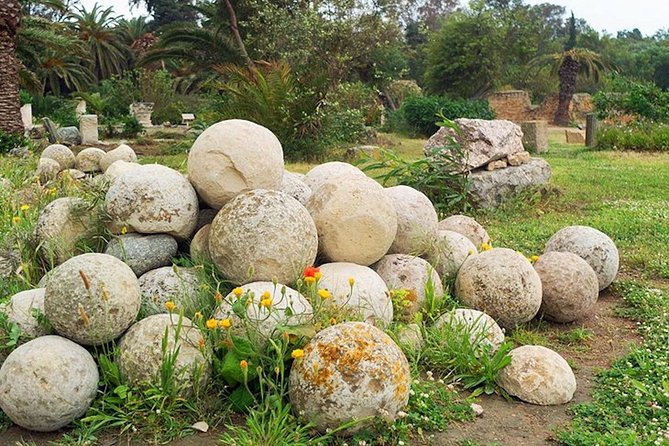
The Carthage Museum gets about 30 minutes. That is a short visit, but it adds useful objects and historical layers to the outdoor ruins.
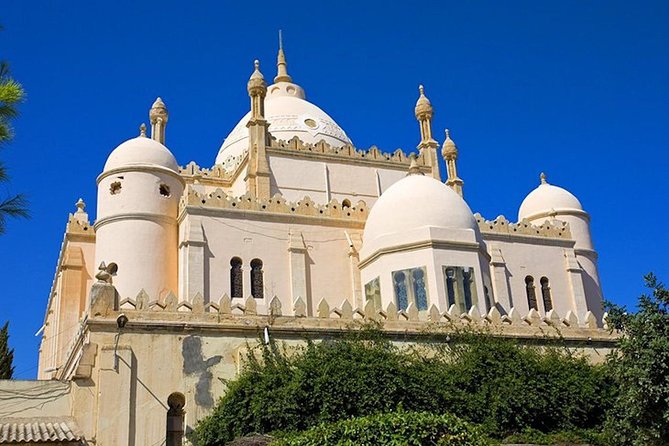
The museum is housed near the Saint-Louis Basilica, built at the end of the 19th century on the site of the ancient Carthage acropolis. Its collection covers several periods:
- Phoenician-Punic Carthage
- Roman-African Carthage
- The Arab-Muslim period
This range matters because Carthage did not have only one life. The city changed under different rulers and cultures, and the museum helps place the archaeological remains in that longer sequence. Objects can provide details that walls cannot, especially when you want to understand religion, trade, art, and daily customs.
Thirty minutes is enough for an introduction, but not enough for a careful museum visit. If you love artifacts and inscriptions, you may wish the schedule allowed more time here. The trade-off is that this excursion gives you four different parts of Carthage rather than concentrating on one collection.
The nearby basilica also adds a later historical layer to the stop. The building itself is not an ancient Carthaginian monument, but its position near the former acropolis shows how later communities reused and reinterpreted important ground.
More half-day trips:
- Half-Day Traditional Tunisian Cuisine Cooking Class in Tunis
★ 5.0 · 9 reviews - Half-Day Carthage, Sidi Bou Said Private Tour with Licensed Guide
★ 4.0 · 5 reviews - Half-day excursion from Sousse to the amphitheater of El Jem
★ 5.0 · 47 reviews - Half-day excursion the mountain oases from Tozeur
★ 4.5 · 39 reviews
Seeing the Punic Ports that powered the city
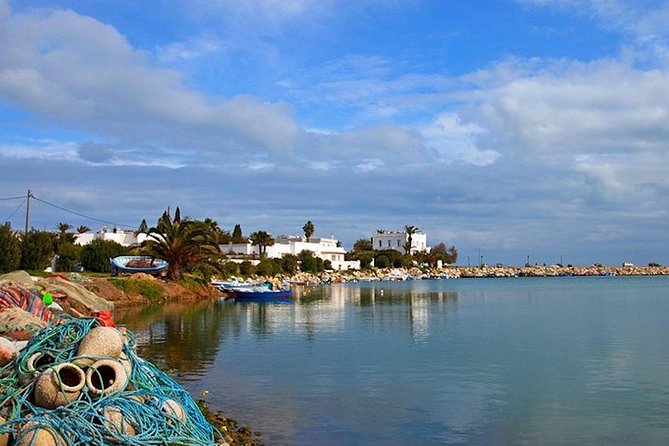
The final stop covers the Punic Ports and museum area, with about 30 minutes allocated. Admission to this part is listed as free.
The original ports were central to Carthage’s strength. Today, much of what remains is the shape of the harbor system, but that outline tells an impressive story. A narrow channel connected a southern commercial port with a northern circular naval port.
The design helped protect the military harbor from outside view. Carthage’s navy could see out toward the sea, while the naval base remained difficult for an approaching enemy to inspect. The military port reportedly held dry docks for about 220 vessels, with additional moorings around the quay.
The commercial port covered about seven hectares and was bordered by quays and warehouses. Those numbers help you picture a working port rather than a decorative waterfront. Ships, cargo, storage, and repairs all supported the city’s reach across the Mediterranean.
Half an hour is enough to understand the layout, especially with a guide pointing out the surviving contours. It is not enough for a long, quiet walk around every section. Still, ending at the ports gives the tour a useful sense of purpose. You see how trade and naval power supported the city before its defeat.
What the private guide adds to the day
The guide is the central reason to choose this tour instead of arranging a basic transfer to Carthage. The company provides a licensed guide, and the strongest praise focuses on historical explanation, kindness, and flexibility.
Nouraddean, often referred to as Nour, receives particular praise for making Tunisia’s past understandable and for adapting the tour to a group’s schedule and interests. Another customer described the guide as helpful with both history and Tunisian culture. That combination is valuable because Carthage makes more sense when you can connect ancient events with the country you are visiting today.
A private guide can also help you avoid a common problem at archaeological sites: seeing a famous ruin without knowing why it matters. You can ask about the Punic Wars, Roman rule, religious practices, architecture, or the later Arab-Muslim period. The guide can spend more time on the subjects your group actually cares about.
The driver also forms part of the experience. Feedback specifically praises courteous driving and attentive service. Since the route involves several separate areas, private transport saves energy and keeps the half-day schedule workable.
Do not expect the private format to remove every practical challenge. The tour still involves outdoor walking and warm conditions. It also follows a fairly full schedule, so tell the guide early if you need a slower pace or more time at one particular stop.
Is $94.90 a fair price for this Carthage tour?
At $94.90 per person, the tour is best judged as a private sightseeing service rather than a simple entrance ticket. The cost includes hotel pickup and drop-off from Tunis or Hammamet, a private vehicle, a licensed guide, and entrance fees.
That package can be good value for a small group that wants comfort and historical explanation. You avoid arranging taxis between scattered sites, and you do not need to work out which tickets to buy. Group discounts may make the per-person cost more attractive for larger parties.
The value is weaker if you only want a brief look at the ruins and are happy to organize your own transport. In that case, the private guide and included transfers account for much of what you are paying for. The four-hour format is also efficient rather than leisurely.
The tour is booked an average of 26 days ahead, so reserving early is sensible if your dates are fixed. Confirmation is provided at booking. Pickup is offered from Tunis and Hammamet, but hotel transfers from other cities are not included.
Free cancellation is available up to 24 hours before the start time for a full refund. Changes or cancellations within 24 hours are not accepted for a refund. The tour requires good weather, and if poor conditions cause cancellation, you are offered another date or a full refund.
Who will get the most from this four-hour outing?
I would recommend this tour to you if you have limited time in Tunis, want to see more than one Carthage site, and prefer having the historical setting explained as you go. It is also a sensible choice for families, couples, and small groups that value a private vehicle over public transport.
It suits visitors staying in Hammamet who want a structured day trip without piecing together the route themselves. The private arrangement is also useful if your schedule is tight or if you want to ask many questions without sharing the guide with strangers.
History fans should enjoy the range of subjects, from Phoenician beginnings and Roman conquest to port engineering and later periods. The tour is less suitable if you want a long museum visit, a relaxed picnic, or a full day at one archaeological area.
Children can participate, but an adult must accompany them. Parents should also consider the Tophet’s serious subject matter and the amount of outdoor walking. Service animals are allowed, and the tour is near public transportation, though the package itself includes private transport.
Practical advice for a smoother visit
Wear walking shoes and prepare for time outside. The tour includes several archaeological areas, and one customer specifically pointed out the combination of walking and heat as something to keep in mind.
Bring water and plan to eat before or after the outing, since lunch is not included. The four-hour schedule leaves little space for a meal during the tour.
Keep your group’s priorities in mind. If the ports fascinate you, ask for more explanation there. If you care most about art and artifacts, use the museum stop efficiently and tell the guide you want context for the collection.
Finally, allow the guide to shape the order and detail when possible. The most praised part of this experience is the human service: a guide who can explain the past clearly, respond to questions, and adjust to your needs.
Should you book the Carthage Discovery Half-Day Tour?
Book it if you want a well-organized private introduction to Carthage without managing transport, tickets, and site connections yourself. The combination of Byrsa Hill, the Tophet, museum, and Punic Ports gives you a broad picture in only four hours, while the guide adds the context that scattered ruins often lack.
Skip it if you prefer exploring at your own pace or want to spend most of a day studying one site. For everyone else, especially those based in Tunis or Hammamet, $94.90 is a reasonable price for private transfers, admission, and a guide who can turn a short visit into a clear lesson in Tunisia’s past.
FAQ
How long does the Carthage Discovery Half-Day Tour last?
The tour lasts approximately four hours.
Where does hotel pickup and drop-off take place?
Pickup and drop-off are included from hotels in Tunis or Hammamet.
Is this a private tour?
Yes. Only your group participates in the activity.
What transportation is provided?
Transport is provided in a private, air-conditioned vehicle.
Are entrance fees included?
Yes. Entrance fees for the archaeological site, Tophet, and Carthage Museum are included. Admission to the Punic Ports and Museum stop is listed as free.
Is lunch included?
No. Lunch is not included in the tour price.
Can children join the tour?
Yes, most travelers can participate, but children must be accompanied by an adult.
What happens if bad weather cancels the tour?
If poor weather causes cancellation, you can choose a different date or receive a full refund. Free cancellation for any other reason is available up to 24 hours before the start time.
Just added around Tunis
- Explore Tunisia in Depth:The Private Grand Tour in 8 Days★ 5.0 · 3 reviews
- 3-Day South of Tunisia Guided Tour from Tunis★ 4.0 · 3 reviews
- Private Tour Bardo Museum, Carthage, Sidi Bou Said and Medina★ 4.5 · 3 reviews
- Private Group Day Tour Tunis Medina Carthage Sidi Bou Said★ 4.5 · 3 reviews
- Bardo Museum- The ruins of Carthage- Village of Sidi Bou Said★ 5.0 · 4 reviews
- 5 Days Tunisia Discovery Private Tour★ 5.0 · 4 reviews
- Tunis Carthage Private Arrival Airport Transfer to Tunis★ 5.0 · 4 reviews
- 4-Day Private Tour: Sahara and Djerba Island from Tunis and Hammamet★ 5.0 · 4 reviews
Sidi Bou Said & Carthage Tours, compared.
VIP Tour: Tunis Medina/Bardo, Sidi Bou Said, Carthage |PICKUP ALL
Read our review →
Private tour: Medina,Carthage ,Sidi Bou Said, Bardo Museum+lunch
Read our review →
Carthage, Bardo Museum, Sidi Bou Said and Medina Private Day Tour
Read our review →
Guided Bike Tour of Carthage Archeological Site in Tunisia
Read our review →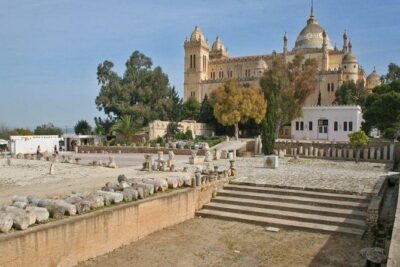
1 day excursion Tunis Sidi Bousaid Carthage departure from Sousse
Read our review →
Archaelogical Site Of Carthage + Picturesque Village Of Sidi Bou Said
Read our review →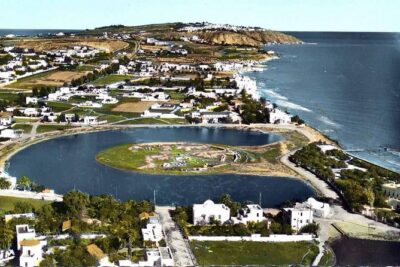
Tunis, Sidi Bousaid and Carthage day trip from Hammamet
Read our review →Browse the lists this tour appears in