
Reviewed · SIDI BOU SAID & CARTHAGE TOURS
Guided Bike Tour of Carthage Archeological Site in Tunisia
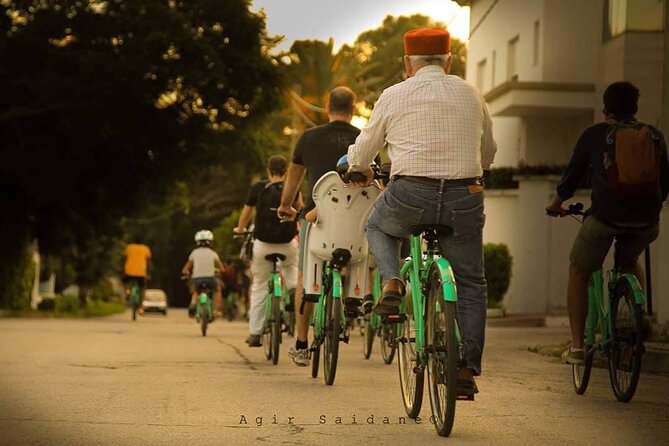
Ancient Carthage feels better on two wheels. This three-hour private bike tour links the city’s scattered archaeological sites with a local guide, so you spend less time figuring out roads and more time understanding what you see. I especially like the private format, which gives your group room to ask questions, and the chance to visit major sites such as the Punic ports, Antoninus Baths, and Byrsa Hill in one outing.
I also like the option to upgrade to an electric bicycle, a smart choice in Tunisian heat and on the hills around Carthage. The main consideration is physical: even with a bike, you will need moderate fitness, and the tour requires riding near cars and pedestrians. Bring your passport, and remember that hotel pickup is not included.
- A private three-hour route connects five major Carthage sites, including the Tophet, Punic ports, Roman baths, theater, and Byrsa Hill.
- Electric bikes can make the ride easier, especially in the heat and on uphill sections.
- Your guide handles the historical thread, linking the old Punic city with its later Roman transformation.
- Antoninus Baths receives the most time, with about an hour to explore the large seaside ruins.
- The Carthage museum on Byrsa Hill is closed, and Saint Louis Cathedral is viewed from outside.
- The tour begins and ends at 9 Rue Hannibal, with no hotel transportation included.
In This Review
- Why Seeing Carthage by Bicycle Makes Sense
- Starting at the Tophet, 30 Minutes in Punic Carthage
- Punic Ports and the Mediterranean Story
- One Hour Among the Baths of Antoninus
- The Roman Theatre in 20 Minutes
- Byrsa Hill, Saint Louis Cathedral, and the Missing Museum
- What the Guide Adds to the Ride
- Electric Bike, Heat, and Road Conditions
- Price, Timing, and Overall Value
- Who Should Book This Carthage Tour?
- Should You Book the Bike Tour of Carthage?
- FAQ
- How long does the guided bike tour of Carthage last?
- What sites are included?
- Is the Carthage museum open during the tour?
- Is Saint Louis Cathedral visited inside?
- Are bicycles and helmets provided?
- Does the tour include hotel pickup and drop-off?
- Do I need a passport?
- What happens if bad weather cancels the tour?
Why Seeing Carthage by Bicycle Makes Sense
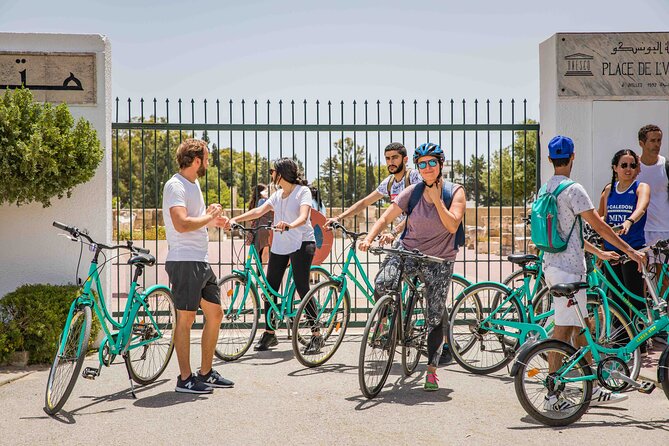
Carthage is not one compact ruin. Its important remains are spread across a broad archaeological area, mixed into the modern town and its streets. A bike lets you move between these places without treating every stop as an isolated monument.
I like that the route combines Punic and Roman sites. Carthage began as a major Phoenician city, later became Rome’s North African capital, and then developed a layered identity that you can see in the remains. A guide helps connect those periods instead of leaving you with a collection of broken walls and unfamiliar names.
The private setup matters here. Your group is the only group on the activity, so you can ask for more explanation at the sites that catch your attention. Guides named Kareem, Jibrane, and Chedi have been praised for clear explanations, patience, and a strong command of Carthage’s past.
The bicycle also adds a small local lesson. One participant found it useful to ride with a local and learn how bikes, cars, and pedestrians share the roads. That does not make the outing a formal cycling lesson, but it gives you a more direct feel for everyday movement around Carthage.
Starting at the Tophet, 30 Minutes in Punic Carthage
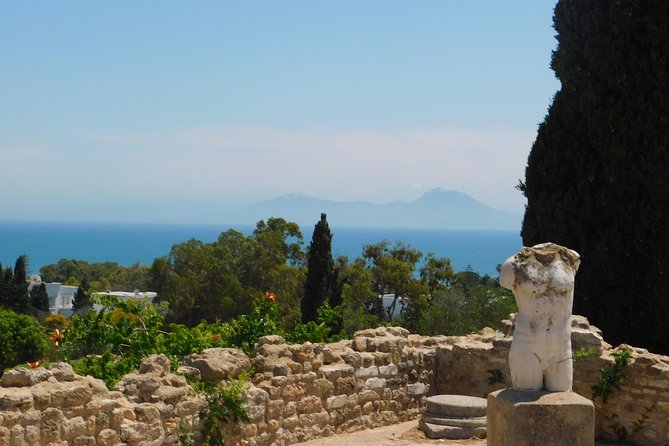
The first stop is the Tophet de Carthage, a sanctuary linked with Punic culture. You have about 30 minutes here, with admission included.
This is an important opening because it introduces Carthage before the Roman period. Your guide can explain the religious setting and the role of the sanctuary, giving you a frame for understanding the city as a Phoenician and Punic power rather than simply an old Roman site.
The Tophet is also a place where explanation matters more than visual scale. You might find the remains less immediately dramatic than the baths, but the site carries major cultural meaning. Stay close to the guide and ask questions, since the historical context is what turns the stop into something memorable.
The short time allowance keeps the overall route moving. If you want long, independent examination of every archaeological detail, this tour may feel guided at a brisk pace. The private format helps, since you can ask to pause for clarification without trying to speak over a large group.
More Sidi Bou Said and Carthage tours:
- Private tour: Medina,Carthage ,Sidi Bou Said, Bardo Museum+lunch
★ 5.0 · 230 reviews - Carthage, Bardo Museum, Sidi Bou Said and Medina Private Day Tour
★ 4.5 · 153 reviews - Group Guided Bike Tour of Carthage Archeological Site in Tunisia
★ 5.0 · 57 reviews
Punic Ports and the Mediterranean Story
Next comes the Punic Ports, with around 30 minutes to see the remains and visit the museum area included in the stop.
These ports help explain how Carthage functioned as a major Mediterranean power. The harbor was not just a scenic waterfront. It supported trade, ships, military activity, and the city’s connection with the wider Mediterranean world.
I like this stop because it gives practical meaning to Carthage’s importance. Instead of picturing an inland ruin, you begin to see a city built around movement, commerce, and naval strength. Your guide can make the port easier to read, since the surviving remains may not immediately reveal how the original harbor worked.
The half-hour visit is enough for an introduction, but not a slow museum session. If you have a special interest in ancient seafaring, you may want to note the port’s details and return later with more time. On this tour, the port works best as part of the larger story.
One Hour Among the Baths of Antoninus
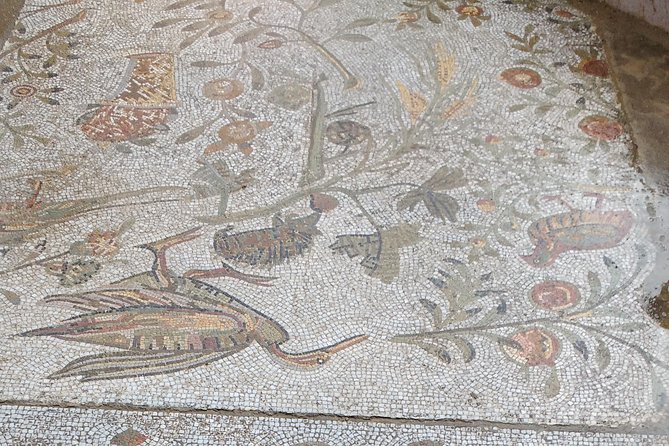
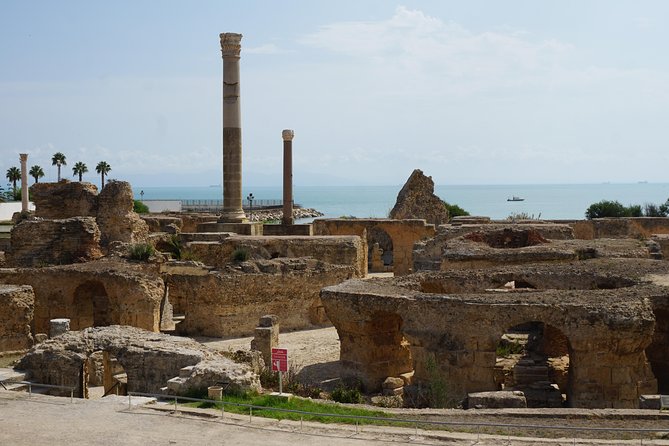
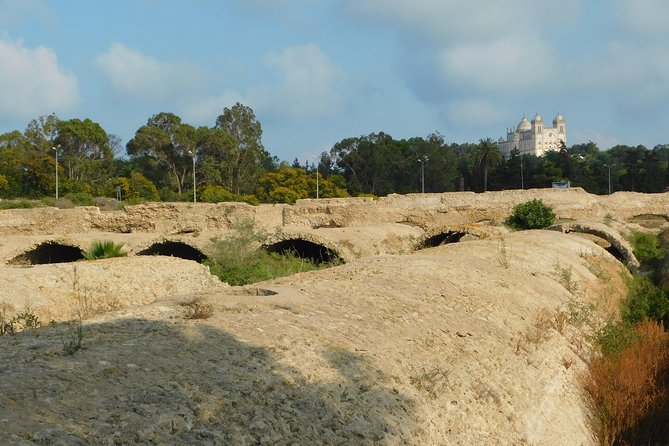
The longest stop is the Baths of Antoninus, where you spend about an hour. The ruins face the sea and once formed one of the largest bath complexes in the Roman Empire.
This is likely to be the visual high point of the ride. The scale of the site helps you understand Roman public life, engineering, and the role of baths as social spaces. Even in a ruined state, the surviving structures show that this was far more than a place to wash.
Take your time here. The hour gives you space to listen, walk around, and look from different angles. The seaside setting adds to the experience, but the main attraction is the size and layout of the archaeological remains.
There is a practical reason the electric bike option earns its price here. The route includes several sites and some hills, and the heat can make ordinary cycling tiring. An electric bicycle will not remove the need to pedal, but it can help you arrive at the major stops with enough energy to pay attention.
The baths are also a good test of what kind of tour you want. If you enjoy detailed historical explanation and seeing large ruins in person, the hour feels useful. If you prefer quick photo stops, this may be the point where the tour feels slower than expected.
The Roman Theatre in 20 Minutes
The Roman Theatre of Carthage receives about 20 minutes. It is described as a beautiful site, and it adds a different kind of Roman monument to the route.
After the baths, the theater shifts your attention from public bathing to performance and civic life. A theater can be easier to picture than a collapsed complex because its purpose is familiar: seating, performance space, and an audience gathered together.
Twenty minutes is a short visit, so expect an overview rather than an extended exploration. Your guide’s explanation will help you make sense of the remains quickly. I would use this stop to look at the shape of the venue, listen for details about its Roman use, and avoid expecting a full theater visit.
The compact timing also keeps the bicycle tour from becoming an all-day commitment. Three hours is long enough to see the core sites but short enough to fit into a morning or afternoon in Tunis.
More bike rides:
- Self guided bike tour of Carthage archeological site
★ 4.5 · 10 reviews - Djerba Island: 1.5-Hour Quad Biking Adventure
★ 4.5 · 17 reviews - Quad Biking (ATV) in Douz Tunisia Sahara Desert
★ 5.0 · 7 reviews
Byrsa Hill, Saint Louis Cathedral, and the Missing Museum
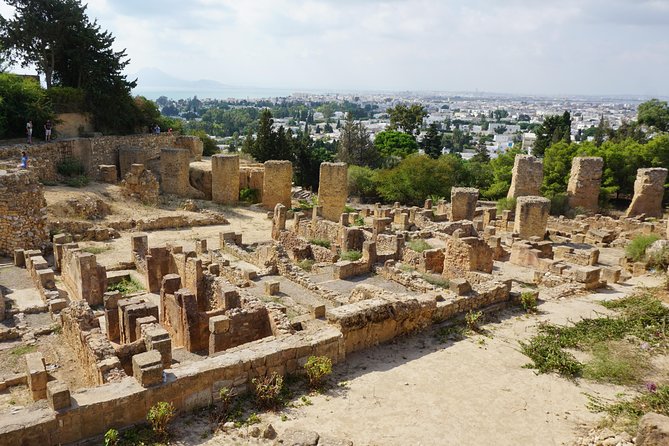
The final stop is Byrsa Hill, with about 15 minutes devoted to the area. Here, you learn about Punic architecture and how the Romans later transformed the hill.
Byrsa Hill is a useful final viewpoint because it brings together several stages of Carthage’s story. The stop is not only about a building. It is about how political power changed the purpose and appearance of the hill over time.
You will see Saint Louis Cathedral from outside, but the tour does not enter. The Carthage museum on the hill is currently closed, so you should not book this experience expecting an indoor museum visit or a long look at cathedral interiors.
Fifteen minutes is enough for a brief explanation and exterior viewing. It is not enough for a major museum stop, and the closure limits what you can see on Byrsa Hill. Still, the hill works well as a final chapter because it brings the route back to the city’s changing religious and political identity.
What the Guide Adds to the Ride
The guide is the main reason to choose this tour over simply renting a bicycle. The archaeological area contains many remains, but without context, it can be hard to tell which wall mattered, how a site was used, or why Punic and Roman layers appear together.
Kareem is praised for giving plenty of information and allowing time at each site rather than rushing from one stop to the next. Jibrane is described as making the route feel immersive through explanations of the city and its archaeological remains. Chedi has been praised for complete explanations in French.
The comments about the guides point to a useful strength: the tour is not just transport between ruins. The best guides here appear to adjust their pace and answer questions. Since the activity is private, you can make good use of that flexibility.
You should still keep your expectations realistic. A three-hour tour cannot cover every corner of Carthage or explain every period in equal detail. It gives you a guided foundation, after which you may want to revisit a favorite site on your own.
Electric Bike, Heat, and Road Conditions
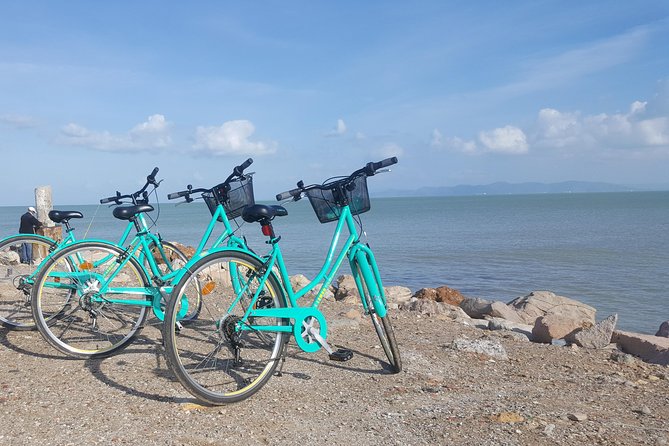
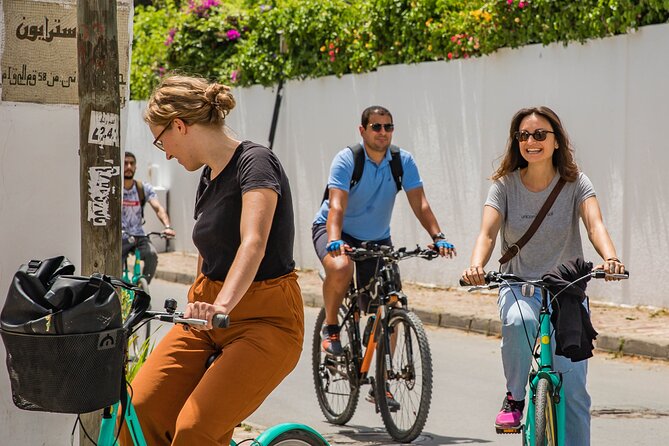
An electric bicycle is an upgrade, not the standard equipment for every booking. If you are comfortable cycling and visit during mild weather, a regular bicycle may be enough. If heat, hills, or moderate exertion concern you, I would give the electric option serious thought.
The tour includes a bicycle and helmet. You do not need to arrange basic cycling equipment separately, which keeps the preparation simple. You should still wear practical clothes and bring anything you normally need for a few hours outdoors, though the supplied information does not specify additional equipment.
The route includes roads where bikes, cars, and pedestrians share space. One useful benefit of having a local guide is learning how to move through that setting. Even so, you should be comfortable on a bicycle and able to maintain awareness around traffic.
Good weather is required. If poor weather cancels the activity, you can choose another date or receive a full refund. That policy is helpful, but it also means you should avoid placing the tour immediately before a fixed departure if your schedule has no flexibility.
Price, Timing, and Overall Value
At $91.89 per person, this is not the cheapest way to see Carthage. The price includes a professional guide, bicycle, helmet, taxes, fees, and handling charges, but not hotel pickup or drop-off.
I think the value depends on how much structure you want. A private guide, included bicycle, and five-stop route make the cost easier to justify for couples, families, or small groups who want personal attention. Group discounts may improve the price for larger parties.
The tour also saves planning time. You do not need to work out how to connect the Tophet, ports, baths, theater, and Byrsa Hill. That matters in Carthage, where the archaeological remains cover a wide area and the sites do not function like rooms in one museum.
The average booking point is 29 days ahead, which suggests you should reserve early if your Tunisia schedule is fixed. Confirmation arrives at booking, and free cancellation is available until 24 hours before the start time. Changes or cancellations inside that window do not receive a refund.
The meeting point is 9 Rue Hannibal at the Carthage archaeological site. Since hotel pickup is not offered, plan your own way there and back. The activity ends at the same meeting point, and the area is near public transportation.
Who Should Book This Carthage Tour?
I would choose this for someone who wants a guided introduction to Carthage without spending a full day on foot. It suits visitors who like history but also want movement, outdoor time, and a little local road experience.
It is especially useful for:
- First-time visitors to Carthage who want the main sites linked into one story
- Small private groups that value the chance to ask questions
- People who find long walking tours tiring
- Cyclists who are comfortable riding near traffic and pedestrians
- Visitors who want Punic and Roman sites in the same outing
- Anyone considering an electric bike for hills and heat
I would hesitate if your main goal is the Carthage museum, since it is closed. I would also look elsewhere if you want hotel transportation, indoor attractions, or a slow archaeological study session at every stop.
The experience has a 4.9 rating from 88 published ratings and a 98 percent recommendation rate. Those figures fit the tour’s strongest qualities: the guides receive repeated praise for clear, engaging explanations, and the electric bikes make a demanding route easier.
Should You Book the Bike Tour of Carthage?
Book it if you want to see the major Carthage sites efficiently and understand what connects them. The private guide, electric bike option, and generous hour at the Baths of Antoninus make this more useful than a simple sightseeing ride.
Before booking, check three things: you can reach the meeting point independently, you are comfortable with moderate cycling, and the closed Carthage museum will not disappoint you. Bring your passport, choose the electric bicycle if heat or hills are a concern, and leave room in your schedule in case weather affects the date.
For a short, active introduction to Punic and Roman Carthage, this is a strong choice. It gives you the broad picture while still leaving enough time to decide which ancient site deserves a longer return visit.
FAQ
How long does the guided bike tour of Carthage last?
The tour lasts approximately three hours.
What sites are included?
The route includes the Tophet de Carthage, Punic Ports and Museum, Baths of Antoninus, Roman Theatre of Carthage, Byrsa Hill, and an exterior view of Saint Louis Cathedral.
Is the Carthage museum open during the tour?
No. The Carthage museum on Byrsa Hill is closed.
Is Saint Louis Cathedral visited inside?
No. You will see Saint Louis Cathedral from outside, but entry is not included.
Are bicycles and helmets provided?
Yes. Bicycle use and a helmet are included. An electric bicycle is available as an upgrade.
Does the tour include hotel pickup and drop-off?
No. Hotel pickup and drop-off are not included. The tour starts and ends at 9 Rue Hannibal, Site archéologique de Carthage.
Do I need a passport?
Yes. A current valid passport is required on the day of the tour.
What happens if bad weather cancels the tour?
If poor weather causes cancellation, you will be offered another date or a full refund. You can also cancel for a full refund if you do so at least 24 hours before the start time.
Just added around Tunis
- Explore Tunisia in Depth:The Private Grand Tour in 8 Days★ 5.0 · 3 reviews
- 3-Day South of Tunisia Guided Tour from Tunis★ 4.0 · 3 reviews
- Private Tour Bardo Museum, Carthage, Sidi Bou Said and Medina★ 4.5 · 3 reviews
- Private Group Day Tour Tunis Medina Carthage Sidi Bou Said★ 4.5 · 3 reviews
- Bardo Museum- The ruins of Carthage- Village of Sidi Bou Said★ 5.0 · 4 reviews
- 5 Days Tunisia Discovery Private Tour★ 5.0 · 4 reviews
- Tunis Carthage Private Arrival Airport Transfer to Tunis★ 5.0 · 4 reviews
- 4-Day Private Tour: Sahara and Djerba Island from Tunis and Hammamet★ 5.0 · 4 reviews
Sidi Bou Said & Carthage Tours, compared.
VIP Tour: Tunis Medina/Bardo, Sidi Bou Said, Carthage |PICKUP ALL
Read our review →
Private tour: Medina,Carthage ,Sidi Bou Said, Bardo Museum+lunch
Read our review →
Carthage, Bardo Museum, Sidi Bou Said and Medina Private Day Tour
Read our review →
1 day excursion Tunis Sidi Bousaid Carthage departure from Sousse
Read our review →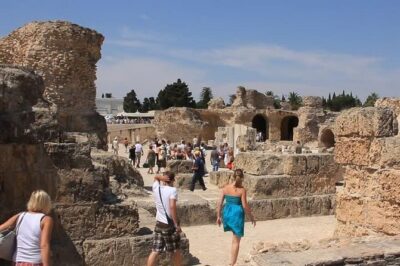
Archaelogical Site Of Carthage + Picturesque Village Of Sidi Bou Said
Read our review →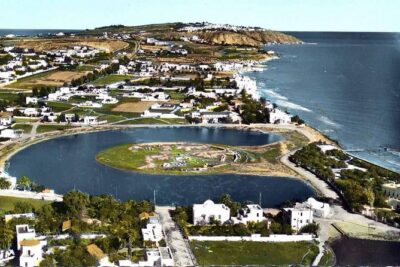
Tunis, Sidi Bousaid and Carthage day trip from Hammamet
Read our review →
Browse the lists this tour appears in