
Reviewed · EL JEM AMPHITHEATRE TOURS
Colosseum of El Jem and Fatimid Medina Mahdia Tour
Roman stone meets sea air here. This 8-hour private tour links Mahdia’s Fatimid and Ottoman monuments with the enormous Roman amphitheater at El Jem, giving you two very different views of Tunisia in one day. I like the strong mix of history and local character, especially the walk through Mahdia’s old town and the chance to see the Skifa El Kahla gate, an unusual surviving piece of the old defenses. I also like having private transport in an air-conditioned vehicle, with WiFi, taxes, and entrance fees covered.
The main concern is site access. Two places were reportedly closed on one outing, and the guide was said to know little about the area and to give incorrect information about another closed site. That does not make the itinerary a poor choice, but you should confirm opening conditions before setting out and keep expectations flexible.
- Mahdia’s Skifa El Kahla is a huge fortified gate dating to the tenth century.
- The old town sits on a narrow peninsula, with sea views, beaches, fishermen, and traditional silk weaving.
- Borj El Kebir gives you Ottoman military architecture on the site of an older Fatimid palace.
- The Great Fatimid Mosque was built between 909 and 934 and has no minaret.
- El Jem’s amphitheater is a UNESCO World Heritage Site and the tour’s grandest stop.
- Private transport and included fees make the $152.69 price easier to justify, especially for a small group.
In This Review
- Why Mahdia Makes a Good First Half
- Passing Through Skifa El Kahla
- Reading Mahdia’s Past at the Museum
- Walking Mahdia’s Narrow Peninsula
- The Ottoman Walls of Borj El Kebir
- The Unusual Great Fatimid Mosque
- Arriving at El Jem’s Roman Amphitheater
- What the $152.69 Price Really Covers
- Timing, Comfort, and Practical Limits
- Who Will Get the Most From This Day?
- Should You Book the Mahdia and El Jem Tour?
- FAQ
- How long does the tour last?
- What time does the tour start?
- Is pickup available?
- Is this a private tour?
- What transportation is provided?
- Are entrance fees included?
- Is lunch included?
- Does the tour visit a beach?
- Is the El Jem mosaic museum included?
- What is the cancellation policy?
Why Mahdia Makes a Good First Half
Mahdia is not simply a collection of monuments. Its setting helps explain its character. The old city occupies a thin peninsula, built close to the rock and surrounded by sapphire-colored water. Its past reaches from Libyco-Punic and Roman times through Byzantine and Islamic rule, while its present-day identity remains tied to fishing, beaches, and silk weaving.
That combination gives the first half of the day a pleasant rhythm. You move from a defensive gate to a museum, then through the old town and on to a fortress and mosque. The stops are close enough in spirit to feel connected, but each one tells a different part of Mahdia’s story.
The tour begins at 8:00 am. An early start matters because the schedule includes several sites and the drive to El Jem later in the day. Pickup is offered, but the exact pickup arrangement is not specified, so I would confirm the meeting point and pickup area when booking.
Passing Through Skifa El Kahla
The Skifa El Kahla is one of Mahdia’s most memorable first sights. This huge gate once controlled access to the historic center and served as the main tower in the second line of defense. Its origins reach back to the tenth century, though the present rampart system was rebuilt by the Turks at the end of the sixteenth century.
You have about 25 minutes here, with no admission fee. That is enough time to look closely at the gate, walk through its passage, and get your bearings in the old citadel. Do not expect a long guided visit. This is a compact stop, but it gives the old town a clear sense of place.
The Skifa is especially useful for understanding Mahdia as a fortified capital rather than just a seaside town. Its narrow access and heavy defensive role make the medina feel connected to its political past. I would bring a phone or camera, since the gate is one of the day’s best architectural photo stops.
More Medina & Souk Tours in Tunis
- Private tour: Medina,Carthage ,Sidi Bou Said, Bardo Museum+lunch
★ 5.0 · 230 reviews - Carthage, Bardo Museum, Sidi Bou Said and Medina Private Day Tour
★ 4.5 · 153 reviews - Guided tour in the UNESCO world heritage Medina of Tunis
★ 5.0 · 68 reviews
Reading Mahdia’s Past at the Museum
The Mahdia Museum occupies renovated old town hall buildings at the entrance to the medina. The visit lasts about 40 minutes, and admission is included. That makes it one of the more useful stops for putting the city’s monuments into context.
On the ground floor, you see objects from Libyco-Punic and Roman-African antiquity. The upper part covers Byzantine and Islamic material. One unusual highlight is represented by two marble columns from a Roman wreck off Mahdia. The ship carried war booty, and much of its cargo was recovered in the 1940s. The columns still show damage from mollusks, a small detail that connects the museum objects to their time underwater.
This is not a large national museum, so the visit should be viewed as a focused introduction rather than a full survey of Tunisian archaeology. I like that it covers several periods without taking too much time from the town itself. If your guide explains the objects well, the museum can make the later fortress and mosque visits more meaningful.
That qualification matters. The quality of interpretation may vary, and one reported outing raised concerns about a guide’s local knowledge. I would ask for clear explanations and specific answers rather than assume every historical detail will be supplied automatically.
Walking Mahdia’s Narrow Peninsula
The old town receives about an hour, with no separate admission charge. This is where the tour feels least like a checklist. Mahdia’s character comes from its setting and everyday life as much as from its monuments.
You can expect streets shaped by the peninsula, sea views, and glimpses of the town’s traditional working identity. The city is associated with fishermen and silk weavers, and its beaches are known for white sand and clear turquoise water. The overview also calls for photo stops by the coast, although the itinerary does not give a separate beach visit or a fixed amount of beach time.
I would use this hour to slow down. Look for the relationship between the old buildings, the water, and the narrow strip of land. If you want a swim or a long beach break, this may not be the right tour, since the day is built around monuments and the drive to El Jem. If you mainly want coastal photographs and a short taste of Mahdia, the stop should fit well.
Lunch is not included. Seafood and regional food are part of the area’s appeal, but the precise lunch restaurant, meal price, and timing are not specified. Ask whether lunch is planned during the day and budget separately.
The Ottoman Walls of Borj El Kebir
Borj El Kebir, also called the Kasbah, is a compact but rewarding fortress visit. It was built at the end of the sixteenth century on the site of an older Fatimid palace and is considered one of the finest examples of Ottoman military architecture in Tunisia.
The fortress follows a quadrangular plan with later corner bastions. Its thick walls originally had a single entrance. A second access point was added in the nineteenth century after the building was reused as a prison. Inside, a vaulted and bent passage leads into a courtyard surrounded by vaulted rooms. An older oratory survives at the southeast corner, incorporated into the fortress.
The visit lasts around 30 minutes, with admission included. That is enough to appreciate the layout, but not enough for a slow architectural study. I would pay attention to how the entrance controls movement. The bent passage is not just decorative. It is part of the building’s defensive logic.
Borj El Kebir also adds variety after the museum and old town. You are no longer looking at a gate or civic collection. You are inside a military structure shaped by Ottoman power and later practical use.
More El Jem visits:
- Private Tour to Kairouan, El Jem & Monastir from Tunis_hammamet
★ 5.0 · 301 reviews - Daytrip to Kairouan and El Jem Colosseum
★ 4.5 · 55 reviews - Kairouan and El Jem Private Day Tour
★ 4.5 · 38 reviews - Private Day Tour , Kairouan & Amphitheatre of el Jem From Tunis /Hammamet/Sousse
★ 4.5 · 8 reviews
The Unusual Great Fatimid Mosque
The Great Fatimid Mosque was built by Obeid Allah el Mehdi between 909 and 934. It is identified as the first Fatimid mosque, and its design has one detail that catches attention immediately: there is no minaret. The call to prayer came from one of two towers.
The building was changed during the Spanish occupation, when it became a sanctuary. Only its northern section dates from the tenth century. Later restoration work, begun under President Bourguiba in 1964, followed the original plan and included construction on land reclaimed from the sea.
You have about 25 minutes here. That makes this a brief architectural stop, not a long religious or historical study. Still, the mosque is valuable because it links Mahdia directly to the Fatimid caliphs, for whom the city served as the first capital in the tenth century.
Access conditions may change, and reported closures are the biggest practical warning attached to this itinerary. Confirm that the mosque and other planned sites are open before departure. If one is closed, ask whether the guide can explain the exterior and provide useful historical context rather than simply moving on.
Arriving at El Jem’s Roman Amphitheater
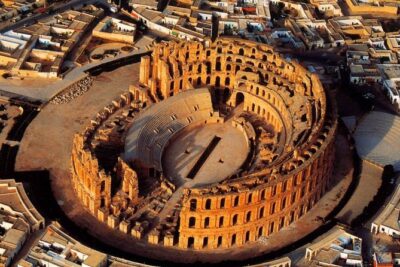
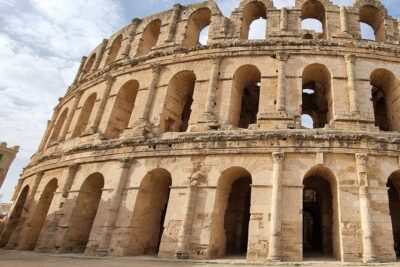
The El Jem amphitheater is the day’s largest visual payoff. You have about an hour inside the UNESCO World Heritage Site, with admission included. Its massive walls rise from the surrounding town and give you a strong sense of Roman scale before you even begin looking at details.
This is the place where the schedule finally opens up. Walk through the arena, study the surviving stonework, and picture the crowds and gladiatorial spectacles that once filled the seating area. The structure is remarkably preserved, and its size makes it easy to understand why El Jem is one of Tunisia’s signature ancient sites.
The word colosseum can make visitors expect Rome, but El Jem has its own force. It is not merely a smaller copy of a famous monument. Here, the amphitheater dominates a modern Tunisian town, making the contrast between ancient engineering and present-day life especially striking.
The itinerary gives one hour, which is a reasonable first visit. I would not expect every corner to receive detailed attention in that time. If ancient architecture is your main interest, you may wish the tour allowed longer. If you want a strong introduction without spending a full day at the site, the hour should be productive.
The overview also refers to a mosaic museum connected with ancient Thysdrus, the Roman name associated with El Jem. However, the detailed stop list names the amphitheater but does not assign a separate visit or admission time to the mosaic museum. Confirm this point before booking if the museum is important to you.
What the $152.69 Price Really Covers
At $152.69 per person, this is not a low-cost sightseeing outing. Its value depends heavily on how many people share the private vehicle and how much you value convenience.
The price includes private transportation, an air-conditioned vehicle, WiFi on board, all fees and taxes, and the listed admissions. Pickup is offered, and group discounts may be available. You are paying to connect Mahdia and El Jem in one organized day rather than arrange transport, entrances, and timing yourself.
For a private group, the price can make sense. You avoid joining strangers, and the day can focus on your own group’s pace within the fixed eight-hour framework. For one or two people, it is a more serious expense, especially since lunch is extra and the tour has only a few written ratings with an overall score of 4.2 out of 5.
The fact that bookings are made an average of 97 days ahead suggests that you should not leave this until the last minute if your dates are fixed. It does not guarantee perfect site access or guiding, though. I would treat the long advance-booking pattern as a reason to check availability early, not as proof that every departure will be equally strong.
Timing, Comfort, and Practical Limits
Eight hours is a packed but workable length for Mahdia and El Jem. The 8:00 am start gives you the best chance of fitting in all six listed stops, but the day will not feel leisurely. Five Mahdia visits come before the amphitheater, and each has a short planned duration.
The air-conditioned vehicle is important in Tunisia, especially when moving between outdoor monuments. WiFi on board is a useful extra, though the tour does not specify its reliability or speed. Private transportation also avoids the stress of coordinating separate public connections between coastal Mahdia and inland El Jem.
Most people can participate, and service animals are allowed. The tour is near public transportation, but it also offers pickup. Since the exact physical demands of each site are not described, ask the provider about walking surfaces and access if that affects your decision.
Free cancellation is available up to 24 hours before the start time for a full refund. Changes or cancellations made less than 24 hours before departure are not accepted for a refund. The cutoff uses local Tunisian time.
Who Will Get the Most From This Day?
I would choose this tour if you want a private day built around major historic sites and do not want to plan transportation yourself. It suits people who enjoy moving through several periods, from Punic and Roman remains to Fatimid architecture and Ottoman defenses.
It is also a good fit for a group that wants the freedom of a private vehicle and the convenience of included entrance fees. Families and mixed-interest groups may appreciate the variety: a gate, museum, old town, fortress, mosque, and amphitheater give the day more range than a single-site outing.
I would hesitate if you want a slow beach day, a long seafood lunch, or highly detailed specialist guiding. The schedule is tight, lunch is not included, and site closures are a real possibility. The biggest weakness is not the selection of places. It is the uncertainty over how well the guide handles changes and explains what you are seeing.
Should You Book the Mahdia and El Jem Tour?
Book it if your priority is efficiency. In one day, you get Mahdia’s peninsula, Fatimid monuments, Ottoman military architecture, coastal scenery, and the El Jem amphitheater, with private transport and admissions handled for you. That is a useful package for a first visit to this part of Tunisia.
Before paying, confirm the opening status of the Great Fatimid Mosque, Mahdia Museum, Borj El Kebir, and any planned mosaic museum visit. Also ask who will guide the tour and what happens if a site is closed. If those answers are clear, the tour offers a strong historical route at a fairer value for groups than for solo visitors.
FAQ
How long does the tour last?
The tour lasts approximately 8 hours.
What time does the tour start?
The stated start time is 8:00 am.
Is pickup available?
Yes, pickup is offered. The exact pickup point should be confirmed when booking.
Is this a private tour?
Yes. Only your group participates in the activity.
What transportation is provided?
The tour includes private transportation in an air-conditioned vehicle. WiFi is also listed as available on board.
Are entrance fees included?
All fees and taxes are included, and admission is specifically included for the Mahdia Museum, Borj El Kebir, and the El Jem amphitheater. Skifa El Kahla and the old town have no admission charge listed.
Is lunch included?
No. Lunch is not included in the tour price.
Does the tour visit a beach?
The overview includes photo stops at white-sand beaches and turquoise water, but no separate beach visit with a fixed duration is listed.
Is the El Jem mosaic museum included?
A mosaic museum connected with ancient Thysdrus is mentioned, but the detailed stop schedule does not list a separate visit or admission time. Confirm this with the provider.
What is the cancellation policy?
You can cancel up to 24 hours before the start time for a full refund. Cancellations or changes made less than 24 hours before the start time are not accepted for a refund.
More medina walks
- Tunis: Carthage, Bardo Museum, Sidi Bou Said & Medina Group Tour
★ 4.5 · 33 reviews - Private Day Tour Tunis Medina Carthage Sidi Bou Said Bardo Museum
★ 5.0 · 30 reviews - Daytrip Carthage Sidi Bousaid Bardo and Tunis Medina
★ 5.0 · 20 reviews - Private Tour Sidi bou Said Medina Carthage & bardo Museum
★ 4.5 · 13 reviews
Just added around Tunis
- Explore Tunisia in Depth:The Private Grand Tour in 8 Days★ 5.0 · 3 reviews
- 3-Day South of Tunisia Guided Tour from Tunis★ 4.0 · 3 reviews
- Private Tour Bardo Museum, Carthage, Sidi Bou Said and Medina★ 4.5 · 3 reviews
- Private Group Day Tour Tunis Medina Carthage Sidi Bou Said★ 4.5 · 3 reviews
- Bardo Museum- The ruins of Carthage- Village of Sidi Bou Said★ 5.0 · 4 reviews
- 5 Days Tunisia Discovery Private Tour★ 5.0 · 4 reviews
- Tunis Carthage Private Arrival Airport Transfer to Tunis★ 5.0 · 4 reviews
- 4-Day Private Tour: Sahara and Djerba Island from Tunis and Hammamet★ 5.0 · 4 reviews
El Jem Amphitheatre Tours, compared.
Fun VIP Tour: El Jem, Kairouan, Monastir/Sousse (PICKUP ALL City)
Read our review →
Private Tour to Kairouan, El Jem & Monastir from Tunis_hammamet
Read our review →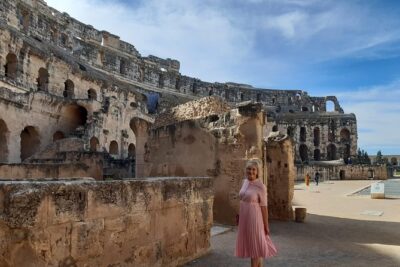
Half-day excursion from Sousse to the amphitheater of El Jem
Read our review →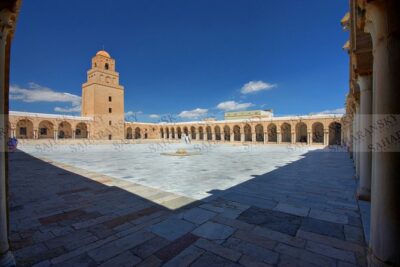
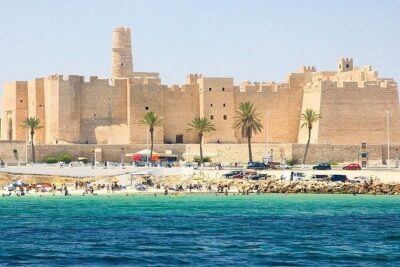
Private and Guided Tour to Kairouan and El Jem and Monastir
Read our review →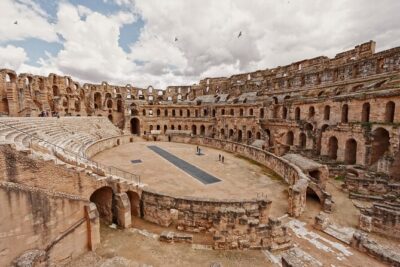
Private Half Day Tour to Roman Coliseum EL JEM from Monastir
Read our review →Browse the lists this tour appears in