
Reviewed · MEDINA & SOUK TOURS
Tour to the Medina of Hammamet and the Spice Market of Nabeul
Small towns, big character. This four-hour outing links Nabeul’s pottery workshops and spice trade with Hammamet’s sea-facing old town, giving you a useful taste of northeastern Tunisia without committing to a full day. I especially like the chance to see traditional ceramics being made and the guide-led look at Hammamet’s medina, where rooftop views and narrow lanes do much of the work. The main caution is that the experience can feel rushed, and the spice-market stop may not match what you expect.
At $29.04 per person, the tour is an appealing way to combine transport, local context, and several stops in one morning. I also like that pickup is offered from your hotel and that the guides are often praised for speaking several languages and answering questions well. Still, allow more than four hours in your schedule if you are staying at a resort, since multiple hotel pickups and drop-offs can add a surprising amount of time.
In This Review
- Key points at a glance
- What this half-day tour actually covers
- Starting the day with hotel pickup
- Hammamet’s sea-facing medina
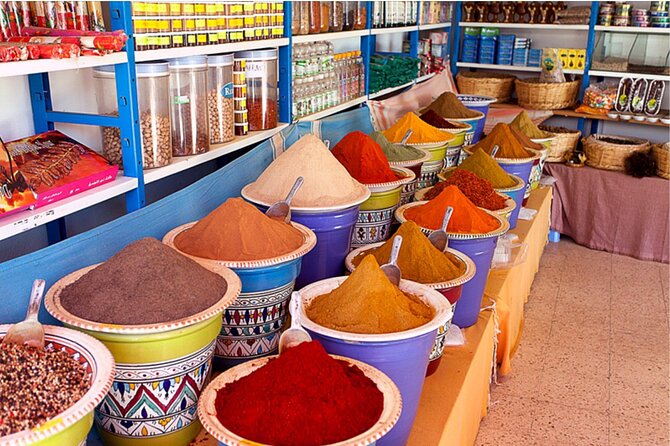
- Nabeul’s market and the spice question
- Inside the pottery workshop
- The guide can make or break the morning
- Is $29.04 good value?
- Who should book this experience?
- Final verdict: a useful introduction with clear caveats
- FAQ
- What is the price of the tour?
- How long does the tour last?
- What time does the tour start?
- Is hotel pickup available?
- What places are included?
- Is the tour suitable for most people?
- Can I cancel for a full refund?
Key points at a glance
- Nabeul pottery comes alive in a working workshop: You can watch local craft techniques and buy pieces directly from the maker.
- Hammamet’s medina sits beside the sea: Roof terraces offer some of the best views on the outing.
- The guide makes a major difference: Strong guides explain architecture, customs, history, and daily life in several languages.
- The spice-market stop needs realistic expectations: It may be a modest market, shop, kiosk, or free-time stop rather than a large traditional bazaar.
- Hotel pickups can stretch the morning: A planned 8:00 am start has sometimes become much later after extensive collection rounds.
- Good value for a short cultural outing: The price is low, but shopping pressure and uneven guiding can affect the experience.
What this half-day tour actually covers
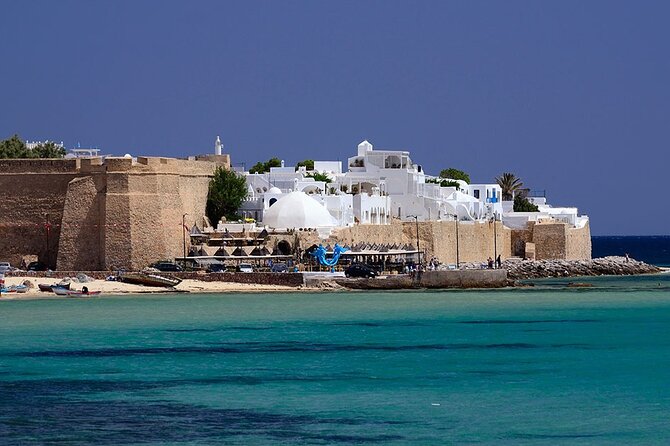
This is a short cultural excursion between Hammamet and Nabeul, two nearby places with different personalities. Nabeul is known for pottery, ceramics, harissa, spices, and neroli water. Hammamet brings the sea, whitewashed old-town streets, souks, an old fishing port, and views from the tops of medina buildings.
The advertised duration is about four hours, with roughly one hour and 30 minutes in the Hammamet medina, one hour and 30 minutes around the Nabeul market, and one hour at the pottery workshop. Admission to the stops is included, and the group can be as large as 50 people.
That last detail matters. This is not a private walking tour. With a full minibus, several languages, and hotel pickups, you should expect a practical group outing rather than a slow, highly personal exploration. The best version of the tour depends heavily on the guide’s ability to keep several language groups involved.
The most successful guides are described as friendly, warm, and well-informed about Tunisian culture. English-speaking visitors have sometimes been part of groups made up mostly of French speakers, but a good multilingual guide still made people feel included. That is worth noting if you are concerned about language.
More medina walks:
- Private tour: Medina,Carthage ,Sidi Bou Said, Bardo Museum+lunch
★ 5.0 · 194 reviews - From Hammamet or Tunis: Carthage, Bardo, Sidi Bou said and Medina
★ 4.5 · 30 reviews - Private Excursion of Friguia Park and Medina of Hammamet
★ 4.5 · 4 reviews
Starting the day with hotel pickup
The stated meeting time is 8:00 am, and pickup is offered. A message confirming the pickup time may arrive the day before, which is useful when you are staying at a large resort with several entrances or nearby hotels.
Do not assume that 8:00 means you will be moving toward Nabeul at 8:00. One outing had a pickup more than an hour late, while another included about 90 minutes of hotel collection before the first proper stop. Multiple pickups and return drop-offs are a common weakness of shared excursions.
I recommend waiting in the exact place given by the operator and keeping the phone number available. If the vehicle has not arrived after a reasonable period, call rather than simply assuming the tour has been canceled. One cancellation caused by a vehicle problem was communicated only after the people waiting made contact, which is not ideal.
The vehicle has been described as a clean, air-conditioned small minibus. That is a welcome feature in Tunisia’s warmer months, though a large group can still mean limited space and a slower pace.
Hammamet’s sea-facing medina
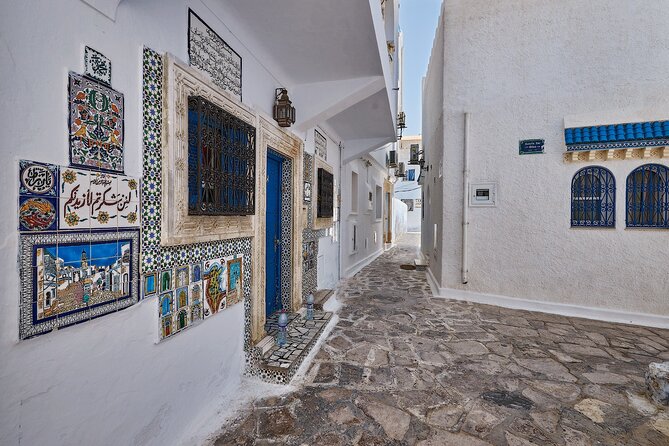
The old town of Hammamet is the emotional high point of the outing. Its medina is built beside the water, and the location gives the walk a sense of place that a landlocked market town cannot match. From roof terraces, you can look across the shoreline and take in the compact old city from above.
The guided portion is meant to explain more than pretty lanes. You may hear about the medina’s architecture, the social customs linked to its spaces, and the way daily life fits into a walled old town. A strong guide can point out details you would otherwise pass without noticing.
You will also have time around the souks and the old fishing port. The souks are useful for browsing Tunisian crafts, but sellers can be persistent. If you dislike shopping pressure, set a clear budget before you enter and remember that looking is not a promise to buy.
The walking route is one reason comfortable shoes matter. The streets are narrow, and the tour is more about wandering through the old quarter than checking off formal monuments. The free admission keeps the price down, but the value comes from the explanations and route rather than from entry to a major museum.
There is one important distinction to keep in mind. Some accounts describe a proper guided walk through the medina, while others say the guide gave most of the commentary from the vehicle and left the group to walk alone. If your guide is strong and stays with the group, this part can be engaging and insightful. If not, you may simply receive transport to a pleasant old town and a short period of free time.
Nabeul’s market and the spice question
Nabeul is presented as the capital of ceramics and pottery, as well as a center for harissa and neroli water. Its market is intended to show everyday Tunisian commerce rather than a staged cultural display. That idea is excellent. A local market can tell you more about food, household goods, and shopping habits than a polished souvenir center.
In practice, the market stop can vary. You might see spice sellers and souvenir items, or you might be directed to a small spice shop or kiosk with free time nearby. Some people found this disappointing because they expected a larger traditional spice market.
There is also a scheduling issue. The experience describes the market as a daily market, but one outing was told that the full spice market takes place on Friday rather than Thursday. If the market is central to your plans, check the operating day before booking. This is especially important if you are visiting outside the main weekly market day.
Expect sales attention here. Spices, harissa, neroli water, and small souvenirs may be offered, and sellers can be direct. I would treat the stop as a chance to look, smell, ask questions, and buy only what you genuinely want. A polite no, thank you is usually enough, and you do not need to accept the first price.
Some visitors were also offered tea or coffee that did not appear during their outing. I would not book this tour for refreshments. Consider drinks an occasional extra rather than a dependable part of the morning.
The guide’s involvement is another variable. A few accounts describe excellent explanations about Tunisian food and customs. Others say the guide did not walk through Nabeul and offered little context once the group left the vehicle. If you want detailed market interpretation, ask questions early and stay close to the guide when the group arrives.
An entirely different way to fill a day in Hammamet:
- Quad ride on the hills of Hammamet
★ 4.0 · 104 reviews - 2-Day Tunisian Sahara Tour with Food & Stay from Hammamet
★ 4.5 · 80 reviews - Tunis, Sidi Bousaid and Carthage day trip from Hammamet
★ 4.5 · 44 reviews - Tunis Carthage airport transfer to Hammamet
★ 5.0 · 34 reviews
Inside the pottery workshop
The ceramics visit is the most distinct part of the Nabeul experience. Rather than simply seeing finished plates stacked in a shop, you may watch a family workshop demonstrate the craft. One particularly appealing detail is the sense of continuity, with pottery described as a family tradition carried through generations.
You can expect a display area filled with bowls, plates, tiles, and other decorated objects. The visit may include a demonstration of how the pottery is formed or finished, followed by time to browse and buy. Direct purchase from the craft maker can be a real advantage because you are seeing the work where it is produced.
This is also a commercial stop, so keep your expectations clear. The workshop is designed to sell pottery as well as explain it. That does not cancel its cultural value, but it means the visit is not a museum demonstration with no shopping element.
If you like practical souvenirs, this is where the tour can earn its price. Ceramics are easier to connect with than a generic trinket, and a piece bought in Nabeul carries a clear link to the place. Pack carefully and ask about handling if you plan to take anything fragile home.
The order of stops can vary. The general description places the pottery workshop early, followed by Nabeul and Hammamet, while the listed stop order places Hammamet first. Plan for the three elements, but do not count on a fixed sequence.
The guide can make or break the morning
The strongest praise for this experience goes to the guides. Good guides explain Hammamet and Nabeul with confidence, answer questions, switch between languages, and include people who are not part of the main French-speaking group.
That matters because the tour covers several subjects quickly: Islamic and local architecture, craft traditions, food production, market customs, and the modern role of tourism. Without explanation, the stops can blur into a pottery shop, a market visit, and a walk through old streets. With a good guide, those same stops connect into a clearer picture of Tunisian life.
The tour may operate in three languages. This is helpful for mixed groups, but it can also slow the rhythm or shorten the time available for each language. If you need English commentary, confirm that it will be provided before departure and make yourself easy for the guide to find.
The group limit of 50 is another reason to keep expectations modest. Even when the actual minibus is smaller, shared transport and hotel routes can make the experience feel less personal. A private tour would suit you better if you want a guide beside you at every stop or if you dislike waiting for other people.
Is $29.04 good value?
At $29.04, this is inexpensive for a morning that includes pickup, transport between Hammamet and Nabeul, a pottery visit, market time, and a guided medina experience. If you are staying at a resort and would otherwise need to arrange separate taxis, the convenience adds real value.
The price is strongest when you want an introduction rather than a specialist tour. You see several sides of the area in a compact period: seaside old-town culture, local commerce, and pottery production. You also avoid spending a full day away from your hotel.
The value drops if you are mainly interested in a serious spice-market visit. The market may be smaller than expected, and the stop can feel like unstructured shopping time. It also drops if your hotel is far along the pickup route and you lose a large part of the morning in the minibus.
For the lowest-cost option, accept some uncertainty in timing and guiding. Pay more for a private experience if your priorities are a fixed schedule, long conversations, or a guide who stays with you through every lane and stall.
Who should book this experience?
I would recommend it to first-time visitors who want a broad introduction to Hammamet and Nabeul without planning the transport themselves. Families can fit it well, especially if they enjoy crafts, markets, and a short walk rather than a long historical tour.
It also suits people who appreciate local shopping with a cultural angle. The pottery workshop is more interesting than a standard souvenir stop, particularly if you enjoy seeing how objects are made.
You should think twice if you dislike vendor attention, shared buses, or flexible timing. It is also not the best choice for anyone expecting a large, traditional spice bazaar every day of the week.
Build extra time into your schedule. Although the advertised length is four hours, some outings have taken closer to six hours because of hotel stops. Wear comfortable shoes, bring water, and keep some Tunisian dinars available if you want to buy pottery, spices, or crafts.
Free cancellation is available up to 24 hours before the local start time. Poor weather or an insufficient number of bookings can also lead to a changed date or a full refund.
Final verdict: a useful introduction with clear caveats
I would book this tour if I wanted an affordable first look at Nabeul’s craft traditions and Hammamet’s old town. The pottery workshop and sea-facing medina give the morning genuine character, and a good multilingual guide can add much more than you would get by visiting alone.
I would not book it if the spice market is the main reason for going, unless I had confirmed the market day and the exact stop. I would also avoid it when working with a tight schedule, since pickup delays and hotel rounds have caused real frustration.
The fairest verdict is simple: good value, strong cultural potential, and uneven organization. Go for the pottery, medina, views, and local context. Treat the market and refreshments as less certain, and allow the morning to run long.
FAQ
What is the price of the tour?
The price is $29.04 per person.
How long does the tour last?
The advertised duration is approximately four hours. Some outings have taken longer because of hotel pickups and drop-offs, so allowing up to six hours is wise.
What time does the tour start?
The stated start time is 8:00 am.
Is hotel pickup available?
Yes. Pickup is offered, and confirmation of the pickup time may be sent the day before.
What places are included?
The experience includes Hammamet’s medina, the Nabeul market or spice-market area, and a pottery workshop in Nabeul.
Is the tour suitable for most people?
Yes. Most people can participate, and the experience is near public transportation. The group may include up to 50 people.
Can I cancel for a full refund?
Yes. You can cancel at least 24 hours before the local start time for a full refund. Changes or cancellations made less than 24 hours before departure are not accepted for a refund.
Just added around Hammamet
- Cap-Bon Self-Guided Excursion from Hammamet★ 4.5 · 3 reviews
- Airport Tunis Carthage Private Transfer to/from Hammamet★ 4.0 · 4 reviews
- Private Excursion of Friguia Park and Medina of Hammamet★ 4.5 · 4 reviews
- Executive: Transfer Tunis Airport to Hammamet by Mercedes E Class★ 5.0 · 4 reviews
- Tunis, Carthage and Sidi Bou Said Self-Guided Excursion from Hammamet★ 4.5 · 4 reviews
- Kairouan, El Djem and Monastir Guided Excursion from Hammamet★ 5.0 · 5 reviews
- Kairouan, El Djem, Monastir Self-Guided Excursion from Hammamet★ 4.5 · 5 reviews
- DayTrip to KORBOUS Thalasso-Thermal Bath & Spectacular SEA Cliffs★ 4.5 · 5 reviews
Medina & Souk Tours, compared.
VIP Tour: Tunis Medina/Bardo, Sidi Bou Said, Carthage |PICKUP ALL
Read our review →
Private tour: Medina,Carthage ,Sidi Bou Said, Bardo Museum+lunch
Read our review →
Carthage, Bardo Museum, Sidi Bou Said and Medina Private Day Tour
Read our review →
Guided tour in the UNESCO world heritage Medina of Tunis
Read our review →
Carthage, Bardo Museum, Sidi Bou Said & Medina Group Tour
Read our review →
From Hammamet or Tunis: Carthage, Bardo, Sidi Bou said and Medina
Read our review →
Private Day Tour Tunis Medina Carthage Sidi Bou Said Bardo Museum
Read our review →Private tour: Medina,Carthage ,Sidi Bou Said, Bardo Museum+lunch
Read our review →Browse the lists this tour appears in