
Reviewed · KAIROUAN TOURS
Kairouan, El Djem, Monastir Self-Guided Excursion from Hammamet
Three great chapters of Tunisia fit into one day. This private excursion links Kairouan’s Islamic landmarks, El Djem’s huge Roman amphitheater, and Monastir’s modern Tunisian story in about 10 hours. I like the strong mix of eras and the comfort of a private, air-conditioned car. I also like that pickup is offered and the group is limited to your party, so you are not tied to a large coach schedule.
The main drawback is the pace. You cover a lot of ground, and entrance fees, lunch, guides, and tips are extra. You should also confirm any optional local guide price before accepting, since one past booking involved a serious disagreement over the quoted cost.
In This Review
- Key points to know before booking
- What this long day is really offering
- Kairouan’s Aghlabid Basins and the story of water
- Sidi Sahbi, Kairouan’s Mosque of the Barber
- Kairouan’s medina, gates, lanes, and markets
- El Djem’s amphitheater, the day’s essential stop
- The El Djem Archaeological Museum and its Roman villa
- Monastir, Bourguiba, the ribat, and the marina
- What the $303.51 group price buys you
- The private car, driver, and pace
- Who should book this excursion?
- Should you book it?
- FAQ
- Where does the excursion start?
- How long does the excursion last?
- How many people can join the private tour?
- Is transportation included?
- Is a professional guide included?
- Are entrance fees included?
- Is lunch included?
- What is the cancellation policy?
Key points to know before booking
- Three very different Tunisian settings: Kairouan presents Arab-Muslim Tunisia, El Djem brings the Roman world to life, and Monastir adds Punic, Roman, and modern republican history.
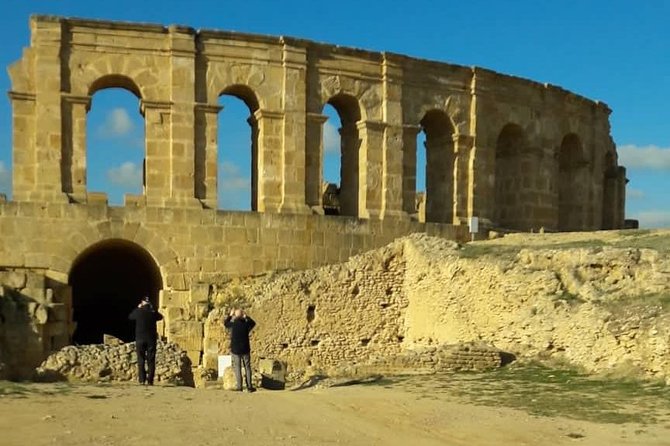
- El Djem is the main event: The third-largest Roman amphitheater in the ancient world could hold about 30,000 spectators and gets a full two hours in the schedule.
- Private transport changes the day: Your group of up to three gets a private, air-conditioned vehicle rather than a shared coach.
- The price works best for a small group: At $303.51 per group of up to three, the per-person cost is much better when all three seats are filled.
- Plan for extra costs: Lunch, museum and monument admissions, optional guides, personal spending, and tips are not included.
- The day needs firm time control: A complaint about spending too long in Kairouan and losing time in Monastir shows why you should agree on priorities early.
What this long day is really offering
This is not one narrowly focused tour. It is a fast survey of central and coastal Tunisia, with each stop showing a different layer of the country.
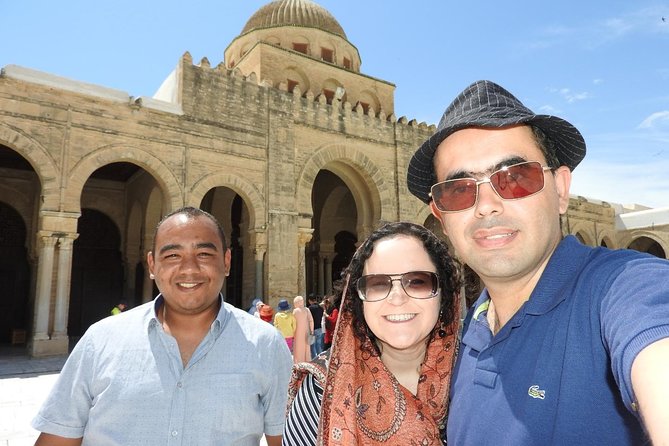
Kairouan is the spiritual center of Tunisian Islam and traditionally counted as the fourth holy city of Islam. El Djem takes you back to Roman Africa, when the town was known as Thysdrus and prospered through the wealth of the surrounding region. Monastir then shifts the story toward Tunisia’s Punic and Roman past, its modern national identity, and its seafront.
I like that range. In one day, you can see religious architecture, ancient engineering, a massive entertainment arena, Roman mosaics, a modern political memorial, a ribat, and a marina. The tradeoff is simple: you get breadth rather than a leisurely look at any one place.
The excursion begins at 8:30 a.m. and lasts about 10 hours. That is a full day, so I would book it when you have enough energy for a demanding schedule. The air-conditioned vehicle and bottled water are small but useful comforts, especially with so much time on the road.
More Kairouan visits:
- Private and Guided Tour to Kairouan and El Jem and Monastir
★ 4.5 · 22 reviews - Kairouan & El Djem Guided Day Trip with Lunch from Hammamet
★ 4.0 · 18 reviews - Kairouan, El Djem and Monastir Guided Excursion from Hammamet
★ 5.0 · 5 reviews
Kairouan’s Aghlabid Basins and the story of water
The first stop is the Bassins Aghlabites, outside Kairouan’s medina walls. You have about 30 minutes here, and admission is not included.
These ninth-century basins are more than a quick photo stop. They were part of an important water system built during the Aghlabid period, in the early part of the second half of the ninth century. The site is regarded as one of the major hydraulic works in the history of the Muslim world.
That detail gives the stop real weight. Kairouan grew as a religious and political center, but cities cannot flourish without water. The basins help you see the practical side of medieval urban life, not just its mosques and mausoleums.
Thirty minutes is probably enough for a first look, though it will not leave room for a long visit. Since the admission fee is extra, ask your driver how much time is available before you enter. This is especially useful if you want to protect time later in Monastir.
Sidi Sahbi, Kairouan’s Mosque of the Barber
Next comes the Mosque of Sidi Sahbi, also called the Mosque of the Barber. It sits outside the medina, and the visit is scheduled for one hour. Admission is listed as free.
The complex is linked with Sidi Sahbi, a companion of the Prophet Muhammad who is traditionally associated with carrying hairs of the Prophet’s beard. That connection explains the common name, Mosque of the Barber, and gives the site a devotional importance beyond its decoration.
You will find a mausoleum and mosque complex rather than a single bare prayer hall. The stop offers a different mood from the open basins. Here, the focus is religious memory, sacred space, and the architectural traditions that helped make Kairouan an important Islamic center.
Dress and behavior should be respectful at religious sites. The supplied information does not specify detailed clothing rules or opening conditions, so I would rely on the driver for current access guidance on the day.
Kairouan’s medina, gates, lanes, and markets
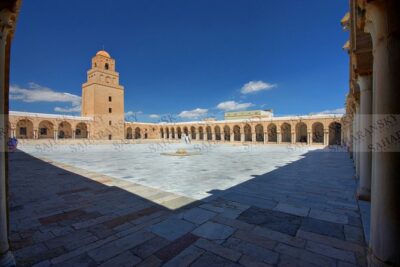
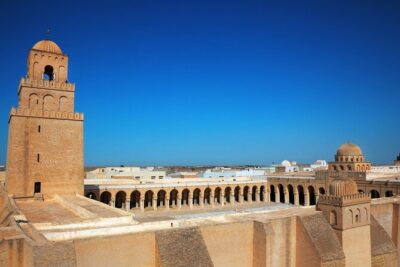
The medina receives about an hour. This is where you visit the Mosque with Three Gates and walk through the narrow streets and markets. The medina has been on the UNESCO World Heritage List since December 9, 1988, meeting five of the six evaluation criteria used for inscription.
I like this part because it connects grand history with ordinary city life. You are not only looking at monuments. You are also seeing the tight street plan, old walls, market activity, and the way religious buildings fit into the city around them.
One hour is short for a medina visit. You will need to choose between lingering in the lanes, shopping, and looking closely at the Mosque with Three Gates. If you want a local guide in Kairouan, settle the price before the visit begins. One booking included an offer of a local guide, followed by a dispute when the guide attempted to charge three times the expected amount. That is a practical warning, not a reason to reject the entire excursion: agree on the fee, currency, and length of service first.
The private format helps here. You can tell the driver if you prefer architecture over shopping, or if you want a little time to walk without being hurried by a group schedule. Still, the day has several stops, so do not expect an open-ended medina wander.
More self-guided routes:
- Tunis, Carthage and Sidi Bou Said Self-Guided Excursion from Hammamet
★ 4.5 · 4 reviews - Cap-Bon Self-Guided Excursion from Hammamet
★ 4.5 · 3 reviews - Self guided bike tour of Carthage archeological site
★ 4.5 · 10 reviews
El Djem’s amphitheater, the day’s essential stop
From Kairouan, the route continues to El Djem, ancient Thysdrus. The amphitheater visit is allotted two hours, which is the longest single block on the schedule. Admission is not included.
This is the clearest highlight of the day. Built in the third century AD, the amphitheater could hold about 30,000 spectators. It is described as the third-largest in the Roman world after Rome and Capua, and it is often considered the most impressive Roman monument in Africa.
The size is what makes El Djem so memorable. You can think about the engineering, the crowds, and the wealth needed to construct and operate a structure on this scale. The stone seating, arena, and underground areas help turn an abstract lesson about Roman Africa into a physical place you can walk through.
Two hours is a sensible allowance. It gives you time to see the main levels and appreciate the scale without reducing the visit to a rushed stop. If you care most about ancient architecture, I would protect this time and avoid cutting it short.
The amphitheater is also the stop most likely to justify the excursion for you. If you have already seen major Roman arenas elsewhere, El Djem still offers a useful comparison because it shows how Roman urban culture reached North Africa. If Roman sites are not your priority, you may find the visit long, but the schedule gives you room to set your own pace.
The El Djem Archaeological Museum and its Roman villa
The nearby Archaeological Museum of El Djem gets one hour. Admission is extra.
The museum is housed in a reconstructed Roman villa and displays mosaics, statues, terracotta figures, perfume containers, and other glass objects. The collection covers material from the second century to the fifth century, according to the supplied description.
This stop adds detail to the amphitheater. The arena shows public spectacle and civic wealth. The museum shows domestic taste, craftsmanship, decoration, and daily life. The mosaics are particularly important because they let you see the artistic skill and themes that existed beyond the arena itself.
I would not skip the museum automatically. The amphitheater gives you scale, while the villa gives you texture. Together, they make El Djem more than a single dramatic ruin.
The extra admission fee matters here. Since several paid entrances are excluded, carry a separate budget for tickets. The tour price covers transportation, insurance, taxes, and bottled water, but not entry to museums or exhibitions.
Monastir, Bourguiba, the ribat, and the marina
The final stop is Monastir, with about one hour for the marina, the mausoleum of Habib Bourguiba, and free time at the ribat and waterfront. Admission is not included.
The route passes the birthplace of Habib Bourguiba, Tunisia’s first president, then includes a visit to his mausoleum. This gives Monastir a modern political dimension that contrasts sharply with Kairouan’s religious identity and El Djem’s Roman past.
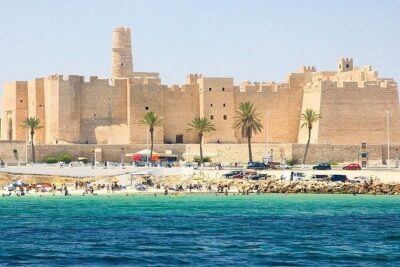
You also have the chance to see the ribat and marina. The ribat connects Monastir to the defensive and religious architecture of earlier centuries, while the marina brings you into the present-day coastal city. Even within one hour, the contrast is useful.
The weak point is timing. One past complaint said the driver tried to persuade the group to skip Monastir and that there was not enough time to visit the ribat after the mausoleum. The driver’s judgment may have reflected the long route, but Monastir is part of the advertised plan, so I would state your priorities before leaving Hammamet.
If the Bourguiba mausoleum matters most, say so. If you want the ribat, ask for enough time there. If you mainly want a short waterfront break, the marina may suit you. A private tour gives you some control, but it does not create extra hours.
What the $303.51 group price buys you
The listed price is $303.51 for a group of up to three people. That makes the strongest financial sense for three people, at roughly $101.17 per person before extra entrance fees, lunch, and tips. For two people, the cost is about $151.76 each. A solo booking carries the full group charge, so the value is less attractive if you are alone.
You are paying for private transportation, an air-conditioned vehicle, bottled water, insurance, and all listed fees and taxes. You are not paying for a professional guide, and the excursion is described as self-guided. That means you should expect transport and routing rather than formal historical interpretation throughout the day.
For a small group that wants to combine sites difficult to arrange independently, the price can be reasonable. The route covers three destinations and a long distance in one day. You also avoid sharing the vehicle with strangers and can discuss how to divide your time.
The value is weaker if you want a slow, guided experience with every ticket and meal handled. Add the entrance fees, lunch, and any guide cost before comparing this with other options. Most importantly, confirm optional services in writing or at least agree on them clearly before the day starts.
The private car, driver, and pace
Pickup is offered, and the start time is 8:30 a.m. The vehicle is air-conditioned and private for your group of up to three. Those features matter because the schedule involves several stops and a great deal of driving.
A positive account described the driver as on time and professional, with the day running as expected. That is exactly what you need on a route where a late start can shorten the final stop. Bottled water is included, but lunch is not, so plan for your midday meal and ask about the timing.
One complaint raised concern about very high driving speeds, including an allegation of 150 kilometers per hour. I cannot confirm the speed, but you should take any discomfort seriously. If the driving feels too fast, say so plainly and ask the driver to slow down. Safety matters more than arriving early.
The private arrangement also creates a responsibility for you. Discuss the order of priorities at the beginning. Kairouan, El Djem, and Monastir are all included, but the exact balance of time can affect what you see at the end.
Who should book this excursion?
I would recommend it most strongly to a small group based in Hammamet that wants a broad introduction to Tunisia and prefers a private vehicle. It suits people who value Roman architecture, religious sites, and modern national history in one packed day.
It is also a good fit if you are comfortable exploring without a professional guide. The tour does not include one, and optional guide arrangements need careful price checking. You should be happy reading signs, preparing your own background, or asking for a guide only after agreeing on the terms.
I would be more cautious if you dislike long days, want generous time in each place, or care deeply about Monastir’s ribat and marina. The schedule can work, but it needs cooperation from the driver and clear time planning.
The activity is private, and most people can participate. Service animals are allowed. Confirmation is provided at booking. Cancellation is free up to 24 hours before the start time, while changes or cancellations inside that window are not accepted and are not refunded.
Should you book it?
Book this excursion if you have only one day for inland Tunisia and want to see Kairouan, El Djem, and Monastir without joining a large group. El Djem and its museum are the strongest reasons to go, while Kairouan supplies the spiritual and urban setting that gives the day balance.
Before paying, make three things clear: the total entrance budget, the price of any local guide, and your must-see stop in Monastir. Fill all three seats if possible, keep lunch flexible, and ask for a safe driving pace. With those points settled, the trip offers a useful, varied look at Tunisia in a single demanding day.
FAQ
Where does the excursion start?
The excursion starts from Hammamet, with pickup offered. The stated start time is 8:30 a.m.
How long does the excursion last?
The experience lasts approximately 10 hours.
How many people can join the private tour?
The price covers a private group of up to three people. Only your group participates.
Is transportation included?
Yes. Private transportation in an air-conditioned vehicle is included, along with bottled water, insurance, and all listed fees and taxes.
Is a professional guide included?
No. A professional guide is not included. Any optional local guide should be arranged with the price confirmed before the service begins.
Are entrance fees included?
No. Entrance fees to museums and exhibitions are not included. The listed schedule also marks admission as not included for the Aghlabid Basins, El Djem Amphitheater, El Djem Archaeological Museum, and Monastir attractions.
Is lunch included?
No. Lunch is not included, and personal expenses and tips are also excluded.
What is the cancellation policy?
You can cancel at least 24 hours before the start time for a full refund. Cancellations or changes made less than 24 hours before the start time are not accepted and are not refunded.
Just added around Hammamet
- Cap-Bon Self-Guided Excursion from Hammamet★ 4.5 · 3 reviews
- Airport Tunis Carthage Private Transfer to/from Hammamet★ 4.0 · 4 reviews
- Private Excursion of Friguia Park and Medina of Hammamet★ 4.5 · 4 reviews
- Executive: Transfer Tunis Airport to Hammamet by Mercedes E Class★ 5.0 · 4 reviews
- Tunis, Carthage and Sidi Bou Said Self-Guided Excursion from Hammamet★ 4.5 · 4 reviews
- Kairouan, El Djem and Monastir Guided Excursion from Hammamet★ 5.0 · 5 reviews
- DayTrip to KORBOUS Thalasso-Thermal Bath & Spectacular SEA Cliffs★ 4.5 · 5 reviews
- Day trip to Cape Bon★ 4.0 · 5 reviews
Kairouan Tours, compared.
Fun VIP Tour: El Jem, Kairouan, Monastir/Sousse (PICKUP ALL City)
Read our review →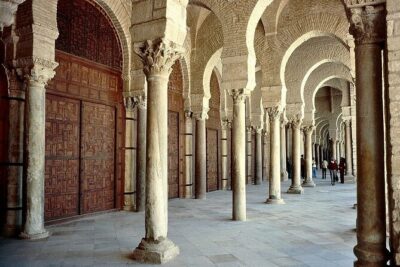
Private Tour to Kairouan, El Jem & Monastir from Tunis_hammamet
Read our review →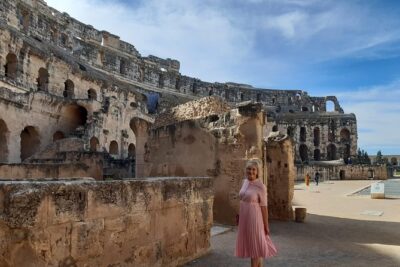
Private and Guided Tour to Kairouan and El Jem and Monastir
Read our review →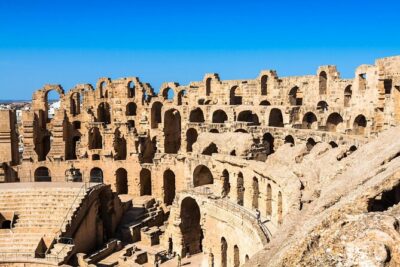
Kairouan & El Djem Guided Day Trip with Lunch from Hammamet
Read our review →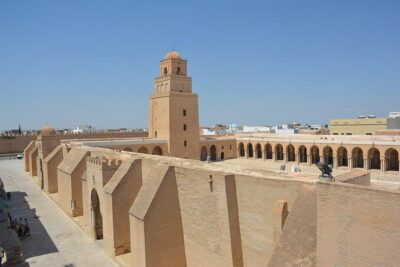
Kairouan Holy City and El Jem Colosseum Tour from Sousse
Read our review →Browse the lists this tour appears in