
Reviewed · SIDI BOU SAID & CARTHAGE TOURS
Group Guided Bike Tour of Carthage Archeological Site in Tunisia
Carthage is easier on two wheels. This three-hour ride links Punic ports, Roman baths, a theater, and ancient sanctuaries without making you cross the same ground again and again. I love the sea-side route and the chance to cover several far-flung sites in one morning. I also like that the guides, including Jiji and Yasi, bring stories to ruins that can otherwise feel short on signs. The main catch is a steep section near Byrsa Hill, plus the optional final stop may be dropped in hot weather or if the group runs short on time.
At $56.99 per person, this is a fair deal if you want transport between Carthage’s main archaeological areas, a professional guide, a bike, a helmet, and admission to the listed sites. The ride is not hard for a reasonably active cyclist, but an e-bike is a smart upgrade if hills and heat do not sound appealing. Bring your passport, meet at 9 Rue Hannibal, and plan to return to that same point.
In This Review
- Key points at a glance
- Why a bike makes sense at Carthage
- Starting at the Tophet of Carthage
- Reading the Punic Ports beside the water
- The Baths of Antoninus and Carthage’s Roman scale
- A short stop at the Roman Theatre
- Byrsa Hill and Saint Louis Cathedral
- What the guide adds to the ruins
- Is three hours enough?
- Price, effort, and what you receive
- Who will enjoy this ride most?
- Weather, cancellation, and useful planning
- Should you book the Carthage bike tour?
- FAQ
- How long does the bike tour last?
- Where does the tour begin?
- Where does the tour end?
- Is hotel pickup included?
- What does the tour provide?
- Is an e-bike available?
- How difficult is the cycling?
- Which archaeological sites are visited?
- Can I enter Saint Louis Cathedral or the Carthage Museum?
- What happens if the weather is poor or not enough people book?
Key points at a glance
- Five historic stops in about three hours: The route covers the Tophet, Punic Ports, Baths of Antoninus, Roman Theatre, and possibly Byrsa Hill.
- Biking solves Carthage’s distance problem: You move from site to site instead of treating each ruin as a separate outing.
- The guides add the missing story: Jiji and Yasi are praised for clear explanations, historical detail, and lively tales.
- Mostly easy cycling, with one serious hill: An e-bike can save effort near the end, especially in warm weather.
- The final stop is flexible: Saint Louis Cathedral and Byrsa Hill depend on group agreement, time, and weather.
- Small-group scale: The maximum is 20 people, though the minimum number of bookings matters for operation.
Why a bike makes sense at Carthage
Carthage is not one compact ruin with a single entrance. Its remains are spread across a broad area near the coast, with Punic and Roman sites separated by roads and residential surroundings. On foot, you can spend a fair amount of energy simply getting from one place to the next.
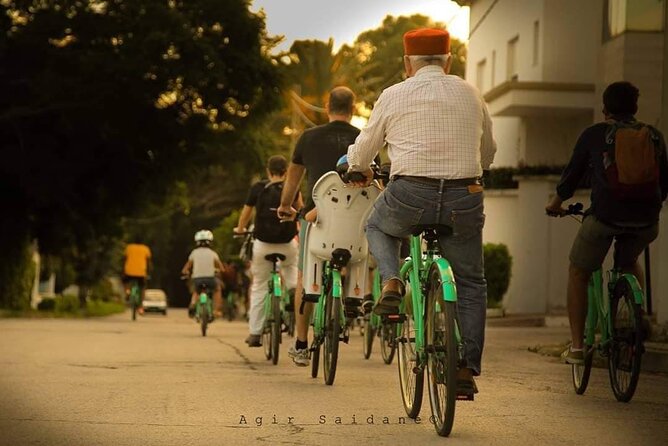
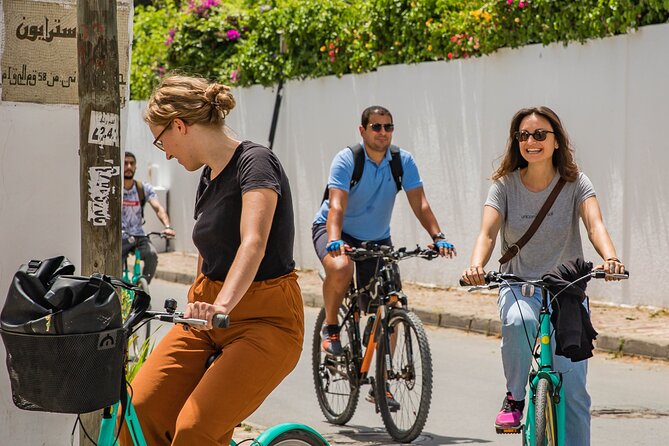
This tour turns those gaps into part of the experience. You cycle between sites, see the surroundings at ground level, and keep moving without the stop-start feel of a vehicle tour. The route was planned to avoid traffic as much as possible, though you should still expect ordinary road conditions rather than a closed cycling course.
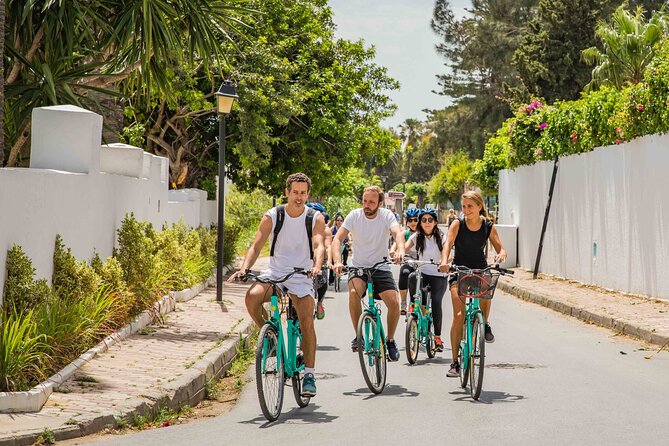
The route is described as mostly flat and easy, with a few hills. One steep section is the point to think about before booking. If you regularly ride a bike, it may be manageable. If you do not, or if the day is hot, choose the e-bike option if available for your booking.
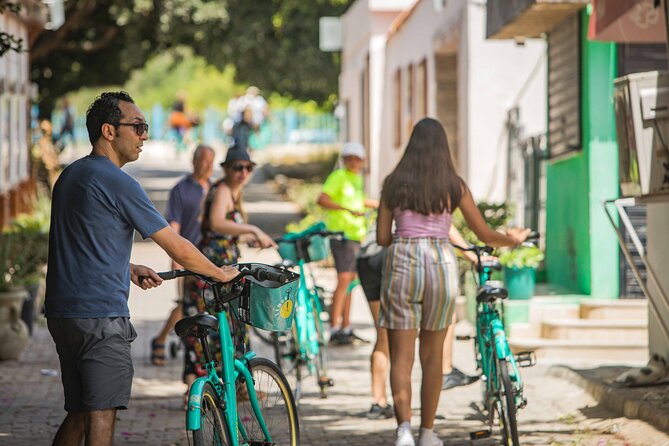
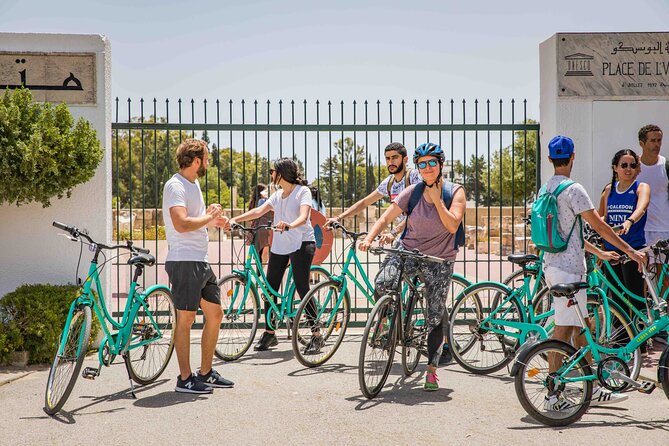
The bicycles are provided, along with helmets. One practical note: the bikes may not look freshly polished, and you may find that the tires could use a little more air. That does not change the historical value of the outing, but it is worth checking your bike before setting off.
More Sidi Bou Said and Carthage tours:
- Private tour: Medina,Carthage ,Sidi Bou Said, Bardo Museum+lunch
★ 5.0 · 230 reviews - Carthage, Bardo Museum, Sidi Bou Said and Medina Private Day Tour
★ 4.5 · 153 reviews - Guided Bike Tour of Carthage Archeological Site in Tunisia
★ 5.0 · 88 reviews
Starting at the Tophet of Carthage
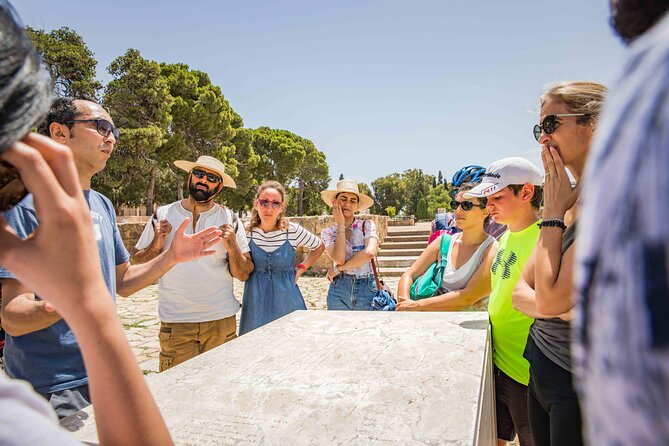
The first stop is the Tophet, a Punic sanctuary where the guide introduces you to the religious culture of ancient Carthage. You have about 30 minutes here, with admission included.
This is a useful opening because it gives you a cultural frame before the tour turns to Roman remains. The Tophet is not simply a pile of old stones. It raises questions about Punic beliefs, ritual practice, and the society that created Carthage long before Rome rebuilt the city in its own image.
Your guide matters greatly here. The site itself may not provide enough explanation to make every feature clear, so a strong guide can turn a quiet archaeological area into a place with meaning. Jiji and Yasi are specifically praised for their command of the history and their ability to tell engaging stories.
Do not expect a long, leisurely stop. Thirty minutes is enough for an introduction and explanation, but not for a slow study of every feature. The bike format works well because you are seeing the Tophet as one chapter in a larger story.
Reading the Punic Ports beside the water
The next stop is the Punic Ports and Museum, also scheduled for about 30 minutes. This was a major Mediterranean port, and it helps you picture Carthage as a naval and trading power rather than only an archaeological site.
The sea is part of the appeal. You are not spending the entire morning in enclosed ruins. Cycling near the coast gives the tour a pleasant change of pace and helps connect the port’s purpose with its setting.
Again, the guide provides much of the interpretation. A port can be difficult to understand from surviving remains alone. With a good explanation, you can better grasp how ships, trade, defense, and the city’s wider reach fit together.
The half-hour limit keeps the morning moving, but it also means this is an overview rather than a museum-focused visit. If you want to read every display or spend a long time examining objects, you may wish you had more time. For a first look at Carthage, the stop gives you the essential idea without slowing the whole route.
The Baths of Antoninus and Carthage’s Roman scale
At the Baths of Antoninus, you get about 40 minutes, the longest stop on the route. That extra time makes sense. The Roman baths were among the largest in the empire, and the surviving remains spread across a striking site facing the sea.
This is likely the visual high point of the ride. The open setting, the coastal outlook, and the size of the ruins help you imagine the Roman city at a scale that smaller fragments cannot convey. You see more than bathing rooms. The ruins point to engineering, public life, social customs, and the resources Rome put into its provincial cities.
I like the balance here: the tour gives the baths enough time to feel substantial without turning the morning into a full archaeological seminar. You can listen, look around, and take in the location before getting back on the bike.
The site is still a ruin, so expectations matter. You will not find a fully reconstructed Roman bath complex. Much of what you understand will come from the guide’s explanation and your own ability to read the remaining foundations. That is one reason the guide’s skill is so important throughout the tour.
More bike rides:
- Self guided bike tour of Carthage archeological site
★ 4.5 · 10 reviews - Djerba Island: 1.5-Hour Quad Biking Adventure
★ 4.5 · 17 reviews - Quad Biking (ATV) in Douz Tunisia Sahara Desert
★ 5.0 · 7 reviews
A short stop at the Roman Theatre
The Roman Theatre of Carthage receives about 20 minutes. This is a quick visit, but it adds another side of Roman Carthage: entertainment and public performance.
The short timing tells you how to approach it. Treat the theater as a compact stop where you learn its place in the ancient city, rather than as a long, detailed exploration. The ride’s strength is the range of sites. You see religious, maritime, civic, bathing, and entertainment spaces in one morning.
Some archaeological sites offer large walls or restored structures that explain themselves. The theater may require more help from the guide. Listen for how it functioned within Roman public life, and use the stop to connect the theater with the other parts of the city you have already seen.
The quick visit also helps keep the tour close to its three-hour schedule. Still, if your group moves slowly or spends extra time at earlier stops, the final parts of the route may feel rushed.
Byrsa Hill and Saint Louis Cathedral
The last stop is conditional. If everyone agrees, and if time and weather allow, you may continue to Byrsa Hill. The plan includes discussion of Punic architecture, the transformation of the hill under Roman rule, and a view of Saint Louis Cathedral from outside.
This is the most flexible section of the tour. High temperatures can cause the stop to be canceled, and the group may not have enough time after the earlier sites. The Carthage Museum on the hill is closed, so you should not book this ride expecting museum entry.
The hill also includes the route’s main physical challenge. One person may find it easy, while another may prefer electric assistance. If the hill is included and you are not used to cycling uphill, an e-bike can make the final section much more pleasant.
Saint Louis Cathedral is viewed without entering. The value here is the hill’s position in Carthage’s story and the chance to discuss how the site changed from Punic center to Roman city and later historic landmark. It is a fitting end, but it should not be treated as guaranteed.
What the guide adds to the ruins
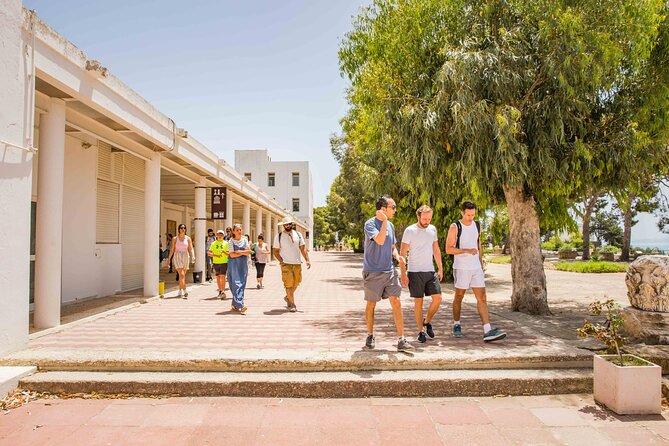
Carthage rewards explanation. Many remains are spread out, partly preserved, and not always marked with enough detail for a quick independent visit. You can see the stones without understanding what made the place important.
That is where the guide earns the fee. Jiji is praised for a warm manner and strong historical command. Yasi is singled out for lively stories and a clear grasp of Carthaginian history. The best part of this format is not only the information, but the connections between stops.
You learn about Punic culture at the Tophet, then see Carthage’s maritime role at the ports, its Roman public works at the baths, and its entertainment spaces at the theater. The ride gives the city a sequence rather than a collection of unrelated ruins.
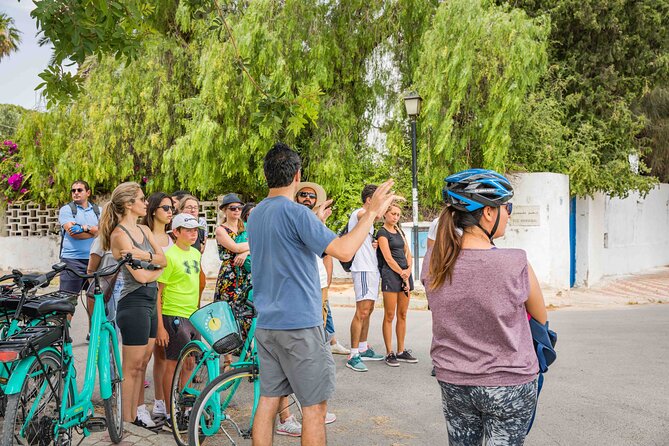
Because the group can contain up to 20 people, the experience is not guaranteed to feel private. That is still a modest maximum for a guided outing, but the size may affect how easily you can ask questions or hear every explanation. On some dates, the minimum number may not be reached. If the operator cancels for that reason, you can choose another date or receive a full refund.
Is three hours enough?
Three hours is enough for a strong introduction, not a complete study of Carthage. The scheduled stops add up quickly: 30 minutes at the Tophet, 30 at the ports, 40 at the baths, 20 at the theater, and 15 at the optional hill and cathedral.
Cycling between them takes time, as do parking bikes, gathering the group, and listening to the guide. If all stops are included, the pace should feel efficient rather than leisurely.
One practical approach is to treat the tour as your orientation to Carthage. You learn which places matter, how the Punic and Roman periods connect, and which site you might want to revisit independently. If you want long stretches at each ruin, the schedule may disappoint you.
You may also want to allow extra time afterward. The tour ends back at the meeting point, and one possible plan is to walk on to any site you did not have time to see. Admission is included for the scheduled archaeological stops, but the tour itself remains limited to roughly three hours.
Price, effort, and what you receive
At $56.99, the cost is reasonable for a guided route that includes the bicycle, helmet, professional guide, taxes, fees, and admission tickets. You are paying not only to enter the sites, but also to connect them efficiently and receive context as you go.
The value is strongest if you are staying in Tunis and want to see several parts of Carthage without arranging separate transport. It is also strong for anyone who finds ruins hard to interpret alone.
The price is less compelling if you prefer a slow, self-guided visit or already have transport and a plan for every site. You also need to pay attention to what is not included. Hotel pickup and drop-off are not provided, so you must reach 9 Rue Hannibal at the archaeological site.
The tour is booked an average of 20 days ahead, which suggests that planning early is sensible, especially if you want a particular date or an e-bike. Confirmation is provided when you book, and the mobile ticket makes the entry process simpler.
Who will enjoy this ride most?
I would recommend it to you if you want history with movement, fresh air, and a clear route. It suits people with moderate physical fitness who can cycle for several hours at an easy pace and handle at least one hill.
It is a good match for first-time visitors to Carthage, couples, families with suitable cycling ability, and anyone with only a morning available. The route gives you a useful overview without requiring a full day.
You may want another option if you have limited mobility, dislike cycling in warm weather, or want to spend an hour at every site. The e-bike helps with effort, but it does not change the fixed timing or the need to ride between stops.
The tour also suits history-minded visitors who want interpretation. If you are mainly seeking dramatic, fully reconstructed ruins, keep your expectations measured. Carthage is rewarding because of its layers and setting, not because every monument remains intact.
Weather, cancellation, and useful planning
This experience depends on good weather. If poor weather causes a cancellation, you are offered another date or a full refund. You can also cancel for a full refund if you do so at least 24 hours before the start time.
The same 24-hour limit applies to changes. Late cancellations and changes are not accepted for a refund, and the cut-off uses local Tunis time.
Bring a current valid passport on the day of the tour. The activity is near public transportation, but hotel transfers are not part of the package. Wear clothing suited to cycling and warm sun, and consider the e-bike before you arrive if you know hills are not your strength.
Should you book the Carthage bike tour?
Book it if you want an active, well-organized introduction to Carthage and value a guide who can explain what the ruins mean. The combination of Punic culture, Roman engineering, coastal views, and easy cycling makes good use of a three-hour morning.
Choose the e-bike if you are an occasional cyclist, if temperatures are high, or if you want to save your energy for listening and sightseeing. Also understand that Byrsa Hill is optional, the museum is closed, and the schedule may not leave time for every site in great detail.
For $56.99, I think this is a strong choice for seeing the main archaeological areas without wasting time on long walks between them. Just book it as a guided overview, not as a slow archaeological expedition, and you will have a much better sense of what Carthage once was.
FAQ
How long does the bike tour last?
The tour lasts approximately three hours.
Where does the tour begin?
It begins at 9 Rue Hannibal, Site archéologique de Carthage 2025, Tunisia.
Where does the tour end?
The activity ends back at the meeting point.
Is hotel pickup included?
No. Hotel pickup and drop-off are not included.
What does the tour provide?
The tour includes use of a bicycle, a helmet, a professional guide, admission tickets for the listed archaeological stops, and all taxes, fees, and handling charges.
Is an e-bike available?
Yes. An e-bike can be booked if you want help on the hills or prefer not to exert yourself.
How difficult is the cycling?
The route has no huge difficulty and is mostly flat, but it includes a steep section. A moderate level of physical fitness is recommended.
Which archaeological sites are visited?
The route includes the Tophet of Carthage, Punic Ports and Museum, Baths of Antoninus, and Roman Theatre of Carthage. Byrsa Hill and Saint Louis Cathedral may be added if time, weather, and group agreement allow.
Can I enter Saint Louis Cathedral or the Carthage Museum?
No. Saint Louis Cathedral is viewed without entering, and the Carthage Museum on Byrsa Hill is closed.
What happens if the weather is poor or not enough people book?
If poor weather or an insufficient number of bookings causes cancellation, you are offered another date or experience, or a full refund.
Just added around Tunis
- Explore Tunisia in Depth:The Private Grand Tour in 8 Days★ 5.0 · 3 reviews
- 3-Day South of Tunisia Guided Tour from Tunis★ 4.0 · 3 reviews
- Private Tour Bardo Museum, Carthage, Sidi Bou Said and Medina★ 4.5 · 3 reviews
- Private Group Day Tour Tunis Medina Carthage Sidi Bou Said★ 4.5 · 3 reviews
- Bardo Museum- The ruins of Carthage- Village of Sidi Bou Said★ 5.0 · 4 reviews
- 5 Days Tunisia Discovery Private Tour★ 5.0 · 4 reviews
- Tunis Carthage Private Arrival Airport Transfer to Tunis★ 5.0 · 4 reviews
- 4-Day Private Tour: Sahara and Djerba Island from Tunis and Hammamet★ 5.0 · 4 reviews
Sidi Bou Said & Carthage Tours, compared.
VIP Tour: Tunis Medina/Bardo, Sidi Bou Said, Carthage |PICKUP ALL
Read our review →
Private tour: Medina,Carthage ,Sidi Bou Said, Bardo Museum+lunch
Read our review →
Carthage, Bardo Museum, Sidi Bou Said and Medina Private Day Tour
Read our review →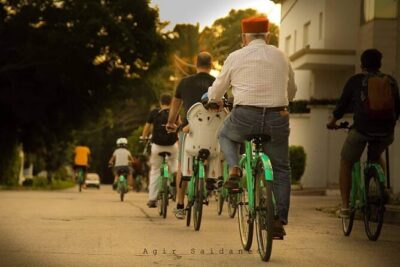
Guided Bike Tour of Carthage Archeological Site in Tunisia
Read our review →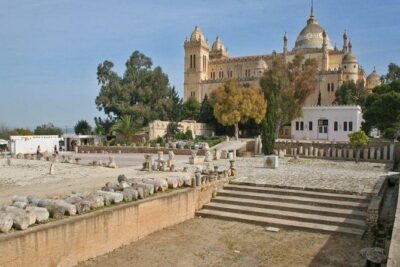
1 day excursion Tunis Sidi Bousaid Carthage departure from Sousse
Read our review →
Archaelogical Site Of Carthage + Picturesque Village Of Sidi Bou Said
Read our review →
Tunis, Sidi Bousaid and Carthage day trip from Hammamet
Read our review →Browse the lists this tour appears in