
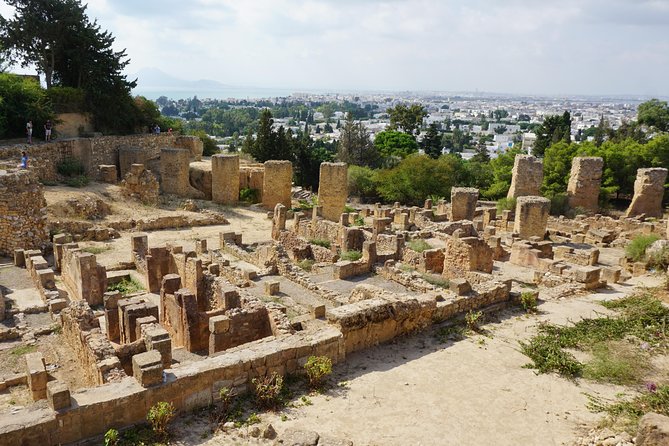
Reviewed · SIDI BOU SAID & CARTHAGE TOURS
Self guided bike tour of Carthage archeological site
Ancient ruins, open roads, and a bicycle make a fine Tunisian day.
This self-guided Carthage bike tour gives you the freedom to move between the city’s scattered archaeological sites without waiting for a group. I like the flexible one-to-eight-hour format, and I like that the route includes major sights such as the Punic sanctuary, Roman ports, Baths of Antoninus, Byrsa Hill, and the aqueducts. The main catch is that admission fees are not included, and the detailed guidebook is available only in French.
You collect a bicycle, helmet, map, and guidebook at 9 Rue Hannibal near the Carthage archaeological site. From there, you set your own pace. This works best if you enjoy making your own choices, but you should arrive prepared to navigate between sites and confirm the meeting point before setting out.
In This Review
- Key points to know before you book
- Why a bicycle makes sense at Carthage
- Starting at 9 Rue Hannibal
- The Tophet: a short but serious first stop
- The Punic Ports and Carthage Museum
- The main archaeological site deserves three hours
- A quiet pause at the North Africa American Cemetery
- The Carthage aqueduct and Malga Cisterns
- Roman villas and Byrsa Hill
- The Roman Theatre: a compact stop with useful scale
- The Baths of Antoninus are the grand finale
- What the $45 price really covers
- Choosing a half-day or full-day ride
- Who will get the most from this experience?
- Booking, cancellation, and final advice
- FAQ
- How much does the self-guided Carthage bike tour cost?
- How long does the experience last?
- What is included with the bicycle tour?
- What language is the guidebook in?
- Are archaeological site admissions included?
- Where does the tour begin and end?
- Can children take part?
Key points to know before you book
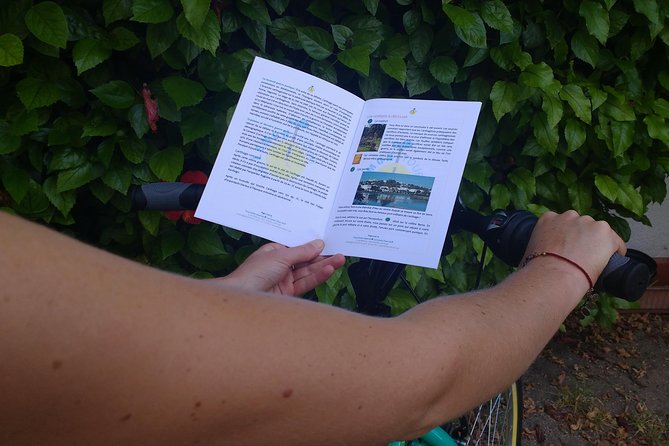
- A bicycle solves Carthage’s distance problem: The ruins are spread across several locations, and cycling lets you connect them without paying for separate taxis between stops.
- The tour is genuinely self-guided: You receive a map and a detailed French guidebook, then choose how long to spend at each site.
- The route covers the big Carthage sights: Expect the Tophet, Punic and Roman ports, Byrsa Hill, Roman villas, the theatre, aqueducts, and Baths of Antoninus.
- Bring money for site admissions: Entry tickets are not included at the archaeological stops, though the North Africa American Cemetery is free.
- French is important: The written guidebook is in French only, so this is a better fit if you read French or are comfortable exploring with limited written explanation.
- Check the address carefully: The meeting point is at 9 Rue Hannibal, and the provider identifies its Lemon Tour location on Google Maps with a bicycle displayed on the wall.
Why a bicycle makes sense at Carthage
Carthage is not one compact ruin with a single entrance. Its remains are spread around the modern town, so walking between every site can eat up much of your day. A bicycle gives you a practical way to connect the stops while keeping control of your schedule.
I like this format because you can spend ten minutes at a small site, then linger for an hour at the Baths of Antoninus or the main archaeological area. You are not tied to a guide’s timetable or a group’s slowest member.
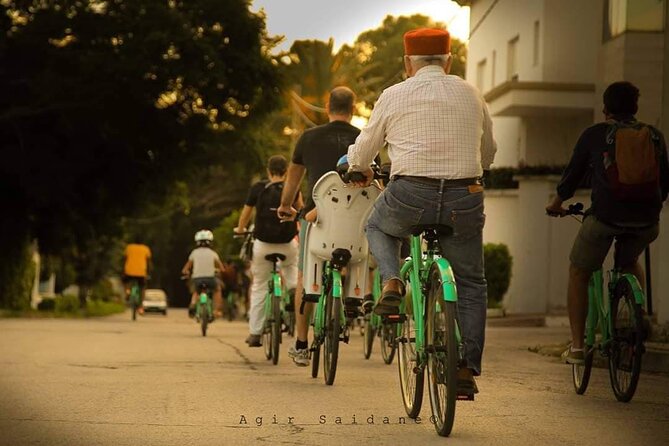
The route also uses roads described as mostly calm, with reduced traffic. That does not remove the need for care, especially around local streets and intersections, but it makes the bicycle approach more appealing than it might first sound.
The tour lasts about one to eight hours. A short outing can cover selected highlights, while a full day allows time for the major ruins, museum areas, and pauses along the way. The bicycle is not just a fun extra here. It is the practical link between places that would otherwise require several taxi rides.
More Sidi Bou Said and Carthage tours:
- Private tour: Medina,Carthage ,Sidi Bou Said, Bardo Museum+lunch
★ 5.0 · 230 reviews - Carthage, Bardo Museum, Sidi Bou Said and Medina Private Day Tour
★ 4.5 · 153 reviews - Guided Bike Tour of Carthage Archeological Site in Tunisia
★ 5.0 · 88 reviews
Starting at 9 Rue Hannibal
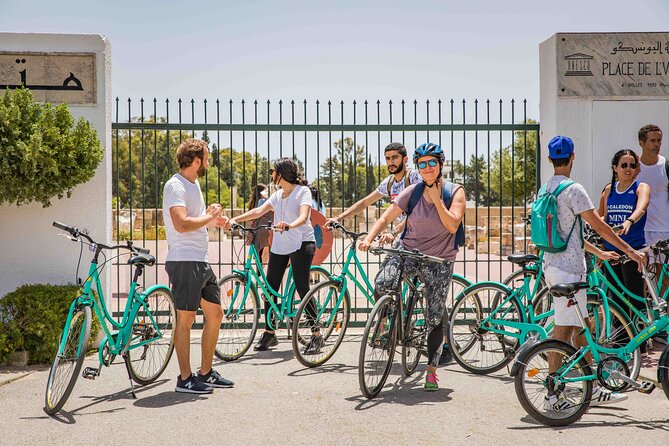
Your starting point is 9 Rue Hannibal, Site archéologique de Carthage 2025, Tunisia. The tour ends back at the same meeting point, so you return the bicycle there after exploring.
Give yourself time to find the location. One complaint about this experience involved difficulty locating the address, even with local taxi help. The provider says the Lemon Tour office is marked on Google Maps and can be recognized by a bicycle on the wall.
That detail matters. If you use a taxi, show the exact address and map pin rather than relying only on the name Carthage. It is also wise to save the provider’s contact details before arrival. A confusing start can turn an inexpensive bike outing into an expensive series of taxi rides.
Once you find the office, the basic arrangement is simple. You receive a bicycle, helmet, map, and detailed guidebook. Children must be accompanied by an adult, and the activity is private, meaning only your own group participates.
The Tophet: a short but serious first stop
The Tophet de Carthage is a Punic sanctuary and the first listed stop. The suggested time is about ten minutes, with admission extra.
This is a brief stop, but it gives the tour an important opening. Before moving into the later Roman remains, you encounter the earlier Punic side of Carthage. The guidebook can help explain what you are seeing, though the French-only text may limit its usefulness if you do not read French.
You should not feel pressured to spend a long time here. Ten minutes may be enough for a quick look and some orientation. If the Punic period interests you, you can stay longer and reduce time elsewhere.
The Punic Ports and Carthage Museum
The next stop brings you to the Punic Ports and Museum, with about five minutes suggested. Admission is not included.
The ancient ports help you understand Carthage as a maritime power. This is one of the places where a guidebook adds value because the remains may not explain themselves at a glance. The museum area can also help connect the visible ruins with the city’s earlier role.
Five minutes is a very short estimate, so treat it as a minimum rather than a rule. If the museum is open and you want more historical context, plan additional time. Since the experience is self-guided, you can make that choice without affecting anyone else.
More bike rides:
- Group Guided Bike Tour of Carthage Archeological Site in Tunisia
★ 5.0 · 57 reviews - Djerba Island: 1.5-Hour Quad Biking Adventure
★ 4.5 · 17 reviews - Quad Biking (ATV) in Douz Tunisia Sahara Desert
★ 5.0 · 7 reviews
The main archaeological site deserves three hours
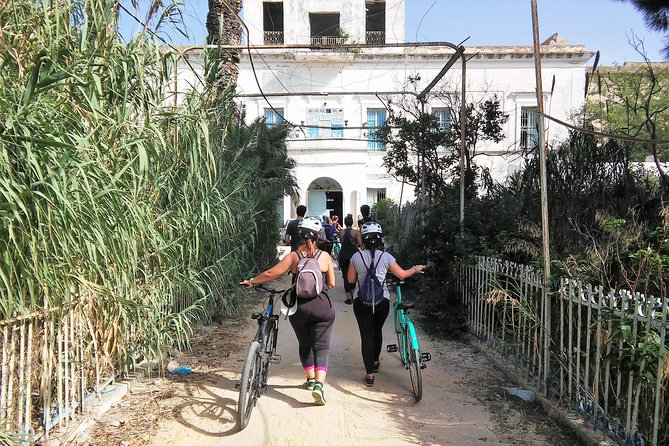
The Site Archéologique de Carthage is the central portion of the outing, with roughly three hours suggested. Admission is extra.
This is where the flexible format pays off most. The main archaeological area contains enough to reward slow looking, map checking, and repeated pauses. You can read the guidebook beside each section rather than trying to absorb everything in a rushed walk.
I would make this the anchor of your day. The smaller stops are valuable, but the main archaeological site deserves the longest block of time. Wear practical footwear even though you are cycling between locations, since you will still walk around the ruins.
Three hours also gives you room for a less hurried visit. You can pause for photographs, compare different sections of the site, and return to anything you skipped earlier. Just remember that the three-hour suggestion does not include the time needed to buy admission or cycle to the next stop.
A quiet pause at the North Africa American Cemetery
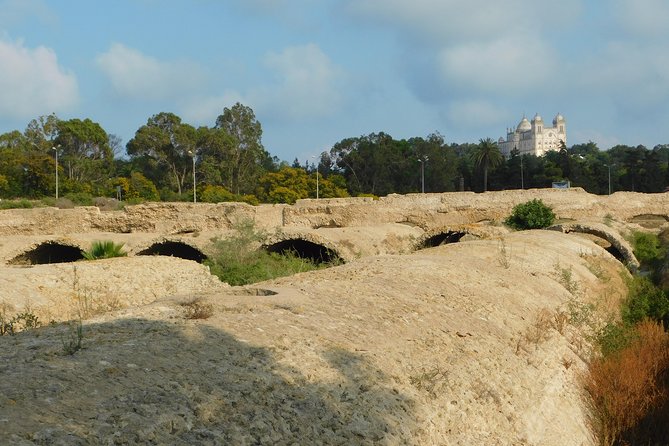
The North Africa American Cemetery is listed as a fifteen-minute stop, and admission is free.
This visit changes the tone of the day. After the ancient Punic and Roman sites, the cemetery offers a much more recent reminder of North Africa’s place in modern conflict. It is a respectful place to slow down rather than a quick photo stop.
Because there is no admission charge, it is an easy addition to the route. The fifteen-minute estimate gives you enough time for a concise visit, though you can stay longer if the setting calls for it.
The Carthage aqueduct and Malga Cisterns
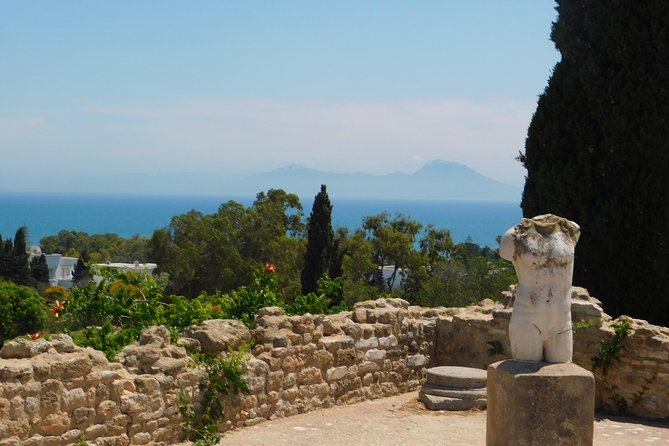
The Carthage Aqueduct, listed with the Malga Cisterns, is another short stop of about five minutes. Admission is not included.
The aqueducts show the engineering side of Carthage and its Roman-era development. You may find that the structure is easier to appreciate after seeing the city’s other remains, since it explains how water supported a large urban center.
Five minutes is again a quick estimate. You will likely spend longer if you want to study the construction or use the guidebook for context. This stop is especially useful for people who enjoy infrastructure, engineering, and the less glamorous systems that made ancient cities function.
Roman villas and Byrsa Hill
The Villas Romaines stop takes about twenty minutes and includes a Roman villa area. Admission is extra.
A villa offers a more personal view of Roman Carthage than a port or public bath. You can look for the shape of domestic space and imagine how private life fit within the larger city. The suggested twenty minutes is enough for a focused visit without making the villa the main event.
Byrsa Hill is included in the route, although no specific time is given. It is an important orientation point because the hill helps you understand how the different Carthage sites relate to one another. You should expect some extra walking and perhaps a slower bicycle approach around the hill.
Since there is no fixed guide leading you from one point to the next, use Byrsa Hill as a natural place to check your route. The map and French guidebook are your main tools here.
The Roman Theatre: a compact stop with useful scale
The Roman Theatre of Carthage is scheduled for about fifteen minutes, with admission extra.
A theatre is easy to understand as a public building, even when much of the original structure is gone. Fifteen minutes gives you time to inspect the site and read the relevant section of the guidebook before moving on.
I like having this stop on the route because it breaks up the larger archaeological areas. You get another view of public life in Roman Carthage without committing another long block of time.
The Baths of Antoninus are the grand finale
The Baths of Antoninus receive the longest suggested visit after the main archaeological site, about one hour. Admission is not included.
This is likely to be one of the most rewarding stops on the route. The scale of the baths helps you picture the size and organization of Roman Carthage. Even a partial ruin can make more sense when you have the freedom to walk, look, and reread the guidebook at your own pace.
Allow the full hour if you can. A rushed visit would undercut the value of cycling to the site. The Baths also work well near the end of the day, when you have already seen the Punic and Roman sides of Carthage and can place this large public complex in a wider setting.
What the $45 price really covers
The listed price is $45. That buys use of the bicycle, a helmet, the map, and a detailed guidebook covering Carthage and its surroundings.
The value depends on how much of the route you use. For a short ride with only a few stops, the price is less compelling because you may not take full advantage of the bicycle. For a half-day or full-day outing, the value improves. You are using one bicycle to connect sites that might otherwise require taxi fares, and you can spend more time at the places that interest you.
The price does not include admission to the archaeological sites, museum areas, villas, theatre, baths, or other listed paid stops. Build those costs into your budget before you arrive. The North Africa American Cemetery is free.
The French guidebook is an important part of the value, but it also sets a limit. If you do not read French, you will have the map and the sights, but not the full written explanation supplied with the tour. That does not make the ride impossible, but it does make it less informative.
Choosing a half-day or full-day ride
A half-day outing suits you if you want the major highlights without stopping at every listed location. You could focus on the main archaeological site, Byrsa Hill, the Baths of Antoninus, and one or two smaller sites.
A full-day ride makes more sense if you want to include the Tophet, ports, museum, American Cemetery, aqueducts, villas, theatre, and baths. The route is flexible, so a full day does not mean you must spend equal time everywhere.
The one-to-eight-hour range is useful for independent planners. You can shape the experience around your energy, interest, and admission budget. It also makes the tour a possible match for people who do not want a rigid morning-to-afternoon program.
Sidi Bou Said can also be visited during the same wider outing, according to the tour description. No exact timing or route details are supplied for that addition, so confirm the practical arrangements before counting on it as part of your schedule.
Who will get the most from this experience?
I would recommend this tour to independent visitors who like maps, ruins, and the freedom to stop when something catches their eye. It is especially useful if you want to see several Carthage sites without arranging separate transport for each one.
It can also suit families, provided children are accompanied by an adult. The private format means your group can set the pace, take breaks, and skip a site without holding up strangers.
I would be more cautious if you want a live, English-language explanation at every stop. The supplied written guidebook is in French only, and the experience is self-guided. You should also think twice if you are uncomfortable cycling on public roads or if finding a specific meeting point is stressful.
The strongest reason to book is control. The main drawback is that you must provide the organization yourself: locating the office, managing entry fees, following the map, and deciding how to divide your time.
Booking, cancellation, and final advice
You can cancel for a full refund up to 24 hours before the local start time. Cancellations or changes made within 24 hours are not refunded or accepted.
I would book this tour if you read French, enjoy independent sightseeing, and want a practical way to connect Carthage’s scattered remains. Confirm the meeting point on Google Maps, save the provider’s contact information, bring funds for admissions, and allow more than the suggested five or ten minutes at any site that interests you.
I would skip it if you need a fully guided experience in another language or if you prefer all entrance fees and transport handled in one package. For the right visitor, though, the bicycle turns Carthage from a collection of distant ruins into a manageable day of discovery.
FAQ
How much does the self-guided Carthage bike tour cost?
The listed price is $45. This includes the bicycle, helmet, map, and detailed guidebook.
How long does the experience last?
The tour lasts approximately one to eight hours. You can choose a shorter outing or spend most of the day following the route.
What is included with the bicycle tour?
The experience includes use of a bicycle, a helmet, a map, and a detailed guidebook about Carthage and the surrounding area.
What language is the guidebook in?
The written guidebook is available in French only.
Are archaeological site admissions included?
No. Admission tickets are not included for the Tophet, Punic Ports and Museum, main archaeological site, Malga Cisterns, Roman villas, Roman Theatre, or Baths of Antoninus. Entry to the North Africa American Cemetery is free.
Where does the tour begin and end?
The tour begins at 9 Rue Hannibal, Site archéologique de Carthage 2025, Tunisia. It ends back at the same meeting point.
Can children take part?
Yes, but children must be accompanied by an adult. The activity is private, so only your own group participates.
More self-guided routes
- Kairouan, El Djem, Monastir Self-Guided Excursion from Hammamet
★ 4.5 · 5 reviews - Tunis, Carthage and Sidi Bou Said Self-Guided Excursion from Hammamet
★ 4.5 · 4 reviews - Cap-Bon Self-Guided Excursion from Hammamet
★ 4.5 · 3 reviews
Just added around Tunis
- Explore Tunisia in Depth:The Private Grand Tour in 8 Days★ 5.0 · 3 reviews
- 3-Day South of Tunisia Guided Tour from Tunis★ 4.0 · 3 reviews
- Private Tour Bardo Museum, Carthage, Sidi Bou Said and Medina★ 4.5 · 3 reviews
- Private Group Day Tour Tunis Medina Carthage Sidi Bou Said★ 4.5 · 3 reviews
- Bardo Museum- The ruins of Carthage- Village of Sidi Bou Said★ 5.0 · 4 reviews
- 5 Days Tunisia Discovery Private Tour★ 5.0 · 4 reviews
- Tunis Carthage Private Arrival Airport Transfer to Tunis★ 5.0 · 4 reviews
- 4-Day Private Tour: Sahara and Djerba Island from Tunis and Hammamet★ 5.0 · 4 reviews
Sidi Bou Said & Carthage Tours, compared.
VIP Tour: Tunis Medina/Bardo, Sidi Bou Said, Carthage |PICKUP ALL
Read our review →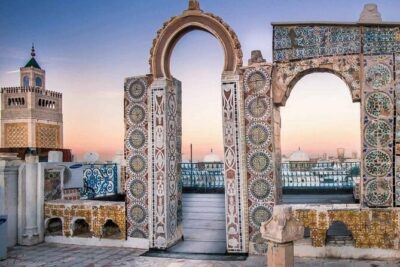
Private tour: Medina,Carthage ,Sidi Bou Said, Bardo Museum+lunch
Read our review →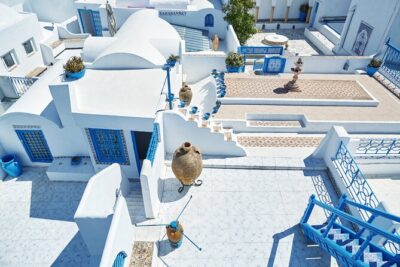
Carthage, Bardo Museum, Sidi Bou Said and Medina Private Day Tour
Read our review →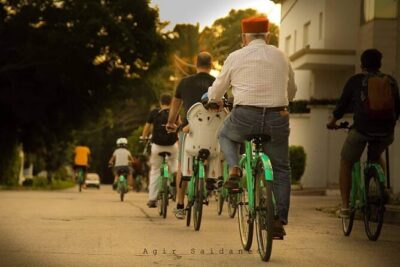
Guided Bike Tour of Carthage Archeological Site in Tunisia
Read our review →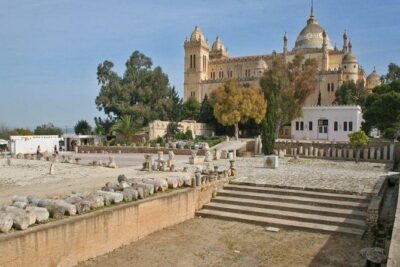
1 day excursion Tunis Sidi Bousaid Carthage departure from Sousse
Read our review →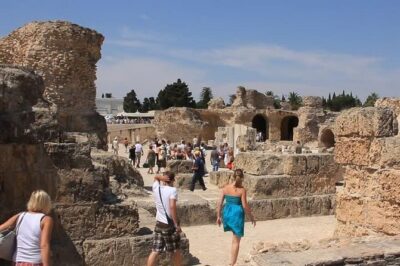
Archaelogical Site Of Carthage + Picturesque Village Of Sidi Bou Said
Read our review →
Tunis, Sidi Bousaid and Carthage day trip from Hammamet
Read our review →Browse the lists this tour appears in