
Reviewed · DOUGGA & TESTOUR DAY TRIPS
DAY TRIP TO Dougga & Bulla Regia , DEPARTURE FROM Tunis
Ancient Rome feels different in Tunisia. This private day trip links Dougga’s grand Roman ruins with Bulla Regia’s unusual underground villas, giving you two very different views of Roman North Africa in about eight hours. I like the private format, which lets your group travel with its own guide and driver, and I like that lunch, entrance fees, bottled water, coffee, and tea are included.
The strongest part is the contrast between the sites. Dougga gives you a broad Roman city with a theater, forum, temple, baths, and latrines, while Bulla Regia focuses on cool, partly underground homes and finely made mosaics. The main drawback is the long day from Tunis, with Bulla Regia about 160 kilometers away, so you should expect a good amount of time in the vehicle.
In This Review
- Key points to know before booking
- Why these two Roman sites work so well together
- Starting from Tunis at 8:00 am
- Dougga’s theater and Roman city center
- Dougga’s houses, baths, and daily routines
- The road to Bulla Regia and its underground villas
- Why the mosaics are the highlight at Bulla Regia
- Lunch and the value of the private format
- How physically demanding is the day?
- What the guide and driver add to the day
- Who should book this Dougga and Bulla Regia tour?
- Booking details and cancellation terms
- FAQ
- What is included in the tour price?
- Are alcoholic drinks included?
- What time does the tour start?
- Is this a private tour?
- How long is the experience?
- How far is Bulla Regia from Tunis?
- Can I cancel for a full refund?
- Should you book this day trip?
Key points to know before booking
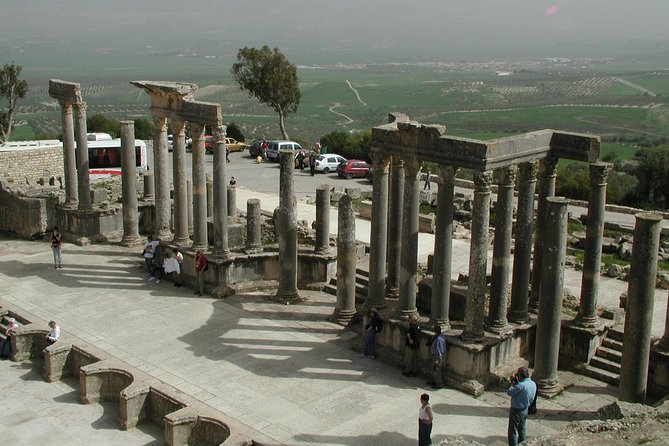
- Dougga is the grander site: You see a theater, marketplace, forum, Capitoline Temple, public baths, and other Roman remains across a large archaeological area.
- Bulla Regia offers something unusual: Its Roman villas included rooms below ground to escape the North African heat.
- A private tour keeps the day personal: Only your group takes part, with private transport and a guide rather than a large coach party.
- Lunch and entry fees are covered: The $175.29 price includes meals, drinks listed in the package, transportation, and all taxes and admission charges.
- Plan for a physically active visit: You will spend time walking around ancient ruins, so a moderate level of fitness is advised.
- The tour begins at 8:00 am: An early start helps fit both archaeological sites and lunch into one day.
Why these two Roman sites work so well together
Dougga and Bulla Regia are not duplicates. That matters because a full day of ancient ruins can blur together if every stop offers the same kind of monument.
Dougga gives you the public face of Roman life. Its open spaces and large buildings show how a Roman city organized religion, trade, politics, entertainment, bathing, and daily routines. Bulla Regia shifts the focus indoors, where villa design tells you how residents adapted Roman architecture to Tunisia’s hot climate.
I like this pairing because you get scale at Dougga and detail at Bulla Regia. One site helps you picture a city. The other helps you picture a home.
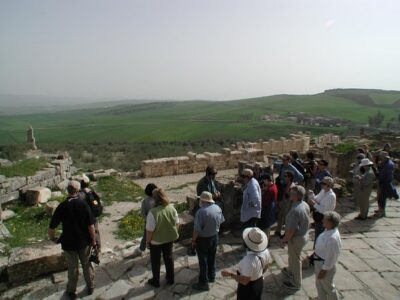
The tour is private, so your group does not need to match the pace of strangers. That can be useful at archaeological sites, where you may want to pause at a mosaic, ask about a temple, or move on from a feature that interests you less. The guide and driver were praised for being friendly, energetic, capable, and good company throughout the day, which is especially important when the route includes several hours on the road.
More Dougga day trips:
- Private Excursion to Testour, Dougga and Bulla Regia from Tunis.
★ 5.0 · 100 reviews - Full Day Dougga & Bulla Regia Via Testour Private tour with Lunch
★ 5.0 · 29 reviews - Private Guided Tour of Dougga and Testour Mosque
★ 4.5 · 15 reviews
Starting from Tunis at 8:00 am
The day begins at 8:00 am, with pickup offered from Tunis. The package provides an air-conditioned vehicle, private transport, bottled water, coffee or tea, and all fees and taxes.
That early start is practical rather than decorative. Dougga and Bulla Regia are both substantial sites, and the two-hour visits listed for each leave room for the drive, lunch, and transitions. You should still expect a full day, not a quick morning outing.
The private vehicle is one of the more useful inclusions here. A public transport trip to two archaeological sites would be difficult to arrange in one day, and a standard group coach could make the schedule feel rigid. Here, your own group travels together, with a driver who received strong praise for being pleasant and capable.
The route is also part of the experience. Bulla Regia is about 160 kilometers from Tunis, so this is not a short excursion just outside the capital. Bring water, use the drive to rest between sites, and wear shoes suited to uneven ancient surfaces.
Dougga’s theater and Roman city center
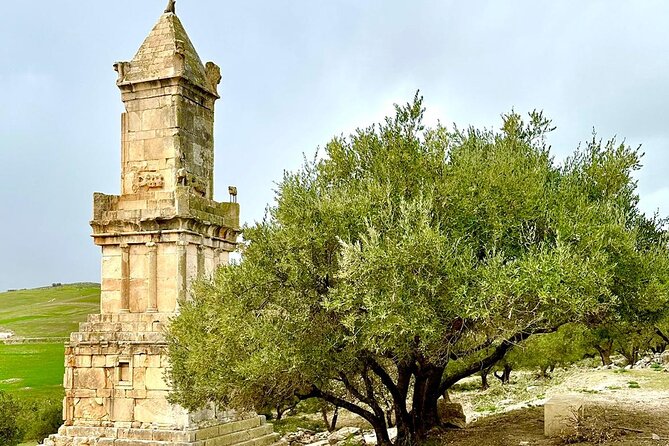
Dougga is the first major stop and receives about two hours. It contains some of the largest Roman ruins in North Africa, and its buildings give the visit a broad sense of how a Roman settlement worked.
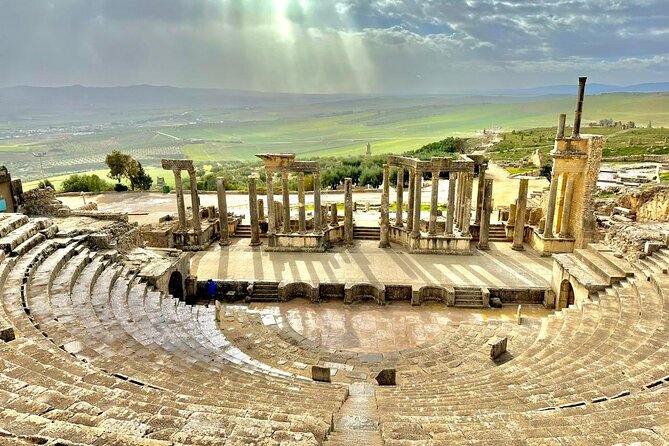
The tour starts at the theater, built in the second century and donated by the Gracchus family. A theater is an easy place to begin because its purpose is clear: this was a public setting for performances and civic life. From there, the route moves through the city’s commercial and political spaces.
You continue to the Place des Roses de Vent, then the marketplace dominated by Mercury, the Roman god of commerce. This is a useful reminder that Dougga was not only a collection of temples. People came here to buy and sell goods, meet others, conduct business, and take part in public life.
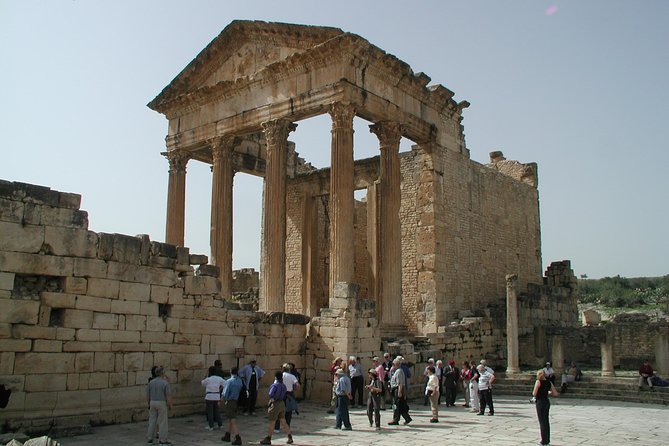
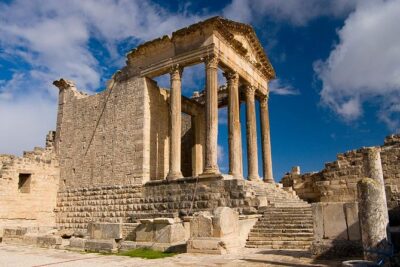
The Capitoline Temple is one of the day’s major sights. It was dedicated to Jupiter, Juno, and Minerva, the three principal Roman deities honored together in the Capitoline tradition. Its survival gives you a strong visual link to Roman religion and public authority.
The Forum follows, along with the Public Licinius Baths. These spaces show the importance of shared civic buildings. A Roman city needed more than houses. It needed places for worship, politics, commerce, washing, and social life.
Dougga’s houses, baths, and daily routines
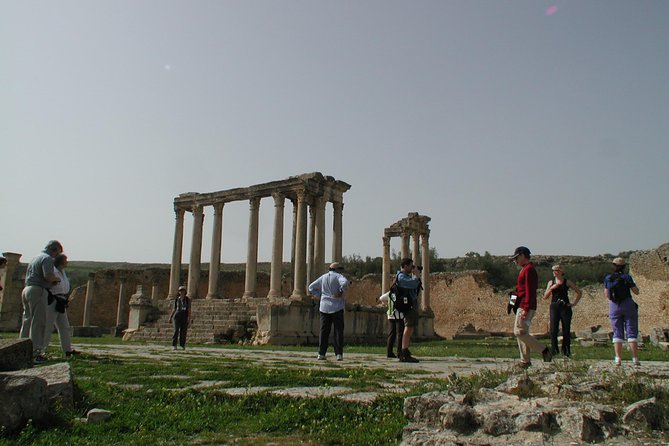
The final part of the Dougga visit includes the House of Trifolium, the Cyclopes Baths, and the twelve-seat latrines.
These smaller or more domestic features add balance to the grand monuments. The House of Trifolium offers a look at private life, while the baths show how much importance Roman society placed on communal bathing. The twelve-seat latrines may draw a laugh, but they are also practical evidence of how public facilities worked.
I find details like these valuable because they keep the visit from becoming a parade of impressive columns. Temples and theaters show power and ceremony. Houses, baths, and latrines show ordinary routines and the practical systems that supported urban life.
Two hours is enough for a focused introduction, but Dougga is large. You will not absorb every stone or corner in that time. The guide’s role matters here, and the strong feedback on the guide’s energy and command of the subject is reassuring. A good explanation can help you understand why a ruin matters instead of leaving you to identify one broken wall after another.
More day trips:
- 1 day excursion Tunis Sidi Bousaid Carthage departure from Sousse
★ 5.0 · 87 reviews - Private Day Trip Ksar Ghilane Oasis
★ 5.0 · 53 reviews - Tunis, Sidi Bousaid and Carthage day trip from Hammamet
★ 4.5 · 44 reviews - Door of the tunisian desert Ksar Ghilane and Matmata: Full one Day
★ 4.0 · 42 reviews
The road to Bulla Regia and its underground villas
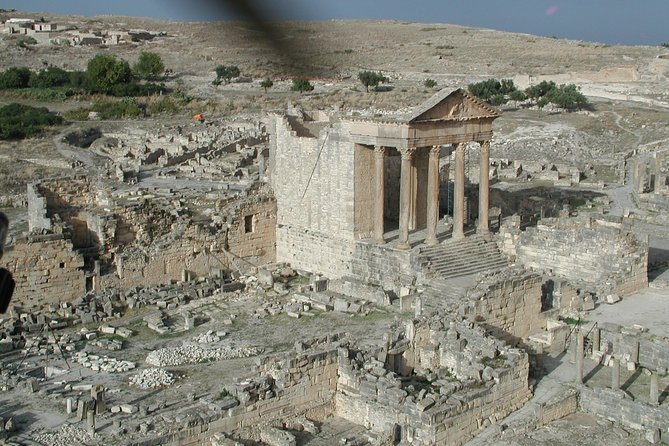
After Dougga, the tour continues to Bulla Regia. The site is about 160 kilometers from Tunis, and its main attraction is a clever architectural response to heat.
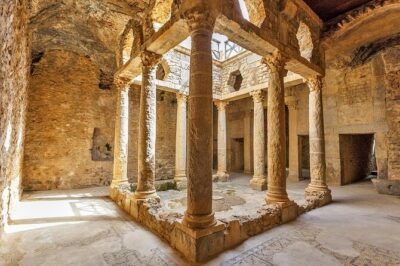
Roman villas at Bulla Regia were built with one floor above ground and another below. The lower level helped residents avoid the worst of the heat, creating cooler living areas beneath the surface. This design makes Bulla Regia different from the usual Roman ruin experience.
Seven villas have been excavated so far. They are named after the mosaics found inside, which tells you where much of the site’s appeal lies. At Dougga, the big civic buildings dominate. At Bulla Regia, the villas and their floors reward closer attention.
You may find the underground rooms more memorable than the larger monuments because the design is immediately understandable. It is not just an architectural curiosity. It is a direct response to climate, comfort, and daily living.
The tour allows about two hours at Bulla Regia. That gives you time to see the villas and examine the mosaics without turning the stop into a rushed photo break. Still, the combination of uneven ground, steps, and ancient remains means you should be comfortable walking for extended periods.
Why the mosaics are the highlight at Bulla Regia
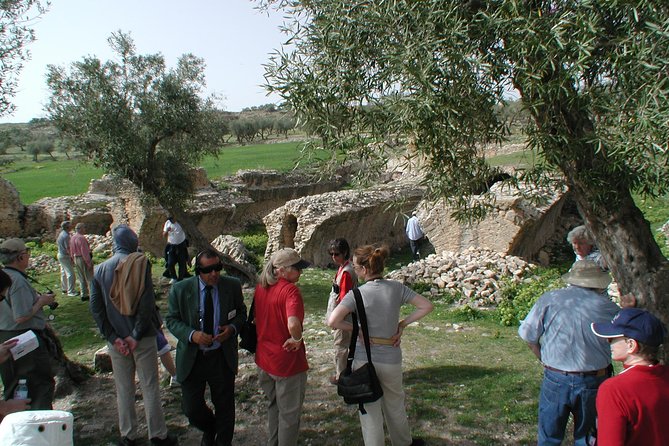
The mosaics give Bulla Regia its strongest visual appeal. They are tied to the villas themselves, so you see decorative art in the setting where it was used rather than in a museum display removed from its original context.
The mosaics also help you picture the homes as lived-in spaces. Ancient villas were not bare stone shells when their owners occupied them. Patterned floors and decorated rooms gave these residences a sense of status, taste, and comfort.
The visit is especially rewarding if you enjoy small details. At Dougga, you look across a city and its monumental buildings. At Bulla Regia, you look down into rooms and across decorated surfaces. I would give Bulla Regia your full attention even if Dougga initially feels more dramatic.
The guide can also help connect the mosaics to the villa layout. The most useful explanation here is not simply identifying the picture or pattern. It is understanding how the underground floor worked and why the Romans chose this design in Bulla Regia.
Lunch and the value of the private format
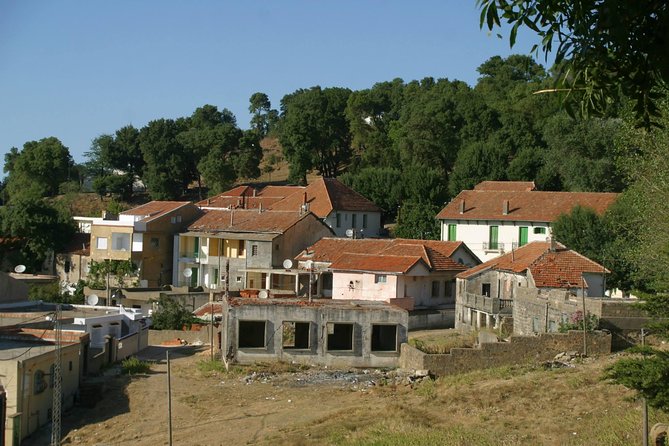
Lunch at a local restaurant is included, along with coffee or tea and bottled water. Alcoholic drinks and soda are not included, so you should budget separately if you want either.
A provided lunch makes sense on this route. The sites are far enough from Tunis that stopping for a meal is necessary, and having it arranged keeps the day moving. It also gives you a chance to eat local food rather than relying on snacks in the vehicle.
The private format is the main reason to consider this tour instead of trying to combine the sites independently. Your group gets private transportation, one guide, and a driver, with no other party sharing the activity. If you are traveling with family or friends, the ability to keep questions and pacing within your own group adds real value.
The tradeoff is price. At $175.29 per person, this is not the cheapest way to see Roman ruins in Tunisia. But the price includes a private air-conditioned vehicle, guide service, lunch, bottled water, coffee or tea, admission tickets, and taxes. For a small group that values comfort and a direct route, the package is easier to justify. Solo visitors or people watching every dollar may find the cost harder to accept.
Group discounts are offered, though the available information does not specify the discount amount. It is worth checking the final price for your party before booking.
How physically demanding is the day?
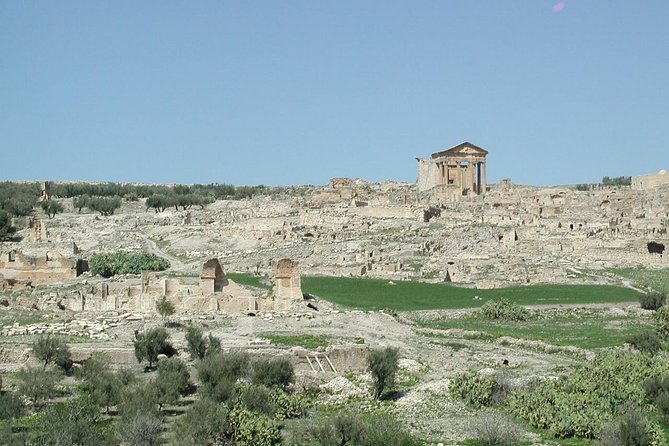
The tour calls for a moderate level of physical fitness. That is a sensible warning, since both locations are archaeological sites rather than polished indoor museums.
You will walk between ruins, spend time standing, and may encounter uneven surfaces. Bulla Regia’s below-ground villa design may also involve changes in level. The available details do not provide a specific accessibility plan, so anyone with mobility concerns should ask the operator before reserving.
Good walking shoes matter more than stylish ones. Bottled water is included, but comfortable clothing and protection from the sun remain sensible choices for a day spent outdoors.
The weather can also affect the outing. If poor weather causes cancellation, you can receive a different date or a full refund. The activity also requires a minimum number of participants, despite being private for your group, so a failure to meet that minimum can lead to a new date, another experience, or a refund.
What the guide and driver add to the day
The human side of this tour received the clearest praise. The guide was described as energetic, friendly, and well informed, while the driver was described as capable and pleasant.
That combination is important on a long archaeological day. The guide needs to make Roman history understandable without turning every stop into a lecture. The driver needs to handle the long route calmly and keep the day comfortable.
I would choose this tour for the guide-driver team as much as for the ruins. Dougga and Bulla Regia have enough visual interest to reward you on their own, but context makes the remains far easier to read. A personal guide can also adjust explanations for someone new to Roman history or for someone already familiar with it.
The small review sample gives the tour a strong 4.8 rating from four reviews, but that is not enough evidence to promise a perfect day for every group. The most consistent strengths are organization, friendliness, transport, and the quality of the explanations. The available feedback also hints that a few improvements could be made, though it does not provide enough detail to identify a specific recurring problem.
Who should book this Dougga and Bulla Regia tour?
I would recommend it most strongly to:
- People staying in Tunis who want to see major Roman sites in one day
- First-time visitors to Tunisia who want historical context from a guide
- Couples, families, or friends who prefer a private vehicle
- Anyone interested in Roman architecture, mosaics, and daily life
- Visitors who value having lunch, entrance fees, and transport handled together
I would think twice if you dislike long road journeys or prefer a slow visit to one site. Dougga alone can fill much of a day for someone who wants to examine every building carefully. Adding Bulla Regia gives you more variety, but it also makes the schedule more demanding.
This is also not the best fit for someone seeking a casual sightseeing day with little walking. The moderate fitness requirement is worth taking seriously.
Booking details and cancellation terms
Pickup is offered, and the start time is 8:00 am. Confirmation is provided when you book, and the tour is described as near public transportation.
You can cancel up to 24 hours before the start time for a full refund. Cancellations or changes made within 24 hours are not accepted for a refund. Cutoff times use local time, so check the clock carefully if your plans change.
FAQ
What is included in the tour price?
The price includes lunch, coffee or tea, bottled water, an air-conditioned vehicle, private transportation, admission fees, and all taxes.
Are alcoholic drinks included?
No. Alcoholic beverages and soda are not included in the tour price.
What time does the tour start?
The tour starts at 8:00 am.
Is this a private tour?
Yes. Only your group participates in the private tour or activity.
How long is the experience?
The full trip lasts about eight hours. The planned visit is about two hours at Dougga and two hours at Bulla Regia, with the remaining time used for driving, lunch, and transitions.
How far is Bulla Regia from Tunis?
Bulla Regia is about 160 kilometers from Tunis.
Can I cancel for a full refund?
Yes, if you cancel at least 24 hours before the experience begins. Cancellations within 24 hours are not refundable. If the operator cancels because of poor weather or because the minimum number of participants is not met, you will be offered another date or experience, or a full refund.
Should you book this day trip?
I would book this tour if you want two important Roman sites without arranging a complicated route yourself. Dougga supplies the large public monuments, while Bulla Regia gives you the memorable underground villas and mosaics. Lunch, tickets, water, and private transport make the $175.29 price easier to defend, especially for a small group.
I would skip it only if the long drive or moderate walking sounds tiring. For history newcomers and serious ancient-world fans alike, this is one of the more useful day trips from Tunis, provided you are ready for an early start and a full day on the road.
Just added around Tunis
- 3-Day South of Tunisia Guided Tour from Tunis★ 4.0 · 3 reviews
- Explore Tunisia in Depth:The Private Grand Tour in 8 Days★ 5.0 · 3 reviews
- Private Tour Bardo Museum, Carthage, Sidi Bou Said and Medina★ 4.5 · 3 reviews
- Private Group Day Tour Tunis Medina Carthage Sidi Bou Said★ 4.5 · 3 reviews
- 5 Days Tunisia Discovery Private Tour★ 5.0 · 4 reviews
- Bardo Museum- The ruins of Carthage- Village of Sidi Bou Said★ 5.0 · 4 reviews
- Tunis Carthage Private Arrival Airport Transfer to Tunis★ 5.0 · 4 reviews
- 4-Day Private Tour: Sahara and Djerba Island from Tunis and Hammamet★ 5.0 · 4 reviews
Dougga & Testour Day Trips, compared.
Private Excursion to Testour, Dougga and Bulla Regia from Tunis.
Read our review →
Full Day Dougga & Bulla Regia Via Testour Private tour with Lunch
Read our review →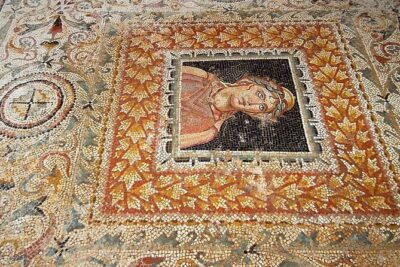
Private Day Trip to Testour, Dougga and Bulla Regia from Hammamet
Read our review →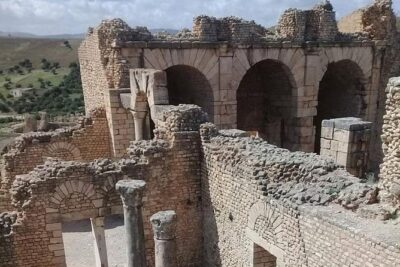
Private Guided Tour of Dougga and Testour Mosque
Read our review →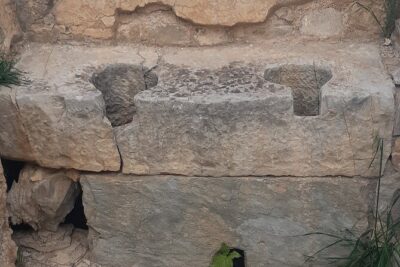
Browse the lists this tour appears in