
Reviewed · DOUGGA & TESTOUR DAY TRIPS
Dougga and Bulla Regia Guided Tour From Tunis
Roman ruins with a Tunisian twist. This private day trip links three very different places: the grand hilltop remains of Dougga, the underground homes of Bulla Regia, and the Andalusian village of Testour. I like the private car, which lets your group travel at its own pace, and I like the chance to see two major archaeological sites in one day without arranging several separate transfers.
The main drawback is the long road time. The tour lasts about seven to eight hours, but the guided visits add up to only about three hours, so you should expect a full day with plenty of time in the vehicle. Food is another small question mark: the program includes local tasting, but one poor experience involved a disappointing wrap eaten standing near a bin.
In This Review
- Key points before you book
- Why this route works from Tunis
- Dougga: give the best time to Tunisia’s Roman showpiece
- Bulla Regia and its cool underground houses
- Testour brings tea, cheese, and Andalusian culture
- The private car and the value of the guide
- How much walking and outdoor time should you expect?
- Who will get the most from this day trip?
- Booking, cancellation, and practical details
- Should you book the Dougga and Bulla Regia tour?
- FAQ
- How long does the Dougga and Bulla Regia tour last?
- What is the price of the tour?
- Is hotel pickup offered?
- Is this a private tour?
- Are entrance tickets included?
- How long is the visit to Bulla Regia?
- How long is the visit to Dougga?
- What happens in Testour?
- Can service animals join the tour?
- What is the cancellation policy?
Key points before you book
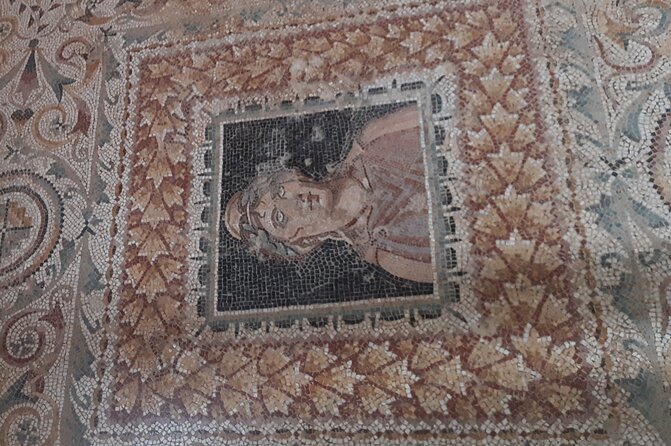
- Dougga is the main event: Allow about 1.5 to 2 hours for Tunisia’s UNESCO-listed Roman site, with broad views and a large number of well-preserved remains.
- Bulla Regia offers something genuinely unusual: Its underground houses show how Roman residents used cooler rooms below street level.
- Testour adds a human touch: Tea, regional cheese, an Andalusian village, a cultural center, and the Great Mosque make this more than an archaeology-only outing.
- The private format is useful: Only your group takes part, and hotel pickup and drop-off are offered.
- Guide quality matters: Ghassen earned especially warm praise for clear explanations and useful Tunisia advice, while Ameur was singled out as a punctual, capable driver.
- Plan for language clarity: A multilingual guide may need to balance different language requests within the same group, so confirm your preferred language before departure.
Why this route works from Tunis
Dougga and Bulla Regia are not quick city-center stops. They sit well beyond Tunis, and reaching both by ordinary public transport would take planning, connections, and patience. This tour solves the main problem by putting the sites into one private-car route with a driver and certified guide.
That convenience is the real value of the $141.36 price per person. The cost is not simply for entrance tickets. You are paying for transport, planning, site access, a private group setting, and guided visits at two large archaeological areas. The price makes more sense if you are traveling with friends or family, since group discounts may be available and the vehicle is reserved for your party.
The tour is normally booked about 25 days ahead. That is a useful sign that you should not leave this excursion until the last minute if it is important to your Tunisia plans. Confirmation arrives at booking, pickup is offered, and the service includes a mobile ticket.
The route requires a full day, even though each archaeological stop is fairly focused. You get around one hour at Bulla Regia, 1.5 hours at Dougga, and about 30 minutes in Testour. The rest is road time, which becomes part of the experience as you pass through the countryside and talk with your driver or guide.
More Dougga day trips:
- Private Excursion to Testour, Dougga and Bulla Regia from Tunis.
★ 5.0 · 100 reviews - Full Day Dougga & Bulla Regia Via Testour Private tour with Lunch
★ 5.0 · 29 reviews - Private Guided Tour of Dougga and Testour Mosque
★ 4.5 · 15 reviews
Dougga: give the best time to Tunisia’s Roman showpiece
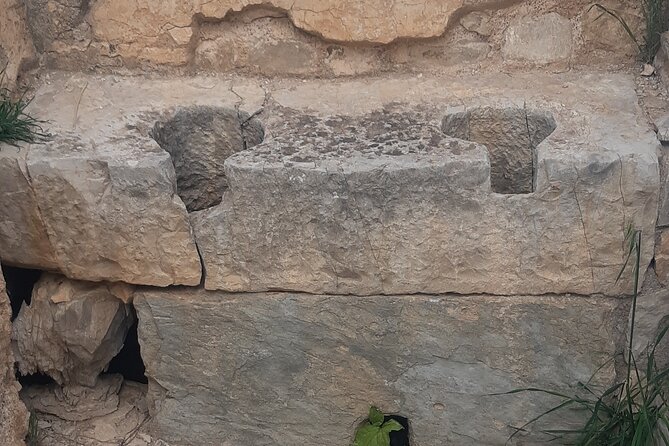
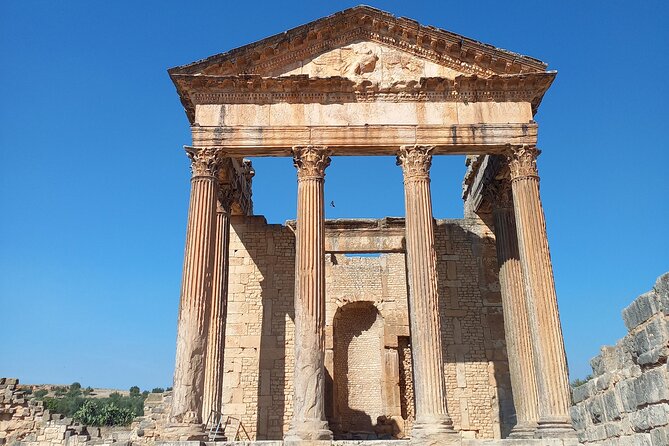
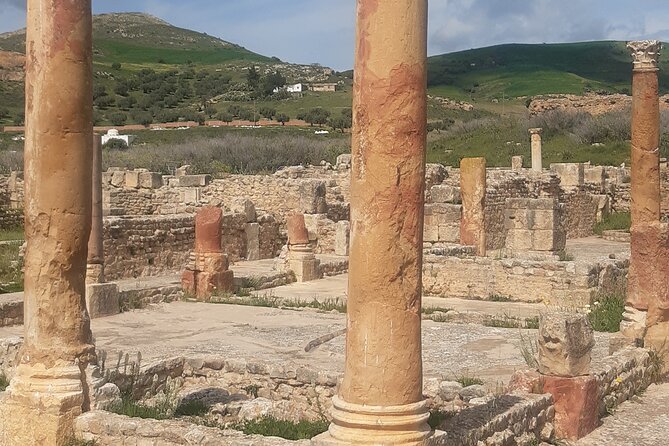
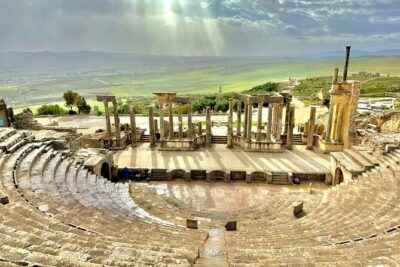
Dougga deserves pride of place on this route. It is a UNESCO World Heritage site with a scale that helps you understand how important this ancient settlement once was. The site is not just one monument surrounded by scattered stones. It is a broad archaeological area where temples, public buildings, streets, and theaters create a sense of a functioning town.
The visit lasts about 1.5 hours in the stated schedule, though the overview allows about two hours. That difference is worth noting. Your exact time may depend on traffic, the pace of your group, and how much time is needed at Bulla Regia and Testour. If Dougga is your top priority, tell the guide early.
The setting is part of Dougga’s appeal. From the ruins, you can look across open Tunisian scenery rather than modern city streets. The views make the site easier to picture as a real settlement, not merely an archaeological display. Bring a hat, water, and comfortable shoes, since the site is large and the route involves walking outdoors.
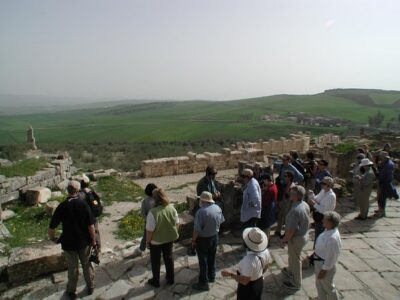
Your certified guide will explain what you are seeing in place. That matters at Dougga because the remains can otherwise feel scattered. A good explanation connects a column, temple, or public building to the wider town plan and gives you a reason to pause instead of rushing from one photogenic ruin to the next.
The strongest praise for the excursion centers on Dougga. One visitor called it an enormous highlight, and another particularly urged people visiting Tunisia to include it in their plans. That enthusiasm is understandable: Dougga offers both impressive ruins and a sense of space that smaller Roman sites may lack.
Still, you should set realistic expectations. This is not a polished museum complex with every object labeled in several languages. You are visiting an open archaeological site, and the guide’s explanations will shape how much you take away. The quality of that explanation matters greatly.
Bulla Regia and its cool underground houses
Bulla Regia gives the day a different rhythm. Dougga is about scale and setting. Bulla Regia is about architecture, especially the way wealthy Roman residents built parts of their homes below ground.
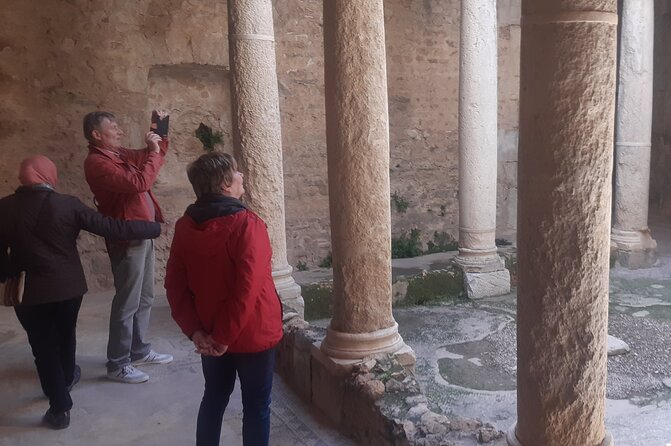
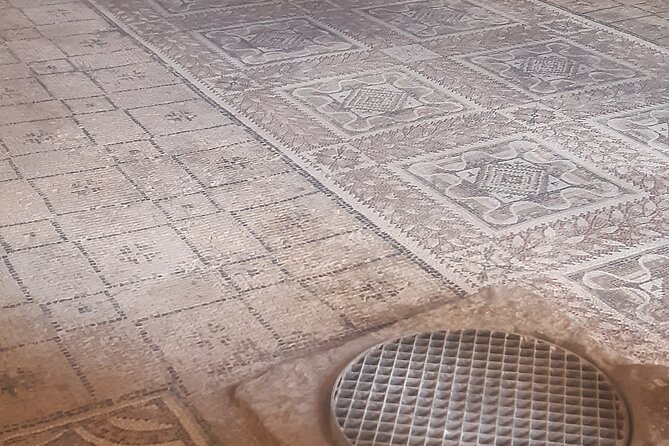
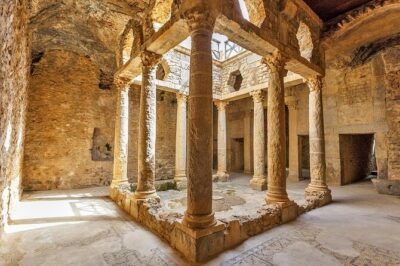
The underground houses are the reason to visit. They were designed to offer shelter from the heat, and they create rooms that feel different from the exposed ruins at Dougga. You can see how domestic life was organized below street level, rather than simply viewing grand public monuments.
The site visit lasts about one hour, with admission included. That is enough for a focused introduction, but it is not a leisurely archaeological study. Listen closely to the guide and keep your attention on the details of the houses, floors, and decorative work.
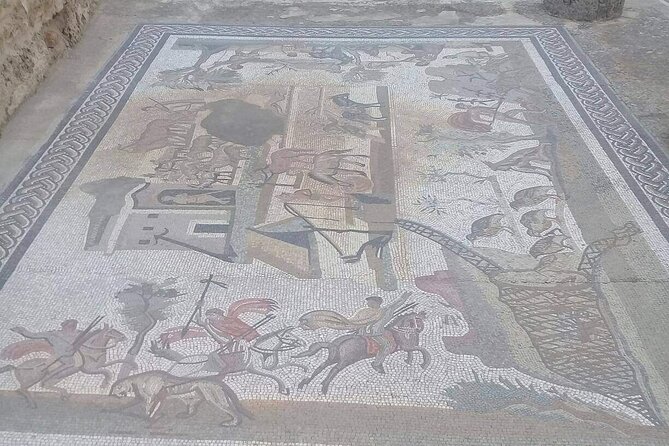
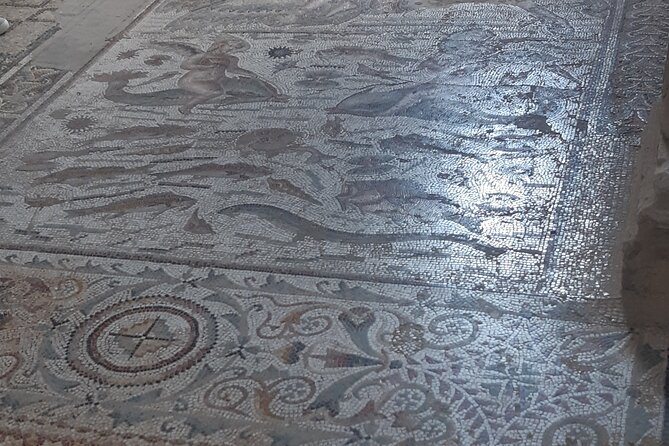
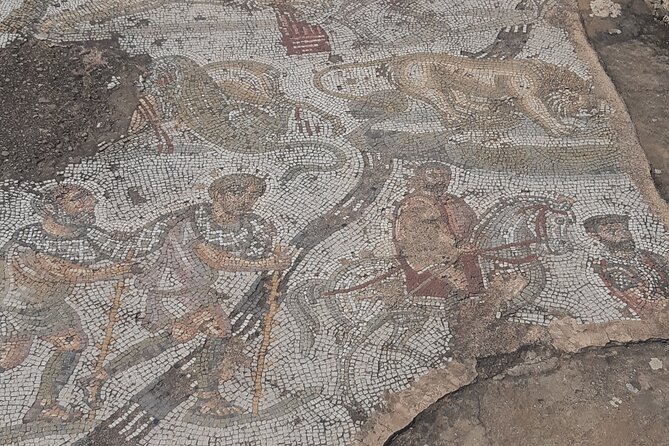
One of the best-known details is the mosaic of Venus. Exquisite mosaics are a major part of Bulla Regia’s appeal, and the Venus mosaic gives you a memorable visual anchor after the long drive. The underground design is the real surprise, though. It shows practical adaptation to the climate in a way that stone temples alone cannot.
Bulla Regia may suit you especially well if you prefer homes, rooms, and everyday life to monumental ruins. It is also a good counterpoint to Dougga. Seeing both in one day helps you compare public Roman architecture with private domestic spaces.
There is one practical limitation: an hour can pass quickly. If you enjoy Roman archaeology, you may wish you had more time. The private format gives you some flexibility, but the route still has three stops and a return journey to Tunis. Ask how much time is available before you begin the site visit, so you can focus on the parts that interest you most.
Testour brings tea, cheese, and Andalusian culture
Testour is a short stop, about 30 minutes, but it keeps the trip from becoming a parade of ancient stones. The village is known here for its Andalusian character, and the visit includes tea in a setting described as a place of Cordoba, along with the cultural center and the Great Mosque.
The mosque is the main architectural stop. Calling it an Andalusian medieval mosque gives you a clue about the cultural connections represented in Testour. You will not have a long time to study the village, but the stop adds a later chapter to the day’s story, after the Roman sites.
The program also includes a taste of regional cheese. That small food experience is a useful way to connect the excursion to present-day Tunisia. It is not a full meal, so do not treat the Testour stop as your only food plan for the day.
The food element deserves a balanced warning. The description promises local street food, and the regional cheese tasting sounds appealing. Yet one Spanish-language account reported a poor wrap served in an unpleasant eating spot. That does not prove every group receives the same food, but it does suggest you should keep expectations modest and carry a snack if you are particular about lunch.
A quick stop can be charming, but it can also feel rushed. Testour works best if you see it as a brief cultural pause, not a full village tour. The tea, mosque, cultural center, and cheese tasting provide a change of pace, while Dougga and Bulla Regia remain the main reasons to book.
A few more excursions of this kind worth a look:
- Private Tour to Kairouan, El Jem & Monastir from Tunis_hammamet
★ 5.0 · 301 reviews - Private tour: Medina,Carthage ,Sidi Bou Said, Bardo Museum+lunch
★ 5.0 · 230 reviews - Carthage, Bardo Museum, Sidi Bou Said and Medina Private Day Tour
★ 4.5 · 153 reviews - Guided Bike Tour of Carthage Archeological Site in Tunisia
★ 5.0 · 88 reviews
The private car and the value of the guide
The private format is one of the strongest features. Only your group participates, so you are not tied to a large bus party or a fixed crowd pace. Pickup and drop-off are offered, and the driver can focus on your party rather than managing a full coach.
A private vehicle also makes the long journey more pleasant. You can use the road time to ask about Tunisian history, current politics, and daily life. One highly positive account praised exactly this sort of conversation during the drive, along with the rolling countryside.
The driver matters on a day with this much road time. Ameur received specific praise for excellent organization, punctuality, and driving. Another account described the pickup as right on time, while several others highlighted smooth hotel pickup and drop-off. Those details are not glamorous, but they make a major difference when you have a strict day plan.
Ghassen was singled out as an especially strong guide. His explanations were described as clear and detailed, and he also offered useful suggestions for the rest of a Tunisia trip. If you are able to request a guide, asking whether Ghassen is available could be worthwhile, though availability is not guaranteed.
You should also confirm the language you want before the day begins. The service can use multilingual guiding, but one mixed-language group had a disagreement when a French booking shared the tour with someone who wanted English. The guide eventually spoke mostly English, leaving the French-speaking participant unhappy. If language is important to you, state it clearly at booking and again at pickup.
The overall rating is 4.7 from 11 reviews, with 91 percent recommending the experience. That is a strong result, but the small number of reviews means you should still read the details of the service rather than relying on the score alone. The pattern is clear: punctuality, driving, private organization, and site guiding receive the most praise. Food and language coordination require more care.
How much walking and outdoor time should you expect?
The tour is suitable for most participants, and service animals are allowed. It is also near public transportation, although the experience itself is built around private pickup and driving.
You will spend time walking at two open archaeological sites. Dougga is the larger site, so comfortable footwear is sensible. The information provided does not specify the exact terrain or accessibility arrangements, so anyone with mobility concerns should ask the provider for current details before booking.
Weather matters. The experience requires good weather, and poor conditions can lead to a new date or a full refund. Since much of the day takes place outdoors, check the forecast and bring protection from sun or rain as appropriate.
The tour duration includes travel time. That point is easy to miss when you see three stops listed. You should not expect seven or eight hours of continuous sightseeing. Instead, think of this as a long countryside outing with three guided visits placed along the route.
Who will get the most from this day trip?
I would recommend the tour to anyone staying in Tunis who wants to see major Roman sites without renting a car or planning a complicated route. The private setup is particularly useful for couples, families, and small groups who value flexibility and direct transport.
It suits people who enjoy history but do not need every minute filled with formal museum displays. Dougga offers impressive public ruins, Bulla Regia reveals unusual homes and mosaics, and Testour adds a later cultural layer. Together, they provide more variety than a single archaeological stop.
It is also a good option for first-time visitors to Tunisia who want context from a local guide. The driver and guide can give you an introduction to the country beyond the monuments, and Ghassen was praised for offering useful ideas for other parts of a Tunisia trip.
I would hesitate if you dislike long drives, want a slow lunch, or need a full day at one site. The schedule is ambitious. You are seeing three places, but none receives an extended, unhurried treatment.
Language-sensitive visitors should confirm arrangements before paying. The service can be multilingual, but the mixed-language complaint shows why a clear agreement matters. Food-focused visitors should also consider bringing something extra, since the tasting and street-food arrangements may not satisfy everyone.
Booking, cancellation, and practical details
The price is $141.36 per person, with group discounts offered. Admission tickets are included for Bulla Regia and Dougga, while the Testour visit has no separate admission charge.
You receive confirmation at the time of booking, and a mobile ticket is available. Pickup is offered, and the activity is private to your group. Most participants can take part, and service animals are allowed.
Free cancellation is available if you cancel at least 24 hours before the local start time. Changes made inside that 24-hour window are not accepted, and cancellations inside the window are not refunded. If bad weather forces the provider to cancel, you will be offered another date or a full refund.
Should you book the Dougga and Bulla Regia tour?
Book it if you want an efficient private route from Tunis to two of Tunisia’s most important Roman archaeological sites, with Testour added for cultural variety. The strongest reasons are Dougga’s scale, Bulla Regia’s underground houses, the private vehicle, and the reliable organization praised by several guests.
Before booking, confirm your pickup point, preferred guiding language, and how the day’s time will be divided. Bring water, practical shoes, and a backup snack. If those small preparations suit you, this is a strong-value day trip for seeing far more than you could manage easily on your own.
FAQ
How long does the Dougga and Bulla Regia tour last?
The complete experience lasts approximately seven to eight hours, including travel time between Tunis and the sites.
What is the price of the tour?
The listed price is $141.36 per person. Group discounts are available.
Is hotel pickup offered?
Yes. Pickup and drop-off are offered as part of the private tour service.
Is this a private tour?
Yes. Only your group participates in the activity.
Are entrance tickets included?
Admission tickets are included for Bulla Regia and Dougga. The Testour stop has no separate admission charge.
How long is the visit to Bulla Regia?
The guided visit at Bulla Regia lasts about one hour.
How long is the visit to Dougga?
The guided visit at Dougga lasts about 1.5 hours. The broader tour description allows approximately two hours at the site.
What happens in Testour?
The stop includes tea, a visit to the cultural center and Great Mosque, and a tasting of regional cheese. The Testour visit lasts about 30 minutes.
Can service animals join the tour?
Yes. Service animals are allowed.
What is the cancellation policy?
You can receive a full refund if you cancel at least 24 hours before the experience start time. Poor weather may result in a different date or a full refund.
Just added around Tunis
- Explore Tunisia in Depth:The Private Grand Tour in 8 Days★ 5.0 · 3 reviews
- 3-Day South of Tunisia Guided Tour from Tunis★ 4.0 · 3 reviews
- Private Tour Bardo Museum, Carthage, Sidi Bou Said and Medina★ 4.5 · 3 reviews
- Private Group Day Tour Tunis Medina Carthage Sidi Bou Said★ 4.5 · 3 reviews
- Bardo Museum- The ruins of Carthage- Village of Sidi Bou Said★ 5.0 · 4 reviews
- 5 Days Tunisia Discovery Private Tour★ 5.0 · 4 reviews
- Tunis Carthage Private Arrival Airport Transfer to Tunis★ 5.0 · 4 reviews
- 4-Day Private Tour: Sahara and Djerba Island from Tunis and Hammamet★ 5.0 · 4 reviews
Dougga & Testour Day Trips, compared.
Private Excursion to Testour, Dougga and Bulla Regia from Tunis.
Read our review →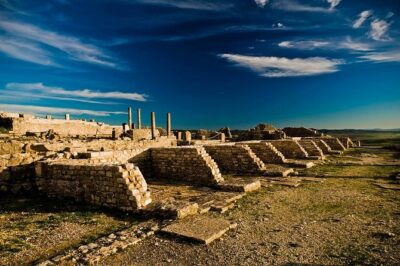
Full Day Dougga & Bulla Regia Via Testour Private tour with Lunch
Read our review →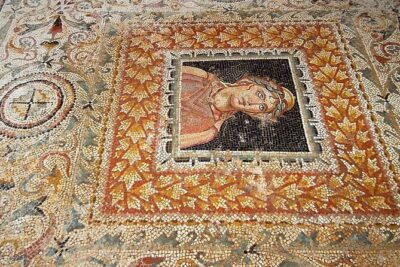
Private Day Trip to Testour, Dougga and Bulla Regia from Hammamet
Read our review →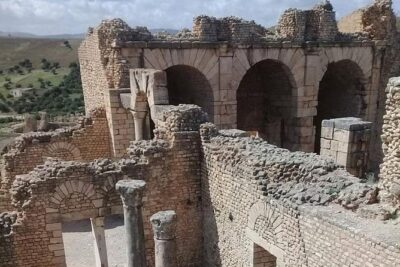
Private Guided Tour of Dougga and Testour Mosque
Read our review →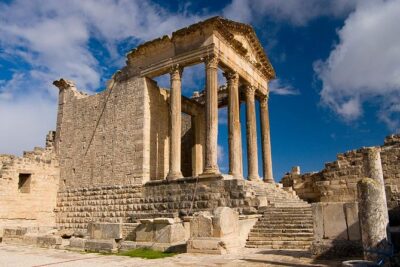
DAY TRIP TO Dougga & Bulla Regia , DEPARTURE FROM Tunis
Read our review →Browse the lists this tour appears in