
Reviewed · DOUGGA & TESTOUR DAY TRIPS
Private Excursion to Testour, Dougga and Bulla Regia from Tunis.
Ancient Tunisia rewards an early start. This private 8-hour excursion links three very different places: Testour’s unusual Andalusian mosque, the sweeping Roman ruins of Dougga, and Bulla Regia’s famous underground houses and mosaics. I like the mix of cultures and the freedom of traveling with only your own group. I also like that admission to Dougga and Bulla Regia is included.
The main drawback is the pace. Dougga deserves three hours, Bulla Regia needs at least two, and Testour can become a short photo stop. You should also expect steep, uneven steps at the archaeological sites, along with a long drive through northwestern Tunisia.
In This Review
- Key points at a glance
- Why this northwestern Tunisia day trip is worth your time
- Testour and the mosque with the backward clock
- Dougga: Tunisia’s finest Roman ruin field
- Bulla Regia and its cool underground homes
- The private vehicle, guide, and pace
- What to bring for the archaeological sites
- Who should book this excursion?
- Is $127.95 per person good value?
- Should you book the Testour, Dougga, and Bulla Regia tour?
- FAQ
- Where does this excursion begin?
- How long does the tour last?
- Is this a private tour?
- What sites are included?
- How long is the visit to Dougga?
- How long is the visit to Bulla Regia?
- Are entrance tickets included?
- What is special about Testour?
- Is the tour suitable for most people?
- Can I cancel for a full refund?
Key points at a glance
- Three very different stops: Andalusian Testour, Roman Dougga, and Numidian-Roman Bulla Regia give the day real variety.
- Dougga is the star attraction: The UNESCO-listed ruins include a capitol, theater, forum, baths, houses, and a remarkable Libyco-Punic mausoleum.
- Bulla Regia rewards careful looking: Its underground homes, mosaics, temples, and churches show a side of Roman Tunisia that Dougga does not.
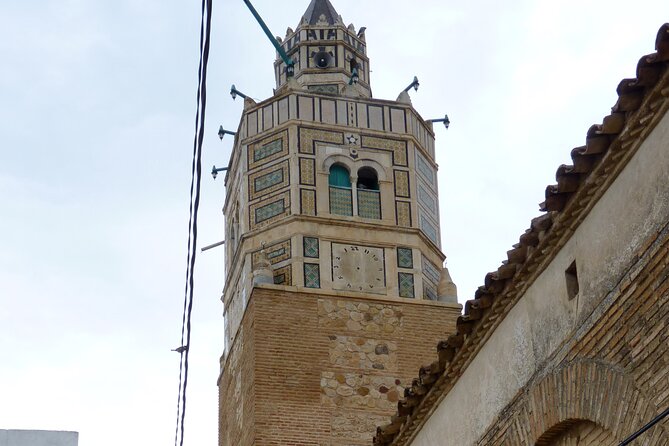
- Testour is brief but unusual: The Grand Mosque has an octagonal minaret with a counterclockwise clock and Spanish-inspired details.
- Private touring helps with timing: Only your group participates, so you can ask questions and adjust the rhythm within the day.
- Guiding is usually a strong point: Guides including Chaouki, Yahya, Iskander, Rabia, and Yosra have received especially warm praise for clear explanations and good company.
Why this northwestern Tunisia day trip is worth your time
This is not a simple ruins transfer. The route gives you three windows into Tunisia’s past, from the arrival of Andalusian families in the 17th century to the public buildings and private homes of Roman North Africa.
At the advertised price of $127.95 per person, the value depends on your group size. The price includes a private vehicle, a driver, a guide, and entrance tickets for Dougga and Bulla Regia. For one or two people, that is a significant outlay in Tunisia, but it buys a full day of transport and guided visits to sites that are difficult to combine by public transport.
For a small group, the arrangement becomes more attractive. You are not waiting for a busload of people, and you can ask for extra explanation at a particular temple or mosaic. One particularly effective guide, Chaouki, has been praised for detailed historical explanations, good timing, and even taking photographs during the day. Other highly praised guides include Yahya, Iskander, Rabia, Yosra, and Chouaki.
The timing matters. Departure is at 8:00 in the morning, and the entire outing lasts about eight hours. That early start gives you the best chance of seeing Dougga and Bulla Regia before the day feels rushed. If you want a relaxed visit to every corner, this schedule may still feel tight.
More Dougga day trips:
- Full Day Dougga & Bulla Regia Via Testour Private tour with Lunch
★ 5.0 · 29 reviews - Private Guided Tour of Dougga and Testour Mosque
★ 4.5 · 15 reviews - Dougga and Bulla Regia Guided Tour From Tunis
★ 4.5 · 11 reviews
Testour and the mosque with the backward clock
Testour is the cultural surprise at the beginning of the route. This small Andalusian village was founded by Moorish people in the early 17th century, and its Grand Mosque reflects the influence of Muslims who came to Tunisia from Spain.
The minaret is the focal point. It rises about 23 meters, has an octagonal shape, and recalls the bell towers of southern Spain. Small double windows and glazed inscriptions decorate its exterior. At the top, a mechanical clock turns counterclockwise, an odd and memorable detail that gives Testour a character far beyond a standard roadside stop.
I like this opening because it prevents the day from becoming a parade of Roman stones. You get a glimpse of a later chapter in Tunisian history before heading back to antiquity.
Set your expectations carefully. The stop is described as a panoramic visit, and the actual time can be short. Some departures have allowed only about ten minutes around the mosque, while others have included tea, shopping, or a little more time in town. If Testour matters to you, say so at the beginning and ask whether the schedule can allow extra time.
The available details do not promise a full interior visit to the mosque. Plan on seeing the minaret and surrounding town rather than assuming a long architectural tour. The driver may provide only limited commentary here, and the main guide may join you later at Dougga. That arrangement explains why Testour can feel less informative than the two archaeological sites.
Still, do not dismiss it. The mosque’s clock and Spanish-style minaret are exactly the sort of detail that makes a road day memorable. If you have an interest in Islamic and Andalusian architecture, this is more than a quick coffee break.
Dougga: Tunisia’s finest Roman ruin field
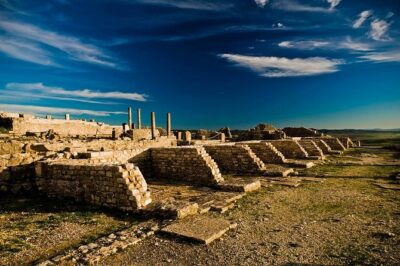
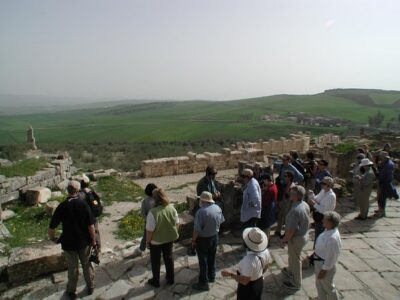
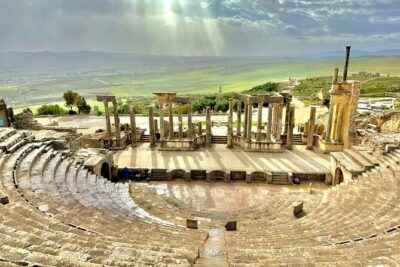
Dougga is the reason to book this excursion. The ancient city of Thugga occupies an open hilltop setting, with broad views across the surrounding countryside. Its ruins are unusually complete, and the site was added to UNESCO’s World Heritage List in 1997.
You are scheduled to spend about three hours here, which is sensible. Dougga is not one monument with a few stones scattered around it. It is a full urban center with civic buildings, entertainment spaces, religious monuments, homes, and public baths.
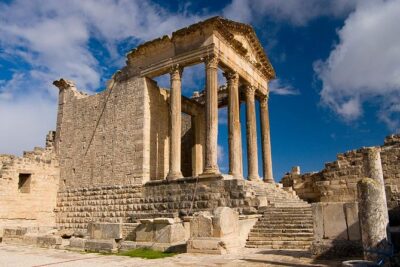
Start with the capitol. Its columns and elevated position make it one of the site’s most powerful views, especially when you look out across the valley and then back toward the forum. The forum was the center of public life, while the nearby Place of the Wind Rose gives you a striking example of Roman urban design.
The theater helps you picture how the city worked as a community. The thermal baths reveal the Roman taste for public bathing and social life. Houses fill in the domestic side of the picture, showing that Dougga was not only a collection of official monuments.
Do not skip the Libyco-Punic Mausoleum. It links Dougga’s Roman period to earlier local traditions and is one of the site’s most distinctive structures. The triumphal arch adds another reminder of how Roman power was displayed in provincial cities.
What makes Dougga special is the combination of scale and setting. You can walk through streets, pass temples, look into houses, and see the remains of a functioning city rather than isolated ruins. The site has been compared favorably with Pompeii by one visitor, but without the crowds. That comparison is useful for understanding the appeal, though Dougga has its own character and a more open, rural setting.
The walking is manageable for most people, but the ground is not smooth. Expect uneven surfaces and some steep steps. Comfortable shoes are important, and you should not treat the three-hour visit as a gentle stroll. If you have knee, balance, or mobility concerns, ask the operator about the route before booking.
Your guide makes a real difference here. The strongest departures have included detailed explanations of Roman life, local history, and the meaning of individual monuments. Iskander, Chaouki, Yahya, and Rabia have all been singled out for answering questions and keeping the visit friendly as well as informative.
Bulla Regia and its cool underground homes
Bulla Regia provides a useful contrast to Dougga. The site lies near Jendouba in northwestern Tunisia and preserves more than 17 centuries of settlement. It began as a Numidian foundation, became a royal residence, developed as an autonomous city in the early Roman period, and later received municipal and colonial status under Roman rulers.
The site is especially known for buildings connected with religious life. You can see the capitol, the Temple of Apollo, two Christian basilicas, and the Church of Alexander. These monuments chart the shift from older local and Roman beliefs to Christianity.
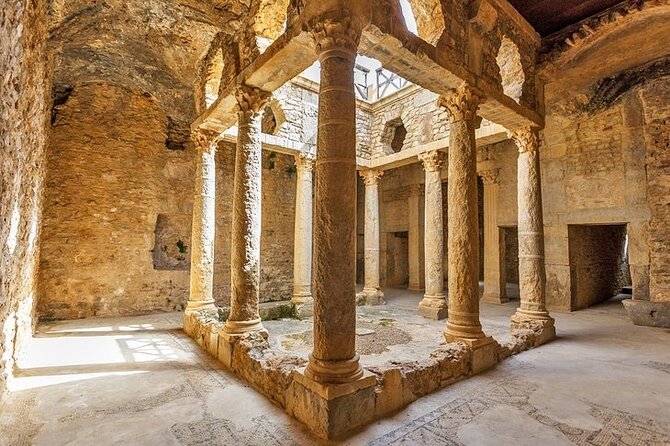
The great prize is underground domestic architecture. Wealthy Roman homes were built partly below ground, a practical response to the heat. Their lower rooms offered shade and cooler air, while mosaics added color and status.
Bulla Regia is not as expansive as Dougga in the area currently open to visitors, but it can be more intimate. The mosaics in two villas are a major highlight, and one visitor called them among the finest seen anywhere. You need to look down as carefully as you look up here. The floors often tell you as much about private life as the temples tell you about public religion.
The underground houses can be frustrating because not every part is easy to see. Some sections remain only partly exposed, and the layout may not be immediately clear without explanation. This is where a guide earns the fee. Ask how the rooms were arranged, what the mosaics depict, and how the underground plan relates to the street level above.
You are given about two hours at Bulla Regia. That is enough to see the main areas, but it is not generous if you want to study every mosaic or pause at every church. A traditional meal in a small town along the route has been part of some departures, but lunch is not clearly listed as an included feature. Treat it as a possible stop, not a guarantee, and confirm before setting your expectations.
A few more excursions of this kind worth a look:
- Private Tour to Kairouan, El Jem & Monastir from Tunis_hammamet
★ 5.0 · 301 reviews - Private tour: Medina,Carthage ,Sidi Bou Said, Bardo Museum+lunch
★ 5.0 · 230 reviews - Carthage, Bardo Museum, Sidi Bou Said and Medina Private Day Tour
★ 4.5 · 153 reviews - Guided Bike Tour of Carthage Archeological Site in Tunisia
★ 5.0 · 88 reviews
The private vehicle, guide, and pace
Private touring is the practical advantage of this outing. Only your own group takes part, so you avoid the slow march and fixed commentary of a large coach. You can ask questions about Roman building methods, Numidian rule, Islamic architecture, or modern Tunisian life without waiting for a group of strangers.
The experience has received strong praise for its guides. Chaouki is repeatedly described as warm, well prepared, and able to explain Tunisian history in detail. Yahya has been praised for patience and kindness during a long day. Iskander has been appreciated for explaining both the sites and Tunisia more broadly. Rabia and Yosra have also received positive comments for clear English and strong site knowledge.
Language can vary by departure. One early January tour was conducted in French, while English-language departures have also been well received. Confirm your preferred language when booking.
The driver is just as important as the guide on a day with long road sections. Most comments describe pleasant drivers and smooth days, but one serious complaint described high speeds and hands away from the wheel. The operator responded that the issue would be investigated and that vehicles are electronically limited. I would still treat safe driving as something worth confirming at pickup. If the driving makes you uncomfortable, speak up at once.
What to bring for the archaeological sites
Keep your packing simple, but prepare for real walking.
- Wear sturdy, comfortable shoes for uneven ground and steps.
- Bring water, since Dougga and Bulla Regia involve extended outdoor visits.
- Carry sun protection, especially because much of the sightseeing takes place around exposed ruins.
- Bring a phone or camera, since the views from Dougga and the mosaics at Bulla Regia are major parts of the experience.
- If you want more time in Testour, tell the guide early rather than waiting until the group is already leaving.
The tour is described as suitable for most people, and service animals are allowed. That does not mean every path is easy. The steep and uneven sections at Dougga and Bulla Regia may be difficult for anyone with limited mobility.
Who should book this excursion?
I would choose this tour if you have at least three days in Tunisia and want to make one serious excursion from Tunis. It suits people who care more about ancient sites than shopping, beaches, or a relaxed countryside drive.
It is especially good for:
- Couples or families who want a private guide.
- First-time visitors seeking a strong introduction to Roman Tunisia.
- Amateur archaeologists and architecture fans.
- People who prefer less crowded sites.
- Small groups that can share the private-tour cost.
I would hesitate if you want a slow village visit, a long lunch, or a gentle day with little walking. Testour is not guaranteed to receive much time, and the two large sites demand attention and energy.
Is $127.95 per person good value?
At $127.95 per person, the excursion is not cheap by Tunisian standards. You are paying for convenience, a private arrangement, transportation, guiding, and two admission tickets rather than just a ride to the ruins.
For a solo visitor, the cost may feel steep. For two or more people, the private format makes more sense, particularly if you value a flexible pace and direct access to a guide. The strongest value comes from the quality of the explanation at Dougga and Bulla Regia. Without good guiding, the sites can become a procession of names and columns.
Before booking, confirm what is included beyond the stated entrance tickets. In particular, ask about lunch, the exact amount of time in Testour, and the guide’s language. Free cancellation is available if you cancel at least 24 hours before the 8:00 a.m. start. Poor weather can lead to a new date or a full refund.
Should you book the Testour, Dougga, and Bulla Regia tour?
Yes, if Dougga and Bulla Regia are high on your Tunisia wish list and you want both reached in one private day. Dougga provides the scale, Bulla Regia supplies the unusual underground homes and mosaics, and Testour adds an unexpected Andalusian note.
Book it with realistic expectations. Ask for extra time in Testour if the mosque matters to you, confirm your guide’s language, and be ready for uneven walking. If you receive one of the highly praised guides, such as Chaouki, Yahya, Iskander, Rabia, or Yosra, the explanations can turn a busy road day into one of the most rewarding history outings from Tunis.
FAQ
Where does this excursion begin?
The excursion begins in Tunis, with pickup offered. The listed start time is 8:00 a.m.
How long does the tour last?
The experience lasts approximately eight hours.
Is this a private tour?
Yes. Only your own group participates in the private activity.
What sites are included?
The route includes Testour, Dougga, and Bulla Regia.
How long is the visit to Dougga?
The planned visit to Dougga lasts about three hours.
How long is the visit to Bulla Regia?
The planned visit to Bulla Regia lasts about two hours.
Are entrance tickets included?
Admission tickets for Dougga and Bulla Regia are included.
What is special about Testour?
Testour is an Andalusian village founded by Moorish people in the early 17th century. Its Grand Mosque has a 23-meter octagonal minaret, Spanish-inspired details, and a mechanical clock whose hands turn counterclockwise.
Is the tour suitable for most people?
The experience states that most people can participate. It also includes steep and uneven stairs at the archaeological sites, so you should consider your walking ability before booking.
Can I cancel for a full refund?
You can cancel for a full refund at least 24 hours before the experience begins. Cancellations or changes made less than 24 hours before the start time are not accepted for a refund. If poor weather causes the operator to cancel, you will be offered another date or a full refund.
Just added around Tunis
- Explore Tunisia in Depth:The Private Grand Tour in 8 Days★ 5.0 · 3 reviews
- 3-Day South of Tunisia Guided Tour from Tunis★ 4.0 · 3 reviews
- Private Tour Bardo Museum, Carthage, Sidi Bou Said and Medina★ 4.5 · 3 reviews
- Private Group Day Tour Tunis Medina Carthage Sidi Bou Said★ 4.5 · 3 reviews
- 5 Days Tunisia Discovery Private Tour★ 5.0 · 4 reviews
- Bardo Museum- The ruins of Carthage- Village of Sidi Bou Said★ 5.0 · 4 reviews
- Tunis Carthage Private Arrival Airport Transfer to Tunis★ 5.0 · 4 reviews
- 4-Day Private Tour: Sahara and Djerba Island from Tunis and Hammamet★ 5.0 · 4 reviews
Dougga & Testour Day Trips, compared.
Full Day Dougga & Bulla Regia Via Testour Private tour with Lunch
Read our review →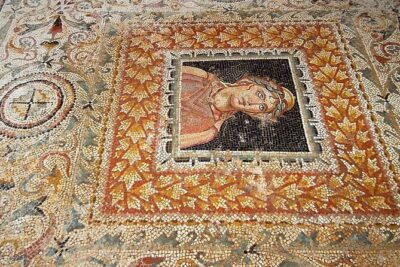
Private Day Trip to Testour, Dougga and Bulla Regia from Hammamet
Read our review →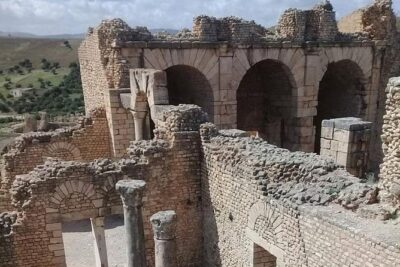
Private Guided Tour of Dougga and Testour Mosque
Read our review →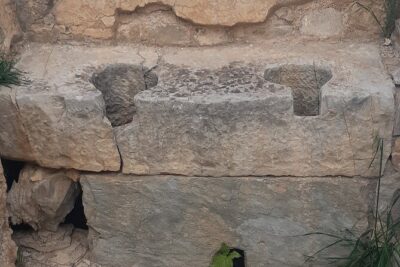
DAY TRIP TO Dougga & Bulla Regia , DEPARTURE FROM Tunis
Read our review →Browse the lists this tour appears in