
Reviewed · GUIDED
7 Day Guided Tunisia Tour Including Pickup
Tunisia packs centuries into one road trip. This seven-day private tour links Roman amphitheaters, Islamic medinas, Berber mountain villages, salt flats, desert film sites, and Mediterranean towns in one sweeping route from Tunis and back.
I like the remarkable variety here, and I like having local guides such as Salem, Yassine, Daoud, Ziad, and Kais to explain what you are seeing. The main concern is the pace: covering much of Tunisia in roughly 2,100 kilometers means several long drives, and monument entrance fees are not included in the advertised price.
I also appreciate the private format. Only your group takes part, so the guide can adjust the rhythm and offer suggestions along the way. At $1,858.33 per person, the tour can be good value for a private, meal-inclusive circuit, but you should confirm the hotel arrangements and budget separately for admissions.
In This Review
- Key points before you book
- What the $1,858.33 price really buys
- Day 1: Sousse, El Djem, and the underground homes of Matmata
- Day 2: Chenini and the fortified ksour of Tataouine
- Day 3: Douz and the salt crust of Chott el Jerid
- Day 4: Chebika, Tamerza, and Ong Jemel
- Day 5: Sbeitla and Islamic Kairouan
- Day 6: Dougga and the Medina of Tunis
- Day 7: Sidi Bou Said and ancient Carthage
- Guides, vehicles, and the private-tour advantage
- Who should book this seven-day circuit?
- Practical details to settle before departure
- Should you book the Tunisia tour?
- FAQ
- How long does the Tunisia tour last?
- Where does the tour start?
- Is pickup available?
- Is this a private tour?
- Which meals are included?
- Are entrance fees included?
- What is the cancellation policy?
Key points before you book
- A seven-day route across nearly all of Tunisia: The itinerary reaches Sousse, El Djem, Matmata, Tataouine, Douz, Tozeur, Sbeitla, Kairouan, Dougga, Tunis, Sidi Bou Said, and Carthage.
- Roman sites are a major strength: El Djem, Sbeitla, Dougga, and Carthage give you four very different views of Roman North Africa.
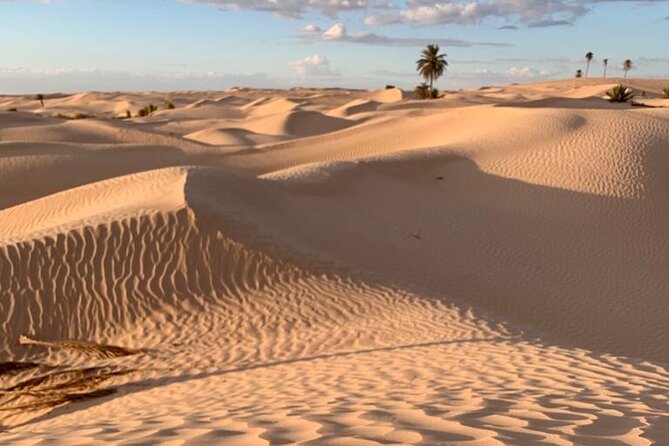
- The Sahara is more than sand dunes: You see the desert gateway at Douz, the salt flats of Chott el Jerid, mountain oases near Chebika and Tamerza, and the Ong Jemel film locations.
- Berber culture gets real attention: Chenini, Ksar Ouled Soltane, Ksar Hadada, and Matmata reveal how people adapted homes and storage buildings to dry, difficult surroundings.
- The tour is private, not a large coach trip: Your group travels together, with pickup offered and mobile ticketing available.
- Meals are partly covered, but admissions are not: Six breakfasts and six dinners are included. Entrance fees at monuments and all taxes are extra.
What the $1,858.33 price really buys
The price is not cheap, but this is not a simple hotel-and-bus sightseeing package. It is a private seven-day circuit with a guide, transport, six breakfasts, and six dinners. The route is ambitious, and private touring usually gives you more control than a fixed large-group schedule.
The strongest value comes from the amount of ground covered. In one week, you move from the Mediterranean coast to the Sahara, then north again through Roman sites and Tunisia’s capital region. Organizing this route independently would require careful planning, several hotel bookings, transport research, and a willingness to handle long intercity connections yourself.
Still, look closely at what is not covered. The formal inclusions name breakfast and dinner, but not lunch, drinks, taxes, or admission fees. The description also does not clearly spell out the hotels, room category, or exact vehicle. Some past guests praised the hotels, restaurants, and comfortable transport, but you should get those details in writing before paying.
At this price, I would ask for a clear list of:
- Hotel names and locations
- The type of vehicle
- Which entrance tickets are extra
- Airport pickup and drop-off details
- The languages spoken by your assigned guide
- How much free time you get at each stop
That small bit of preparation will make the cost easier to judge.
More week-long itineraries:
- Tunisia 7-Day tour
★ 5.0 · 6 reviews
Day 1: Sousse, El Djem, and the underground homes of Matmata
The first day begins with Sousse, one of Tunisia’s best introductions to Islamic urban life. Its UNESCO-listed Medina is a walled maze of narrow lanes, courtyards, shops, cafes, and traditional houses. The scheduled visit is only 30 minutes, so think of it as a brief orientation rather than a full exploration.
The Great Mosque is inside the Medina, and even a short walk gives you a sense of the compact street plan. If you enjoy markets, architecture, and street scenes, this stop may leave you wishing for more time. The short schedule is one of the tour’s recurring trade-offs.
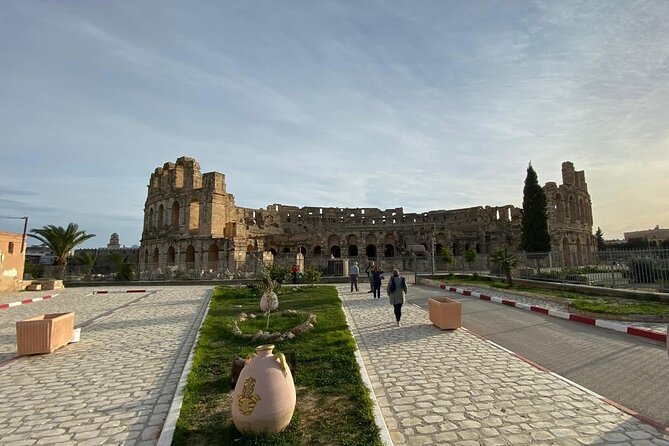
Next comes El Djem, the day’s major sight. Its Roman amphitheater could hold as many as 35,000 spectators and was built around the third century during the reign of Emperor Gordian. The scale is startling, especially because the ruins rise out of a modern Tunisian town rather than sitting in a grand museum complex.
You have about two hours here, enough to walk through the arena, inspect the tiers, and appreciate the engineering. El Djem is one of the tour’s best stops for independent wandering. Entrance fees are listed as extra, so carry money for this and other archaeological sites.
The day ends in Matmata, a dry, rocky region famous for troglodyte houses carved into soft limestone. These underground homes were designed to soften the desert heat and cold. Rooms are arranged around a central courtyard, with the courtyard open to the sky while the living spaces sit below ground.
Matmata gives the itinerary a human scale. You are not just looking at ruins, but at homes shaped by climate and local custom. Some traditional dwellings have become unusual hotels, though the provided details do not confirm that your accommodation will be one of them.
Day 2: Chenini and the fortified ksour of Tataouine
Day two focuses on southern Tunisia’s Berber heritage. Chenini is built into rocky hills and is known for its fortified granaries and village structures, called ksour. These buildings protected grain and household goods from raids and from the demanding desert climate.
The village has narrow lanes, stone and mud-brick homes, flat roofs, and buildings that seem to grow out of the hillside. Two hours allows more than a quick photo stop, though uneven ground and steep sections may make this a tiring visit for some people.
Ksar Ouled Soltane is one of the best-known fortified granaries in the Tataouine area. Its stacked storage rooms show how communities protected food supplies and organized shared buildings. One hour is scheduled here, with admission included at this stop.
Ksar Hadada adds another layer. Its rocky desert setting and Berber architecture are memorable on their own, but the site also has a film connection. The Tataouine region helped inspire the fictional planet Tatooine in Star Wars, and that connection adds a bit of playful pop culture to a serious cultural visit.
The film references are fun, but they should not overwhelm the place itself. The main reward is seeing how local architecture responds to heat, scarce water, and the need for communal protection.
Day 3: Douz and the salt crust of Chott el Jerid
Douz is known as the gateway to the Sahara. The town sits at the desert’s edge and serves as a starting point for camel treks and other desert outings. The schedule gives you two hours, but no camel ride is specifically included, so do not assume a desert excursion is part of the base price.
The value of Douz lies in its position. It marks a clear change from the hill villages and ancient settlements of the previous day. The setting becomes wider, drier, and more open, with the sense that the next part of the route will be shaped by distance.
Chott el Jerid is a shallow salt lake and one of the trip’s most unusual natural stops. During dry periods, water evaporates and leaves behind salt crust, mud flats, and strange pale patterns. After rain, the lake can temporarily hold water and attract birds such as flamingos and other migratory species.
The stop lasts about an hour. Conditions can change with the season, so you may see a broad salt surface rather than a conventional lake. That is part of its appeal. It is less about a single landmark and more about the textures, colors, and enormous sense of space.
A few more excursions of this kind worth a look:
- Private Tour to Kairouan, El Jem & Monastir from Tunis_hammamet
★ 5.0 · 301 reviews - Private tour: Medina,Carthage ,Sidi Bou Said, Bardo Museum+lunch
★ 5.0 · 230 reviews - Carthage, Bardo Museum, Sidi Bou Said and Medina Private Day Tour
★ 4.5 · 153 reviews - Private Excursion to Testour, Dougga and Bulla Regia from Tunis.
★ 5.0 · 100 reviews
Day 4: Chebika, Tamerza, and Ong Jemel
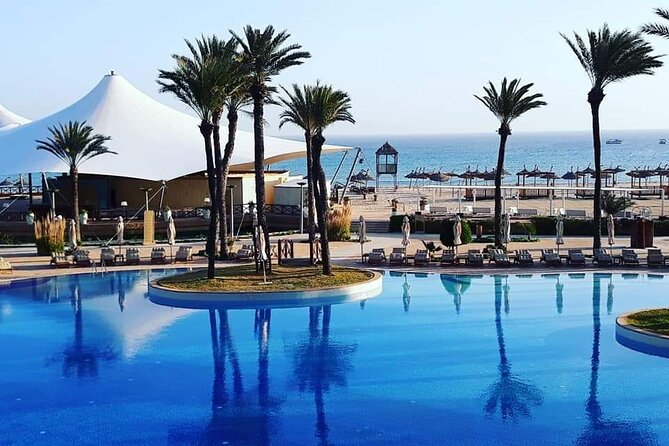
Chebika is a desert oasis fed by Ain Chebika, a spring that forms cascades and pools beside palm trees and rocky cliffs. The contrast is immediate: dry mountains around a pocket of flowing water. Two hours gives you time to walk, take photographs, and enjoy a slower stretch of the itinerary.
This is one of the more scenic days, but you should use sensible footwear. The exact walking conditions are not specified, and oasis paths can be rough or uneven.
Tamerza offers a different mood. Its old village was abandoned in the 1960s after flooding caused by heavy rain. Today, crumbling homes and narrow lanes remain, creating a stark reminder that desert settlements can still face sudden, destructive weather.
The final stop is Ong Jemel and the Eriguet Dunes. The area is linked to Star Wars filming locations, but the real attraction is the desert setting itself. Two hours here should feel less structured than a temple visit. You are looking at broad dunes and unusual rock formations, with time for the scale of the area to sink in.
The tour description does not list a dedicated 4×4 excursion or dune activity. If you want one, ask before booking rather than expecting it to appear on the day.
Day 5: Sbeitla and Islamic Kairouan
Sbeitla is a powerful Roman stop because its ruins are spread across an open archaeological site. The ancient city prospered from the first to the sixth centuries and once served as an important center in Roman Africa.
The site includes a forum, temples, basilicas, a theater, baths, houses, and mosaics. The three temples dedicated to Jupiter, Juno, and Minerva are the visual centerpiece. Two hours is a useful amount of time, though anyone who loves archaeology could easily want longer.
Sbeitla also gives you a break from the better-known El Djem. El Djem is about one immense structure. Sbeitla is about how an entire Roman city worked, from public religion to civic buildings and daily life.
Kairouan shifts the story from Rome to Islam. Founded in 670, the city became a center of Islamic learning and civilization and served as the capital of Ifriqiya, a region that included much of present-day Tunisia, Algeria, and Libya.
The scheduled visit is two hours. That is enough for an introduction to the city, but not an exhaustive study of its religious buildings and markets. The change in tone is important: after several days of Roman and Berber sites, Kairouan helps you understand Tunisia as a major center of Islamic culture.
Day 6: Dougga and the Medina of Tunis
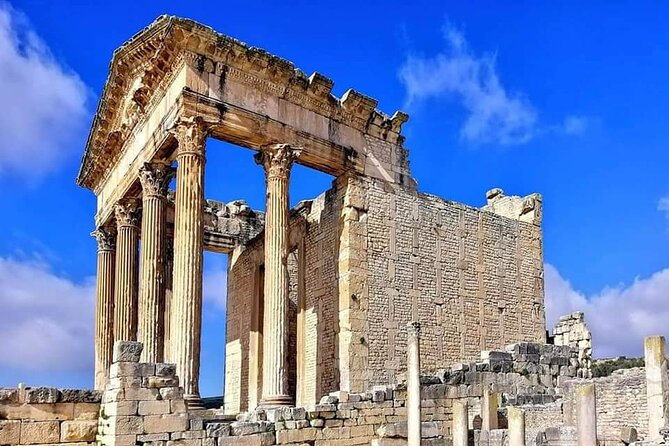
Dougga may be the finest archaeological stop on the route. This UNESCO World Heritage site preserves an ancient Roman city with temples, a theater, public buildings, mosaics, and streets that still make the old city plan understandable.
Two hours gives you a strong overview. The setting is especially rewarding because the ruins are not reduced to one isolated monument. You can see the relationship between religious, civic, and entertainment spaces.
The site is likely to appeal most to anyone who enjoys walking through ruins rather than simply viewing them from a bus. The drawback is the schedule. Dougga deserves concentration, and a two-hour visit can feel brisk if you stop often for photographs or detailed explanations.
Later, the Medina of Tunis brings you back into a living historic district. The walled quarter dates to the ninth century and contains souks, craft workshops, traditional architecture, and a maze of lanes. One hour is short, so expect a taste rather than a complete tour.
This pairing works well. Dougga shows an ancient city preserved in stone, while Tunis shows an old city still functioning as part of daily life.
Day 7: Sidi Bou Said and ancient Carthage
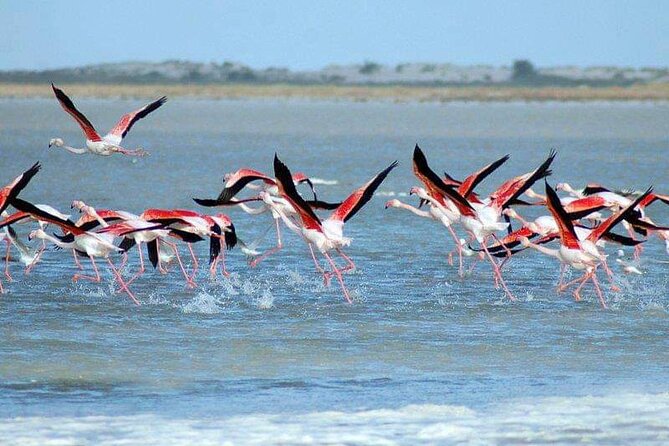
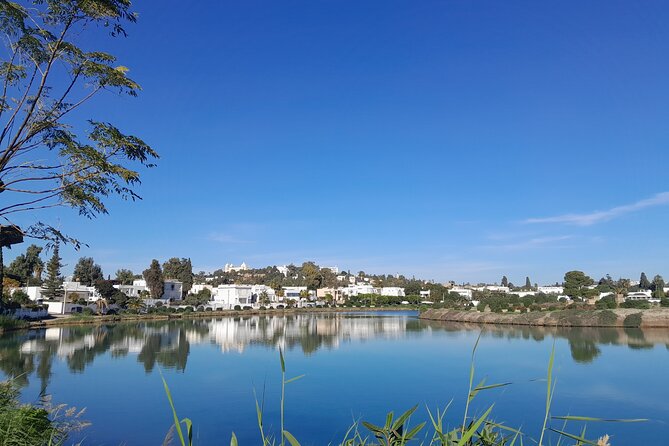
The final day begins in Sidi Bou Said, a hilltop village above the Mediterranean. White buildings, blue doors, blue shutters, and wrought-iron details give the town its unmistakable look. The two-hour visit allows you to stroll through the lanes and enjoy the sea views.
Sidi Bou Said is more atmospheric than monumental. It is a good place to slow down after six days of long drives and archaeological sites. The village’s appeal depends on wandering, so do not rush through it in search of a checklist of sights.
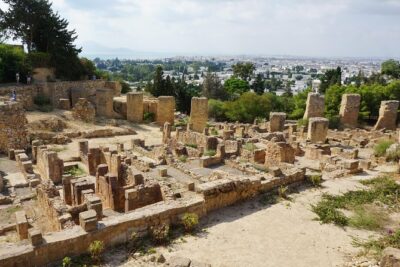
Carthage closes the tour with one of Tunisia’s biggest historical chapters. The ancient city was a major power in the Mediterranean, and its remains are spread across a wide area rather than concentrated behind one entrance.
The itinerary highlights the Tophet, an ancient burial ground with rows of stelae, and the Antonine Baths, a huge complex once used for bathing and social life. Two hours gives you a useful introduction, but Carthage is scattered enough that the quality of the explanation and transport between sections matters.
Admission fees are not included here either. Ask which parts of the site the guide plans to visit and which tickets you will need.
Guides, vehicles, and the private-tour advantage
The strongest personal touch in this experience comes from the guiding. Salem is repeatedly praised for careful planning, flexibility, enthusiasm, humor, and attention to small details. One especially memorable compliment compared his knowledge to a human search engine. Guides named Yassine, Daoud, Ziad, Kais, Samir, and others also received warm praise, so the exact person may depend on availability.
You should not assume Salem will lead every departure. Ask who is assigned to your dates and what languages they speak. This matters on a history-heavy route, where a good explanation can turn a pile of stones into a readable story.
The private arrangement is also valuable. You do not have to match the pace of a large coach group, and the guide can respond to your interests. If you want more time at Dougga, fewer photographs at a minor stop, or help finding a local meal, private touring gives you a better chance of making that request.
Past comments also describe comfortable vehicles and friendly drivers, including Khaled, Hisham, Manuel, and Michel. One account refers to the route covering about 2,100 kilometers, which helps put the driving into perspective. This is a road tour first and a relaxed resort holiday second.
Who should book this seven-day circuit?
I would recommend it to you if you want a broad first look at Tunisia and prefer to have transport, route planning, and local interpretation handled for you. It suits history fans, architecture lovers, photographers, and people who want both Roman sites and desert scenery.
It is less suitable if you dislike long drives, need slow mornings, or want several days at the coast. The schedule is full, and the two-hour visits at major sites can feel short.
The tour also suits couples and small private groups who value flexibility. The strong feedback about Salem and the drivers suggests that personal service is a major part of the experience, not just an extra feature.
Practical details to settle before departure
Pickup is offered, and the stated starting point is Carthage Airport in Tunis. The operating period shown runs from December 4, 2024, through December 28, 2025, with hours listed as 8:00 a.m. to 6:00 p.m., Monday through Sunday.
Confirmation is provided at booking, mobile tickets are available, and group discounts are offered. Most people can take part, but the itinerary includes historic lanes, rocky sites, and desert or oasis terrain, so ask about walking conditions if mobility is a concern.
Free cancellation is available if you cancel at least 24 hours before the local start time. Cancellations or changes made inside that window are not accepted for a refund.
Should you book the Tunisia tour?
I would book this tour if your priority is seeing a great deal of Tunisia in one organized week. The route is unusually broad, the private format is a real advantage, and the combination of El Djem, Dougga, Kairouan, Berber ksour, Chott el Jerid, and Carthage gives you far more than a standard coastal holiday.
I would pause only long enough to confirm the missing cost details. Ask about hotels, lunch, taxes, entrance fees, vehicle type, and your assigned guide. If those answers are clear and the long driving days suit you, $1,858.33 can be a fair price for a private circuit with meals and local support.
FAQ
How long does the Tunisia tour last?
The tour lasts approximately seven days.
Where does the tour start?
The stated starting point is Carthage Airport in Tunis, Tunisia.
Is pickup available?
Yes. Pickup is offered.
Is this a private tour?
Yes. Only your group participates in the activity.
Which meals are included?
Six breakfasts and six dinners are included.
Are entrance fees included?
No. Entrance fees at the monuments are not included. All fees and taxes are also listed as excluded.
What is the cancellation policy?
You can cancel at least 24 hours before the experience start time for a full refund. Cancellations or changes made less than 24 hours before the start are not accepted for a refund.
Just added around Tunis
- Explore Tunisia in Depth:The Private Grand Tour in 8 Days★ 5.0 · 3 reviews
- 3-Day South of Tunisia Guided Tour from Tunis★ 4.0 · 3 reviews
- Private Tour Bardo Museum, Carthage, Sidi Bou Said and Medina★ 4.5 · 3 reviews
- Private Group Day Tour Tunis Medina Carthage Sidi Bou Said★ 4.5 · 3 reviews
- 5 Days Tunisia Discovery Private Tour★ 5.0 · 4 reviews
- Bardo Museum- The ruins of Carthage- Village of Sidi Bou Said★ 5.0 · 4 reviews
- Tunis Carthage Private Arrival Airport Transfer to Tunis★ 5.0 · 4 reviews
- 4-Day Private Tour: Sahara and Djerba Island from Tunis and Hammamet★ 5.0 · 4 reviews
Guided, compared.
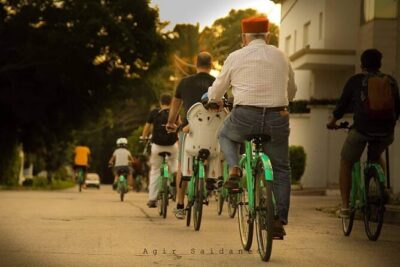
Guided Bike Tour of Carthage Archeological Site in Tunisia
Read our review →
Guided tour in the UNESCO world heritage Medina of Tunis
Read our review →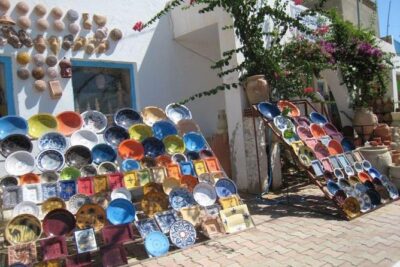
Guided Tour of Djerba island, Museums, Crocodile park & lunch
Read our review →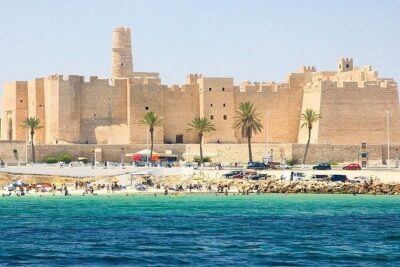
Private and Guided Tour to Kairouan and El Jem and Monastir
Read our review →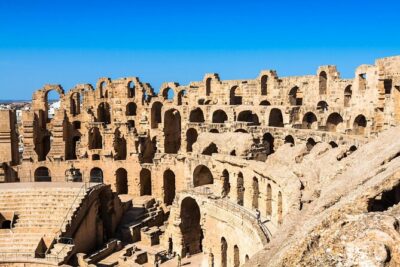
Kairouan & El Djem Guided Day Trip with Lunch from Hammamet
Read our review →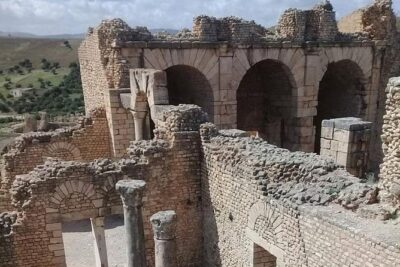
Private Guided Tour of Dougga and Testour Mosque
Read our review →
Self guided bike tour of Carthage archeological site
Read our review →Browse the lists this tour appears in