
Reviewed · GUIDED
Roman Archeology Guided Tour Thuburbo Majus & Uthina
Ancient ruins, without the crowds. This private day trip from Tunis links Uthina, the Zaghouan aqueduct, and Thuburbo Majus in about seven hours, giving you a strong look at Roman North Africa beyond the better-known sites around Carthage. I especially like the private format, which allows some control over your timing, and the chance to see the remarkable Uthina amphitheater and the large Roman remains at Thuburbo Majus.
The tour also benefits from Fathi, a retired professor whose teaching background and command of Tunisian archaeology add real depth to the visit. The main drawback is that the schedule can feel tight, and the aqueduct may be viewed only from the vehicle unless you ask to stop. Lunch is not included, so you should plan for that separately.
In This Review
- Key points to know before booking
- Why this route is worth your day
- Uthina, where the amphitheater takes center stage
- The Zaghouan aqueduct and Rome’s water problem
- Thuburbo Majus, a Roman city with two bathing seasons
- The Laberii villa and the value of mosaics
- Zaghouan’s Andalusian medina
- What the private format changes
- Is $140.96 per person good value?
- Who should book this experience?
- Final call: book it for access and context
- FAQ
- How long does the tour last?
- Where does the tour take place?
- Is transportation included?
- Is hotel pickup offered?
- Is this a private tour?
- Are admission fees included?
- Is lunch included?
- Is WiFi available during the tour?
- What is the cancellation policy?
Key points to know before booking
- Three major Roman-era sights in one day: Uthina, the Zaghouan aqueduct, and Thuburbo Majus form a focused archaeology route south and west of Tunis.
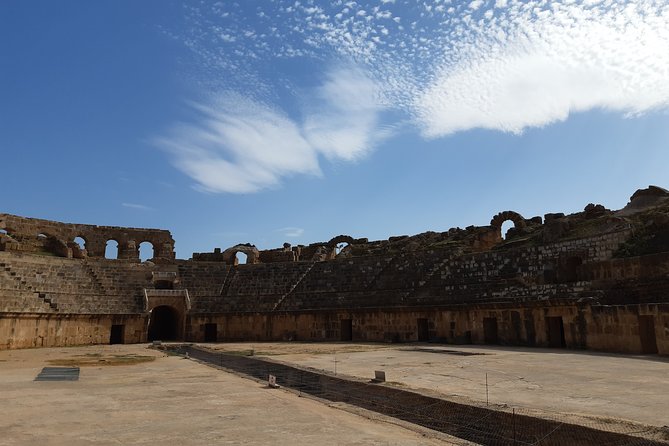
- Uthina has a huge, recently excavated amphitheater: The arena could hold about 20,000 spectators and is one of the trip’s most striking sights.
- Thuburbo Majus rewards a careful visit: Its Capitol, Forum, Corinthian columns, mosaics, and separate winter and summer baths show how much planning went into Roman city life.
- The 132-kilometer aqueduct is an engineering story: It carried water from Zaghouan toward Carthage, with some sections raised on arcades more than 20 meters high.
- This is a private tour: Only your group takes part, and the guide can adjust the start and finish times.
- The price includes useful basics: At $140.96 per person, you get private transport, an air-conditioned vehicle, onboard WiFi, admission fees, and a guide, but not lunch.
Why this route is worth your day
Many visitors to Tunis concentrate on Carthage, Sidi Bou Said, and the Bardo Museum. This route takes you farther into the countryside, where Roman cities are spread across broad archaeological sites rather than packed into a single museum complex.
I like the way the day combines different types of Roman remains. Uthina gives you monumental public architecture and an amphitheater. The aqueduct shifts your attention to water and infrastructure. Thuburbo Majus then shows how a full Roman city worked, with religious buildings, public baths, a Forum, and decorative mosaics.
The sites also tell a less tidy story than a simple Roman success tale. Uthina appears to have begun in the Berber era, was later punished and Romanized, and then passed through brief Vandal and Byzantine periods before its final decline after the Arab conquest in the seventh century. That sequence helps you see North African cities as places that changed hands and purpose over many centuries.
The tour lasts about seven hours. That is enough time for a useful introduction, but not enough for a slow archaeological survey of every structure. I would choose this experience if you want a well-organized overview with a strong guide, not if you want to spend an entire day studying inscriptions and excavation plans.
A few more excursions of this kind worth a look:
- Private Tour to Kairouan, El Jem & Monastir from Tunis_hammamet
★ 5.0 · 301 reviews - Private tour: Medina,Carthage ,Sidi Bou Said, Bardo Museum+lunch
★ 5.0 · 230 reviews - Carthage, Bardo Museum, Sidi Bou Said and Medina Private Day Tour
★ 4.5 · 153 reviews
Uthina, where the amphitheater takes center stage
Uthina, also called Oudhna, lies about 30 kilometers south of Tunis. Its position on a hill gave it a commanding view of routes leading toward Carthage from the south and west. Even before you study the ruins, the location explains why this site mattered.
The ancient city covers more than 100 hectares, so the scale can surprise you. You are not walking into a small, isolated monument. You are visiting the remains of a substantial urban center with imposing Roman buildings spread across a large area.
The most memorable feature is the amphitheater. It could once accommodate around 20,000 spectators, a huge capacity that points to the city’s importance and the popularity of public spectacles in Roman North Africa. The arena has been excavated only recently in full, which gives it a less polished feel than Tunisia’s most famous Roman monuments.
I would allow your full 90 minutes here for the amphitheater and the wider site. Ask Fathi to explain how the buildings fit together, rather than rushing from one ruin to another. A guide who can connect the physical remains to the city’s political and social life makes a real difference at a spread-out site like this.
The drawback is the size. You may not see every corner in detail during the scheduled stop. Wear practical shoes and expect the visit to involve outdoor walking around uneven archaeological ground. The provided information confirms that admission is included, but it does not specify how much free time you have at each individual structure.
The Zaghouan aqueduct and Rome’s water problem
The Zaghouan aqueduct is a short stop, listed at about 20 minutes, but its story is much larger than the time spent viewing it. The full system carried water roughly 132 kilometers to Carthage and is described as the largest hydraulic complex of its kind ever built.
Constructed at the beginning of the second century AD, it shows the Roman answer to a basic urban problem: how to move a dependable water supply across difficult ground. The channel sometimes ran below the surface, sometimes close to ground level, and in two sections crossed raised arcades that could reach more than 20 meters high.
The estimated flow was about 30 million liters per day. Most of that water was held in large vaulted reservoirs at Maalga, near the entrance to Carthage, before it continued to the Baths of Antonine. That connection gives the aqueduct practical meaning. It was not just an impressive line of arches. It helped support the baths and the daily life of a major city.
Here is the practical point: the aqueduct stop may be more of a roadside viewing opportunity than a full walk through the structure. One person who took the tour found that the vehicle simply passed the aqueduct, though a stop could have been made by request. If this is a priority for you, raise it with the guide at the start of the day.
The 20-minute timing also limits what you can do. You will get the basic engineering story and a chance to see part of the system, but you should not expect a long exploration of the full 132-kilometer route. The aqueduct works best as a connecting chapter between Uthina and Thuburbo Majus.
Thuburbo Majus, a Roman city with two bathing seasons
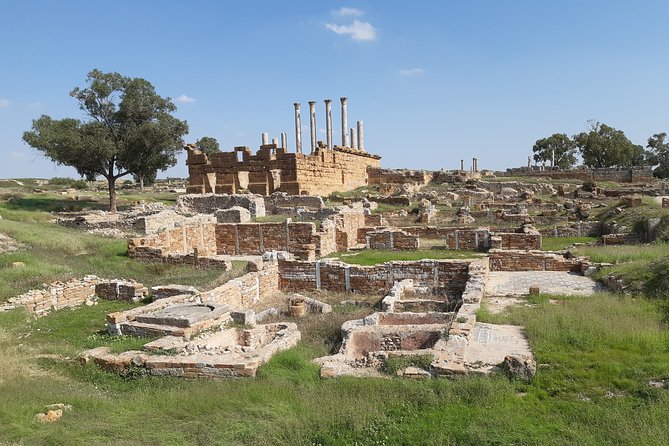
Thuburbo Majus is the archaeological high point of the route for anyone who enjoys Roman urban planning. The city was founded on the side of a hill beside a fertile valley, long before North Africa became part of the Roman Empire. Its best-preserved remains come from the Roman period, and the site is widely regarded as one of Tunisia’s finest ancient cities.
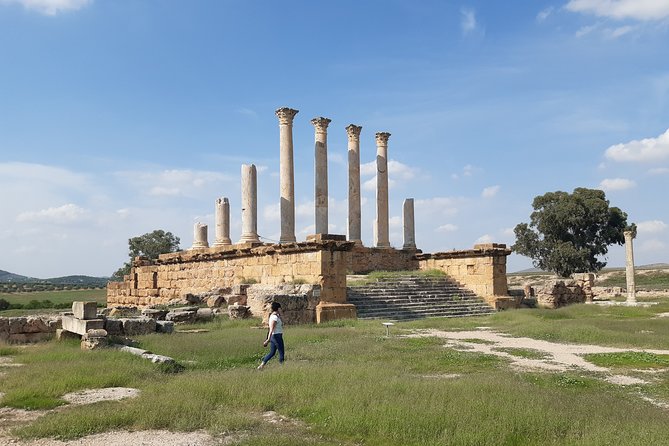
The Capitol deserves your attention first. In Roman cities, this was the principal temple, and the one here is especially well preserved. Six Corinthian columns once formed its front. Four remain intact, rising above the broad staircase that leads toward the Forum.
Those columns give you an immediate sense of proportion. A photograph cannot quite convey how a temple facade controlled the view across a public square. Ask the guide to help identify the relationship between the Capitol, the Forum, and the surrounding civic buildings. Without that context, it is easy to see only scattered stone.
Thuburbo Majus also had two bathing complexes, one for winter and one for summer. That detail is unusually useful because it turns a familiar Roman feature into a practical one. The baths were not simply decorative public buildings. They were designed for different conditions and seasons, reflecting the city’s wealth and civic ambition.
Mosaics add another layer. The route description refers to impressive mosaic work, and the broader tour overview highlights the Laberii villa at Uthina, a 30-room residence covering about 2,300 square meters. Taken together, these remains show both public grandeur and private comfort.
The scheduled stop at Thuburbo Majus is about one hour. I would treat that as a solid introduction, but not enough for every ruin and mosaic. The site is larger than some people expect, so keep your pace steady and use the guide’s time well. One strong practical advantage is that admission is included, leaving you free to focus on the ruins rather than ticket arrangements.
An entirely different way to fill a day in Tunis:
- Private Excursion to Testour, Dougga and Bulla Regia from Tunis.
★ 5.0 · 100 reviews - Guided Bike Tour of Carthage Archeological Site in Tunisia
★ 5.0 · 88 reviews - Guided tour in the UNESCO world heritage Medina of Tunis
★ 5.0 · 68 reviews - Group Guided Bike Tour of Carthage Archeological Site in Tunisia
★ 5.0 · 57 reviews
The Laberii villa and the value of mosaics
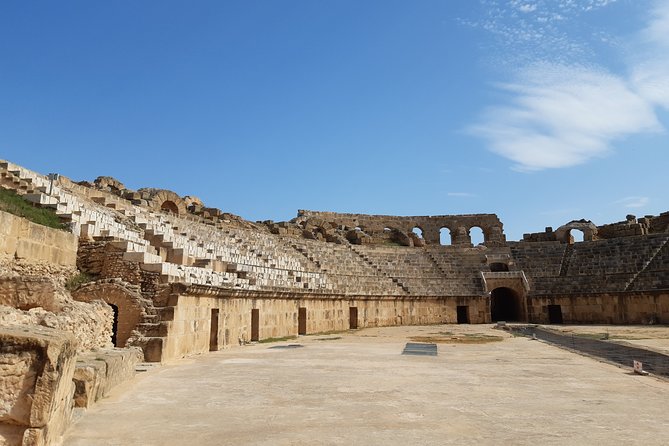
The Laberii villa deserves special attention if your guide includes it in the Uthina visit. With thirty rooms spread across about 2,300 square meters, it offers a glimpse of the scale available to an affluent Roman household.
The mosaics are the main reason to pause here. At a site with large temples and an amphitheater, decorative floors can seem secondary, but they often provide the clearest evidence of taste, wealth, and daily life. Look for the way the rooms were arranged and ask how the villa related to the public city nearby.
Because the tour covers broad sites in a limited time, you may need to choose between examining a mosaic closely and seeing more structures at a faster pace. I prefer to take a few minutes with the best-preserved decorative work, then let the guide point out the key buildings rather than attempting to inspect everything.
Zaghouan’s Andalusian medina
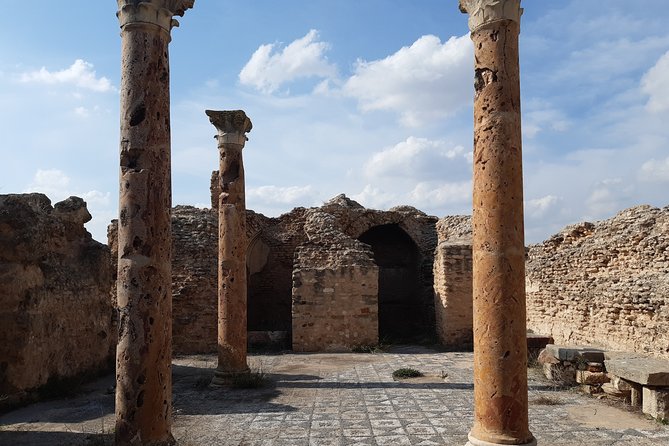
The route also includes a visit to the Andalusian medina of Zaghouan. This gives the day a welcome change of period and atmosphere. After Roman temples, arenas, baths, and waterworks, you get a look at a later Tunisian town shaped by Andalusian influence.
The medina is important to the overall experience because it prevents the day from becoming a single-note parade of ancient stones. You are seeing how the region continued to develop long after the Roman period. The supplied details do not give a precise time allocation or a list of specific buildings within the medina, so you should ask the guide how much walking time is planned.
That uncertainty matters if you care most about Roman archaeology. The medina may be a pleasant interlude, but it also uses time that could otherwise go to Uthina or Thuburbo Majus. Your private format gives you the best chance of discussing that balance with the guide.
What the private format changes
This is a private activity, so only your group participates. That is a major advantage for an archaeology day. You can ask questions without worrying about losing a large group, and you can ask for more explanation at a temple or mosaic that catches your eye.
A past booking also benefited from flexible start and end times. That does not guarantee every request, but it suggests the format can adapt better than a fixed coach excursion. If you are staying in Tunis and have a particular schedule, confirm your preferred timing when arranging the tour.
Pickup is offered, and transport is private in an air-conditioned vehicle. Onboard WiFi is included as well. These are modest comforts, but they matter when the route covers several sites and the Tunisian heat makes an open-ended outdoor day tiring.
The guide is central to the experience. Fathi is described as a retired professor with a strong command of Tunisian Roman sites and a gift for teaching. That combination is especially valuable here because the ruins are extensive and often require explanation. A good guide helps you understand what you are looking at rather than simply naming it.
Is $140.96 per person good value?
At $140.96 per person, this is not a bargain-basement outing. The value depends on how much you would otherwise pay for transport, admissions, and specialist guidance.
Your price includes all fees and taxes, private transportation, an air-conditioned vehicle, WiFi, and admission tickets. Lunch is not included. Since the tour lasts about seven hours and visits several sites outside Tunis, the private vehicle is doing useful work, not just providing a transfer.
The price makes the most sense for couples, families, or small groups who want a private day and can split the cost across several people. Group discounts are offered, though the exact terms are not provided. A solo visitor may find the cost harder to justify unless personal guiding and schedule flexibility are top priorities.
I would compare this with the cost and effort of arranging separate transport to three archaeological sites. The convenience is meaningful, especially because Uthina and Thuburbo Majus are not a simple walk from central Tunis. Still, lunch, extra stops, and any added time may cost more, so ask about the day’s plan before departure.
Who should book this experience?
I would recommend this tour most strongly if you:
- Care about Roman archaeology more than shopping or nightlife
- Want to see major ruins away from the busiest Tunis routes
- Prefer a private vehicle and a guide who can teach as you go
- Have about seven hours available for a focused excursion
- Enjoy comparing temples, amphitheaters, villas, baths, and water systems
- Are comfortable with outdoor walking at large archaeological sites
I would be more cautious if you want a slow visit at every monument. The short aqueduct stop and one-hour Thuburbo Majus visit may feel brief to a serious archaeology student. The trip also may not suit you if lunch planning is difficult, since food is not part of the package.
The tour is also a good choice for someone who has already seen Carthage and wants a different view of ancient Tunisia. It reaches three sites with distinct characters and adds Zaghouan’s later medina to the mix.
Final call: book it for access and context
Book this tour if you want a private, guide-led route through some of Tunisia’s most rewarding Roman remains, especially Uthina’s enormous amphitheater and Thuburbo Majus’s Capitol. Fathi’s teaching background can turn a pile of ancient stones into a readable city, which is exactly what this kind of excursion needs.
Before booking, confirm the planned aqueduct stop, ask how much time will be spent at the Zaghouan medina, and make a lunch plan. If you accept the quick pace, the price buys a useful mix of transport, admissions, comfort, and historical context that is difficult to arrange as easily on your own.
FAQ
How long does the tour last?
The tour lasts approximately seven hours.
Where does the tour take place?
It operates from Tunis and visits Uthina, the Zaghouan aqueduct, Thuburbo Majus, and the Andalusian medina of Zaghouan.
Is transportation included?
Yes. Private transportation in an air-conditioned vehicle is included.
Is hotel pickup offered?
Pickup is offered, though the supplied information does not specify particular pickup locations.
Is this a private tour?
Yes. Only your group participates in the activity.
Are admission fees included?
Yes. All fees and taxes, including admission fees for the listed archaeological visits, are included.
Is lunch included?
No. Lunch is not included in the price.
Is WiFi available during the tour?
Yes. WiFi onboard the vehicle is included.
What is the cancellation policy?
You can cancel at least 24 hours before the local start time for a full refund. Cancellations or changes made less than 24 hours before the start time are not refunded or accepted.
Just added around Tunis
- 3-Day South of Tunisia Guided Tour from Tunis★ 4.0 · 3 reviews
- Explore Tunisia in Depth:The Private Grand Tour in 8 Days★ 5.0 · 3 reviews
- Private Tour Bardo Museum, Carthage, Sidi Bou Said and Medina★ 4.5 · 3 reviews
- Private Group Day Tour Tunis Medina Carthage Sidi Bou Said★ 4.5 · 3 reviews
- 5 Days Tunisia Discovery Private Tour★ 5.0 · 4 reviews
- Bardo Museum- The ruins of Carthage- Village of Sidi Bou Said★ 5.0 · 4 reviews
- Tunis Carthage Private Arrival Airport Transfer to Tunis★ 5.0 · 4 reviews
- 4-Day Private Tour: Sahara and Djerba Island from Tunis and Hammamet★ 5.0 · 4 reviews
Guided, compared.
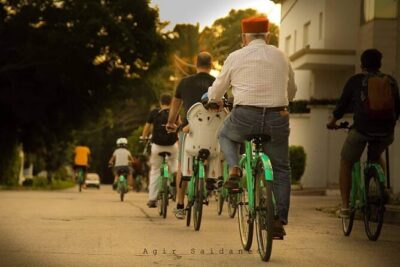
Guided Bike Tour of Carthage Archeological Site in Tunisia
Read our review →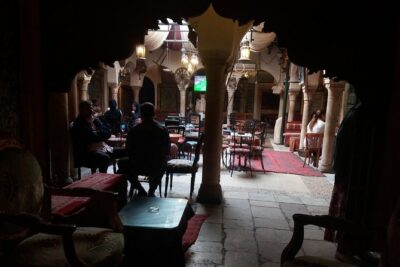
Guided tour in the UNESCO world heritage Medina of Tunis
Read our review →
Guided Tour of Djerba island, Museums, Crocodile park & lunch
Read our review →
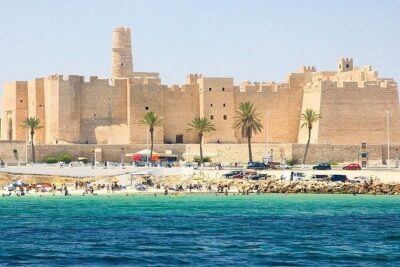
Private and Guided Tour to Kairouan and El Jem and Monastir
Read our review →
Kairouan & El Djem Guided Day Trip with Lunch from Hammamet
Read our review →
Private Guided Tour of Dougga and Testour Mosque
Read our review →
Browse the lists this tour appears in